






Resveratrol (SRT 501) is a polyphenolic natural product, a plant antitoxin with antioxidant and chemopreventive activities. Resveratrol has a wide range of targets including COX, SIRT, LOC, etc. Resveratrol induces autophagy and apoptosis.
Pennogenin 3-O-beta-chacotrioside, isolated from *Paris polyphylla*, exhibits anti-colorectal cancer activity by modulating autophagy through increased expression of autophagy-related proteins LC3 and Beclin-1.
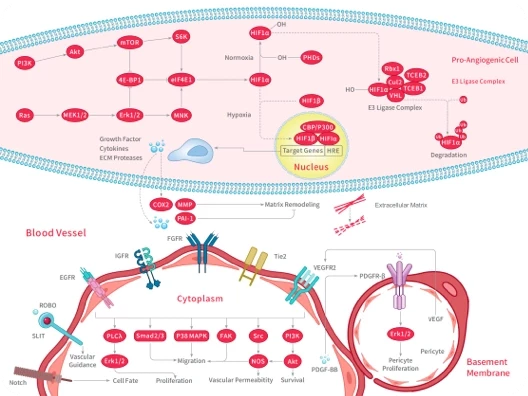
Polyphyllin D induces apoptosis via the mitochondrial apoptotic pathway as evidenced by decreased Bcl-2 expression levels, disruption of MMP and increased Bax, cytochrome C, and cleaved-caspase-3 levels. Polyphyllin D has an anti-angiogenic effect. Polyphyllin D has toxicity in human RBCs as well as its underlying mechanism for the hemolysis and eryptosis/erythroptosis. Polyphyllin D has strong anticancer activity, can overcome drug resistance in R-HepG2 cells and elicit programmed cell death via mitochondrial dysfunction.
The biological activity of Jervine (Jerwiny) is mediated via its interaction with the 7 passes transmembrane protein Smoothened. Jervine binds with and inhibits smoothened, which is an integral part of the Hedgehog signaling pathways. With smoothened inhibited, the GLI1 transcription cannot be activated and Hedgehog target genes cannot be transcribed.
Formosanin C (Polyphyllin B) is a compound isolated from Rhizoma Paridis, showed pro-apoptosis and immunoregulation with antitumor activity in cultured cells and animal systems.
Polyphyllin G (Polyphyllin VII), the the main member of polyphyllin family, shows strong anticancer activity against several carcinomas, including lung cancer, breast cancer, colorectal cancer, cervical cancer, hepatocellular carcinoma and osteosarcoma.
Diosgenin glucoside (Trillin) and other synthetic glycosides with similar activities may be of use in the management of hypercholesterolemia and atherosclerosis. Significant inhibition of Diosgenin glucoside synthesis and stimulation of solasodine glucosylation was found only with PC molecular species containing fatty acids with a chain length of 12-18 carbon atoms.
Velutin shows the strongest inhibitory effect in NF-κB activation and exhibits the greatest effects in blocking the degradation of inhibitor of NF-κB as well as in inhibiting mitogen-activated protein kinase p38 and JNK phosphorylation. Velutin has anti-inflammatory property. Velutin exhibits the greatest potency among all flavones which reduce TNF-α and IL-6 production.
Pseudojervine (O-beta-D-Glucopyranosyljervine) is derived from Veratrum nigrum L. Pseudojervine exhibits feeble inhibition activity against platelet aggregation.
Polyphyllin H can be extracted from loblolly pine and rhizomes, has antitumor activity, and is used in studies of inflammation, fractures, and convulsions.
1. Oxyresveratro can inhibit tyrosinase activity. 2. Oxyresveratro is useful to trauma models, as toxicity to glia could be beneficial by inhibiting reactive gliosis. 3. Oxyresveratrol (trans-Oxyresveratrol) has antioxidant activity, can reduce neuronal oxidative damage and protect hepatocytes against oxidative stress and mitochondrial dysfunction, which may be associated with activation of Nrf2.
trans-Trimethoxyresveratrol (MR-3), a natural methoxylated analog of resveratrol, inhibits breast Y cell invasiveness by downregulation of PI3K/Akt and Wnt/β-catenin signaling cascades and reversal of epithelial-mesenchymal transition.
Veratric acid (3,4-Dimethoxybenzoic acid) is a benzoic acid derivative from plants and fruits, possessing antioxidant, anti-inflammatory, and blood pressure-lowering properties.
2,3-Dimethoxybenzaldehyde (5,6-Dimethoxybenzaldehyde) is a benzoic acid analog, with high Antifungal activity (MIC=2.5 mM). 2,3-Dimethoxybenzaldehyde could be used for the synthesis of berberine.
Veratrosine (Veratramine-beta-D-glucoside) is an alkaloid isolated from the herbs of Veratrum nigrum. Veratrosine exhibits feeble inhibition activity against platelet aggregation.
Ergosta-7,22-dien-3-one is a lanosterane that can be isolated from the substrates of Ganoderma taiwanensis. It exhibits pro-inflammatory properties, stimulating nitric oxide production, inducing gene expression, and promoting the production of TLRs, cytokines, chemokines, and cellular adhesion molecules.
Polyphyllin F is a natural product of Paris, Liliaceae. The catalog number is TN4815 and the CAS number is 76296-74-7. Polyphyllin F can be used as a reference standard.