
























Shopping Cart
Remove All
  • TargetMol
    Your shopping cart is currently empty
Filter
Applied FilterClear all
TargetMol | Tags By Target
  • Apoptosis
    (3)
  • HIV Protease
    (3)
  • NO Synthase
    (2)
  • iGluR
    (2)
  • Autophagy
    (1)
  • Beta-Secretase
    (1)
  • GST
    (1)
  • Gap Junction Protein
    (1)
  • HDAC
    (1)
  • Others
    (7)
TargetMol | Tags By ResearchField
  • Nervous System
    (7)
  • Infection
    (4)
  • Immune System
    (3)
  • Inflammation
    (3)
  • Cancer
    (2)
  • Cardiovascular System
    (1)
Filter
Search Result
Results for "

TAT TFA

" in TargetMol Product Catalog.
  • Inhibitors & Agonists
    37
    TargetMol | All_Pathways
  • Peptide Products
    31
    TargetMol | Peptide_Products
  • TAT TFA (191936-91-1 free base)
    TAT TFA
    TP1407
    TAT TFA (YGRKKRRQRRR) is derived from human immunodeficiency virus (hiv-1) transcription reverse activator TAT, is a cell penetrating peptide.
    • $117
    Inquiry
    Size
    QTY
  • TRPV1-Tat TFA
    Transient Receptor Potential Vanilloid 1-Tat, 736-745-Tat
    T83701
    TRPV1-Tat, a peptide antagonist targeting transient receptor potential vanilloid 1 (TRPV1), is composed of amino acids 736-745 derived from TRPV1's A-kinase anchor protein (AKAP)-binding domain, combined with the HIV Tat-derived cell-penetrating peptide sequence. At a concentration of 200 µM, TRPV1-Tat effectively inhibits heat or phorbol 12-myristate 13-acetate (PMA014)-induced currents in primary mouse dorsal root ganglia via whole-cell patch-clamp assays. Additionally, when administered at dosages of 10 or 30 µM, it elevates the mechanical pain threshold in the hind paws of rats.
    • $55
    Inquiry
    Size
    QTY
  • Tat-NR2B9c TFA
    NA-1 (TFA)
    T13112L1834571-04-8
    Tat-NR2B9c TFA is a 20-aa peptide, and acts as an inhibitor of postsynaptic density-95 (PSD-95)(EC50 of 6.7 nM for PSD-95d2), and possesses neuroprotective efficacy.
    • $823
    7-10 days
    Size
    QTY
  • TAT peptide TFA
    T75759
    TAT peptide (TFA), a cell-penetrating peptide (GRKKRRQRRRPQ) originating from HIV-1's trans-activating transcriptional activator (Tat), facilitates intracellular delivery [1] [2].
    • Inquiry Price
    Inquiry
    Size
    QTY
  • TAT-Gap19 TFA
    T75821
    TAT-Gap19 TFA, a Cx mimetic peptide and specific connexin43 hemichannel (Cx43 HC) inhibitor, does not inhibit corresponding Cx43 gap junction channels (GJCs). It crosses the blood-brain barrier and has shown efficacy in alleviating liver fibrosis in mice [1] [2] [3].
    • Inquiry Price
    Inquiry
    Size
    QTY
  • TAT-14 TFA
    T75914
    TAT-14 TFA is a 14-mer peptide functioning as an Nrf2 activator possessing anti-inflammatory properties. It does not alter Nrf2 mRNA expression but elevates Nrf2 protein levels by targeting the Nrf2 binding site on Keap1 [1].
    • Inquiry Price
    Inquiry
    Size
    QTY
  • TAT-cyclo-CLLFVY TFA
    T75943
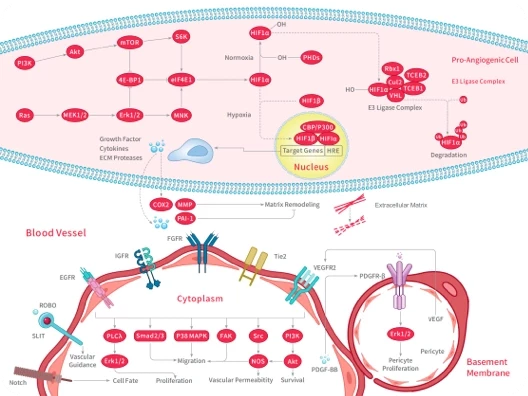
    TAT-cyclo-CLLFVY TFA is a cyclic peptide inhibitor targeting HIF-1 heterodimerization to mitigate hypoxia signaling within cancer cells. It effectively disrupts the protein-protein interaction between HIF-1α and HIF-1β, with an inhibitory concentration (IC 50) of 1.3 μM [1].
    • Inquiry Price
    Inquiry
    Size
    QTY
  • TAT (48-57) (TFA)
    T75983
    TAT (48-57) (TFA) is a cell-penetrating peptide obtained from residues 48-57 of the HIV-1 Tat (transactivator of transcription) protein.
    • Inquiry Price
    Inquiry
    Size
    QTY
  • Tat-beclin 1 TFA
    T76058
    Tat-beclin 1 TFA, a peptide derived from a segment of the autophagy protein beclin 1, effectively induces autophagy and interacts with the autophagy negative regulator GAPR-1 (GLIPR2). It reduces the accumulation of polyglutamine expansion protein aggregates and limits the in vitro replication of various pathogens, including HIV-1. Additionally, Tat-beclin 1 TFA has been shown to decrease mortality rates in mice infected with chikungunya (CHIKV) or West Nile virus (WNV) [1].
    • Inquiry Price
    Inquiry
    Size
    QTY
  • Tat-NR2Baa TFA
    T76069
    Tat-NR2BAA TFA serves as the inactive control peptide for Tat-NR2B9c, featuring a comparable sequence with a crucial distinction: a double-point mutation in its COOH-terminal tSXV motif. This alteration renders Tat-NR2BAA TFA unable to bind to PSD-95, in contrast to Tat-NR2B9c. The latter is a membrane-permeant peptide that impedes PSD-95/NMDAR interaction, specifically detaching NR2B- and/or NR2A-type NMDARs from PSD-95 [1].
    • Inquiry Price
    Inquiry
    Size
    QTY
  • Tat-peptide 190-208 TFA
    T78040
    Tat-peptide 190-208 TFA is a Tat-labeled, cell-permeable fusion peptide derived from residues 190-208 of rat G3BP1. The HIV-derived Tat sequence at the peptide's least conserved region confers cellular permeability. This compound promotes axon growth and enhances neurite formation per neuron, suggesting an axon intrinsic mechanism of action. Additionally, it has potential applications in providing ischemic protection during endovascular repair of intracranial aneurysms [1].
    • Inquiry Price
    Inquiry
    Size
    QTY
  • Tat-peptide control 168-189 TFA
    T78041
    Tat-peptide 168-189, a cell-permeable, Tat-labeled fusion peptide derived from residues 168-189 of rat G3BP1, features the HIV Tat sequence at its least conserved terminus to enhance cellular uptake. It serves as the negative control for Tat-peptide 168-189 TFA, which promotes axon growth and neurite proliferation [1].
    • Inquiry Price
    Inquiry
    Size
    QTY
  • TAT-BH4 (Bcl-xL) (TFA)
    T80222
    "TAT-BH4 (Bcl-xL) TFA, primarily localized at the mitochondria, inhibits apoptotic cell death. This compound comprises an eosin-labeled cysteine at the N-terminal and the protein transduction domain from the HIV TAT protein (amino acids 49 to 57), fused to the Bcl-xL BH4 peptide. It is utilized in research concerning diseases associated with accelerated apoptosis [1]."
    • Inquiry Price
    Inquiry
    Size
    QTY
  • TAT-NEP1-40 TFA
    T80419
    TAT-NEP1-40 TFA, a blood-brain barrier-permeable peptide, safeguards PC12 cells against oxygen and glucose deprivation (OGD) and fosters neurite outgrowth. Additionally, it enhances neurological outcomes post-ischemia by curtailing apoptosis in ischemic cerebral tissues. This compound has utility in investigating central nervous system (CNS) injuries, encompassing axonal regeneration and functional recuperation following a stroke [1].
    • Inquiry Price
    Inquiry
    Size
    QTY
  • TAT-P4-(DATC5)2 TFA
    T81032
    TAT-P4-(DATC5)2 TFA, a high-affinity peptide inhibitor targeting the PDZ domain of protein interacting with C kinase-1 (PICK1), exhibits a K i of 1.7 nM and demonstrates potential in mitigating addiction behaviors in rats [1].
    • Inquiry Price
    Inquiry
    Size
    QTY
  • TAT-amide TFA (697226-52-1 free base)
    TAT-amide TFA
    TP1690
    TAT-amide TFA is a cell penetrating peptide. The cell - penetrating peptides (CPPs) is a kind of access to the short amino acid sequence of different cells.
    • Inquiry Price
    Inquiry
    Size
    QTY
  • TAT-DEF-Elk-1 TFA (1220751-16-5 free base)
    TDE TFA, TAT-DEF-Elk-1 TFA
    TP2157L
    TAT-DEF-Elk-1 TFA is a cell-penetrating peptide Elk-1 inhibitor, mimics and specifically interferes with the DEF domain of Elk-1. TAT-DEF-Elk-1 blocks Elk-1 phosphorylation and prevents Elk-1 nuclear translocation without interfering with ERK nor MSK1 act
    • Inquiry Price
    Inquiry
    Size
    QTY
  • TAT-amide TFA
    TP3352
    TAT-amide TFA is a type of cell-penetrating peptide (CPP). CPPs are short sequences of amino acids that have the ability to enter various cells and are utilized for the delivery of substances into cells.
    • Inquiry Price
    Inquiry
    Size
    QTY
  • Tat-IKIP (46-60) TFA
    TP4067
    Tat-IKIP (46-60)TFA is the trifluoroacetate salt form of Tat-IKIP (46-60), a transmembrane peptide targeting IκB kinase (IKK). It inhibits IKK activation and NF-κB target gene expression by disrupting the IKKβ/NEMO complex. Tat-IKIP (46-60) significantly alleviates DSS-induced acute inflammation in a mouse model of inflammatory bowel disease (IBD) and reduces yeast polysaccharide-induced acute arthritis in an acute arthritis model (AAM). This compound is applicable in the study of inflammatory diseases, such as IBD, pancreatitis, and rheumatoid arthritis.
    • Inquiry Price
    Inquiry
    Size
    QTY
  • Tat-Gap 19 TFA
    T83682
    Tat-Gap 19, a peptide inhibitor of connexin43 (Cx43) hemichannels, is derived from the HIV-1 Tat protein transduction domain fused with a nine-amino acid sequence from Cx43 residues 128-136. This compound, at a concentration of 10 µM, effectively suppresses glutamate-induced ATP release in primary rat hepatocytes, indicating inhibition of Cx43 hemichannel activity. Furthermore, Tat-Gap 19 demonstrates therapeutic potential by significantly reducing infarct volume in a mouse cerebral ischemia-reperfusion injury model following middle cerebral artery occlusion (MCAO) at a dosage of 25 mg/kg. Moreover, its intraperitoneal administration at 1 mg/kg per day ameliorates fibrosis and decreases the area of hepatic stellate cells, the precursors to myofibroblasts, expressing α-smooth muscle actin (α-SMA), in a model of thioacetamide-induced liver damage. Additionally, it enhances superoxide dismutase (SOD) activity in hepatic cells from the treated mice, indicating its antioxidative benefits.
    • $242
    7-10 days
    Size
    QTY
  • Tat-βsyn-degron TFA
    T83726
    Tat-βsyn-degron, an α-synuclein knockdown peptide, integrates three domains: the HIV-1 Tat plasma membrane transduction domain, an α-synuclein binding domain (βsyn) representing amino acids 36-45 of β-synuclein, and a proteasomal targeting domain (degron). It effectively binds to recombinant α-synuclein, demonstrating a significant reduction in α-synuclein levels in primary rat cortical neuron cultures.
    • $63
    Inquiry
    Size
    QTY
  • Tat-NTS Peptide TFA
    Tat-Nuclear Translocation Signal Peptide
    T83727
    Tat-NTS peptide, a cell-penetrating compound, comprises the HIV-1 Tat protein transduction domain fused with a 10-amino acid sequence (residues 228-237) from the repeat III domain of annexin A1, serving as a nuclear translocation signal (NTS). This peptide hinders the interaction between annexin A1 and importin β, obstructing annexin A1's nuclear entry in primary mouse hippocampal neurons. Tat-NTS effectively prevents apoptosis triggered by glucose-oxygen deprivation and reperfusion in these neurons. When administered in vivo at a dosage of 10 mg/kg, it significantly reduces infarct size, minimizes neuronal apoptosis, and improves navigation performance in the Morris water maze test for mice subjected to ischemia-reperfusion injury via middle cerebral artery occlusion (MCAO).
    • $55
    Inquiry
    Size
    QTY
  • Tat-AKAP79 (326-336) TFA
    Tat-A-kinase Anchor Protein 79 (326-336)
    T83728
    Tat-AKAP79 (326-336) is a peptide that links the HIV-1 Tat protein transduction domain with an 11-amino acid sequence from A-kinase anchor protein 79 (AKAP79). This compound effectively inhibits the activation-induced sensitization by protein kinase A (PKA) or PKC of the transient receptor potential vanilloid 1 (TRPV1) at a concentration of 200 µM in isolated rat dorsal root ganglion (DRG) neurons. Additionally, it mitigates nocifensive behavior in mice elicited by formalin or phorbol 12-myristate 13-acetate (PMA014), enhances latency for paw withdrawal from radiant heat, and raises the mechanical threshold force required for paw withdrawal in a carrageenan-induced mouse model of inflammatory pain.
    • $55
    Inquiry
    Size
    QTY
  • Tat-CIRP TFA
    Tat-Cold-inducible RNA Binding Protein
    T83729
    Tat-CIRP, a peptide inhibitor, impedes the protein-protein interaction between myeloid differentiation 2 (MD-2), also known as lymphocyte antigen 96 (LY96), and cold-inducible RNA binding protein (CIRP) by binding to MD-2. This disrupts the MD-2 and CIRP interaction as confirmed in co-immunoprecipitation assays. Notably, in vivo studies reveal that Tat-CIRP, at dosages of 10 and 20 mg/kg, significantly reduces infarct volume in both a mouse model of middle cerebral artery occlusion (MCAO) and a rhesus monkey model of thrombosis-induced stroke. Additionally, it improves motor function, evidenced by decreased time to manipulate and withdraw food with the affected arm in the primate model.
    • $105
    Inquiry
    Size
    QTY