


Shopping Cart
Remove All Your shopping cart is currently empty

Synonyms:
| Pack Size | Price | USA Stock | Global Stock | Quantity |
|---|---|---|---|---|
| 1 mg | $63 | Inquiry | Inquiry | |
| 5 mg | $296 | Inquiry | Inquiry | |
| 10 mg | $561 | Inquiry | Inquiry | |
| 25 mg | $1,240 | Inquiry | Inquiry |
| Description | Tat-βsyn-degron, an α-synuclein knockdown peptide, integrates three domains: the HIV-1 Tat plasma membrane transduction domain, an α-synuclein binding domain (βsyn) representing amino acids 36-45 of β-synuclein, and a proteasomal targeting domain (degron). It effectively binds to recombinant α-synuclein, demonstrating a significant reduction in α-synuclein levels in primary rat cortical neuron cultures. |
| In vivo | Administrating Tat-βsyn-degron at 40 mg/kg reduces α-synuclein levels in the brains of M38 transgenic mice overexpressing human A53T mutant α-synuclein. It also diminishes phosphorylated α-synuclein levels in the substantia nigra and the pons, alongside neuroinflammation in mice exposed to α-synuclein preformed fibrils, simulating spreading synucleinopathy. Furthermore, at a dosage of 6 µmol/kg intraperitoneally, Tat-βsyn-degron ameliorates dopaminergic neuron loss and improves motor deficits in mice suffering from MPTP-induced Parkinson’s disease, underscoring its potential therapeutic benefit. |
| Molecular Weight | 3146.67 |
| Formula | C132H237N59O31.XCF3COOH |
| Smiles | O=C(NCC(N[C@@H](CCCNC(N)=N)C(N[C@@H](CCCCN[H])C(N[C@@H](CCCCN[H])C(N[C@@H](CCCNC(N)=N)C(N[C@@H](CCCNC(N)=N)C(N[C@@H](CCC(N)=O)C(N[C@@H](CCCNC(N)=N)C(N[C@@H](CCCNC(N)=N)C(N[C@@H](CCCNC(N)=N)C(N[C@@H](CCCNC(N)=N)C(N[C@]([C@H](O)C)([H])C(N[C@@H](CCCCN[H])C(N[C@@H](CO)C(NCC(N[C@@H](C(C)C)C(N[C@@H](CC1=CC=C(O)C=C1)C(N[C@H](C(N[C@@H](C(C)C)C(NCC(N[C@@H](CCCNC(N)=N)C(N[C@@H](CCCNC(N)=N)C(N[C@@H](CCCNC(N)=N)C(NCC(O)=O)=O)=O)=O)=O)=O)=O)CC(C)C)=O)=O)=O)=O)=O)=O)=O)=O)=O)=O)=O)=O)=O)=O)=O)=O)=O)[C@H](CC2=CC=C(O)C=C2)N[H].OC(C(F)(F)F)=O |
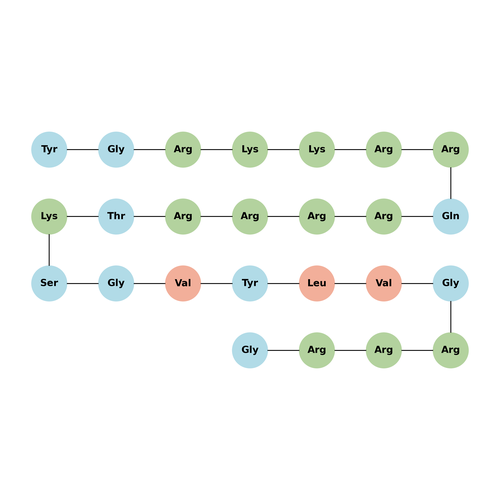
| Sequence | Tyr-Gly-Arg-Lys-Lys-Arg-Arg-Gln-Arg-Arg-Arg-Arg-Thr-Lys-Ser-Gly-Val-Tyr-Leu-Val-Gly-Arg-Arg-Arg-Gly |
| Sequence Short | YGRKKRRQRRRRTKSGVYLVGRRRG |
| Storage | Keep away from moisture Powder: -20°C for 3 years | In solvent: -80°C for 1 year Shipping with blue ice/Shipping at ambient temperature. |
| Solubility Information | DMF: 50 mg/mL (15.89 mM), Sonication is recommended. PBS pH 7.2: 1 mg/mL (0.32 mM), Sonication is recommended. |
 For example, if the intended dosage is 10 mg/kg for animals weighing 20 g , with a dosing volume of 100 μL per animal, and a total of 10 animals are to be administered, using a formulation of
  10% DMSO+ 40% PEG300+ 5% Tween 80+ 45% Saline/PBS/ddH2O , the resulting working solution concentration would be 2 mg/mL.
Dissolve 2 mg of the compound in 100 μL DMSO to obtain a stock solution at a concentration of 20 mg/mL . If the required concentration exceeds the compound's known solubility, please contact us for technical support before proceeding.
1) Add 100 μL of the DMSO stock solution to 400 µL PEG300 and mix thoroughly until the solution becomes clear.
2) Add 50 µL Tween 80 and mix well until fully clarified.
3) Add 450 µL Saline,PBS or ddH2O and mix thoroughly until a homogeneous solution is obtained.
| Size | Quantity | Unit Price | Amount | Operation |
|---|
 Feedback
 Hello! How can I help you today?
Copyright © 2015-2026 TargetMol Chemicals Inc. All Rights Reserved.
