











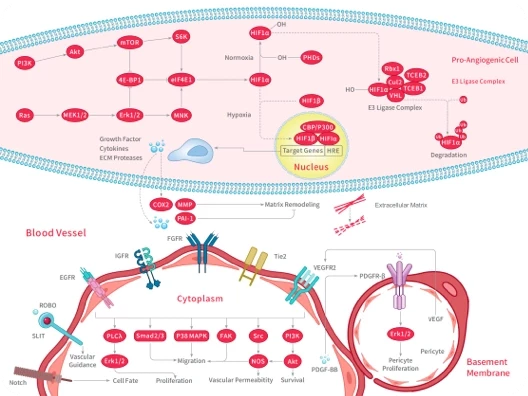

Salidroside is a bioactive phenolic glycoside compound isolated from Rhodiola rosea and is a prolyl endopeptidase inhibitor. Salidroside can alleviate cachexia symptoms in a tumor cachexia mouse model by activating mTOR signaling and protect dopaminergic neurons by enhancing PINK1/Parkin-mediated mitochondrial autophagy. Salidroside can also inhibit the growth of cancer cells by regulating the CDK4-cyclin D1 pathway to block the G1 phase and/or regulating the Cdc2-cyclin B1 pathway to block the G2 phase.
Escin Ib inhibits gastric emptying, at least in part, mediated by capsaicin-sensitive sensory nerves, to stimulate the synthesis and/or release of dopamine, to act through central dopamine2 receptor, which in turn causes the release of PGs.
Rosarin has anti-inflammatory and neuroprotective effects. Rosarin supresses the expression of the proinflammatory factors iNOS, IL-1 β, and TNF- α in the kidney and prefrontal cortex of brain in mice .
Gossypetin, a hexahydroxylated flavonoid extractable from Rhodiola rosea Linn. is a potent MKK3 and MKK6 inhibitor that strongly attenuates the MKK3/6-p38 signaling pathway.Gossypetin exhibits antimutagenic, antiatherosclerotic, antioxidant, as well as cytoprotective and antimicrobial effects.It inhibits bone resorption by downregulating lysosomal caspase K activity and inducing autophagy-associated proteins in actin ring osteoclasts. Gossypetin has anti-mutagenic, anti-atherosclerotic, anti-oxidant, cytoprotective and antibacterial effects, and it inhibits bone resorption by down-regulating lysosomal caspase K activity and by inducing autophagy-associated protein in actin ring osteoblasts.
N-Acetyl-L-aspartic acid is a derivative of aspartic acid, synthesized in neurons from the amino acid aspartic acid and acetyl coenzyme A. N-Acetyl-L-aspartic acid has antioxidant activity.
Rhodiocyanoside A (Multifidin) is a flavonoid that can be extracted from Rhodiola, showing inhibitory activity against histamine release from peritoneal exudate cells sensitized with anti-2,4-dinitrophenyl IgE in rats.
Escin IA (Escin IA;Aescin IA) is a triterpene saponin isolated from horse chestnut, which inhibits HIV-1 protease with IC50 values of 35 μM. Escin IA has anti-TNBC metastasis activity, and its action mechanisms involved inhibition of epithelial-mesenchymal transition process by down-regulating LOXL2 expression[1][2].
Crenulatin, a natural gallotannin, has a bi-directional effect on apoptosis in mouse cerebral microvascular endothelial cells, acting through the regulation of Fas/Bcl-2 expression and caspase-3 activity.
Methyl decanoate (capric acid methyl ester) is an ester compound commonly used as an intermediate in organic synthesis and widely applied in biochemical experiments.
Escin IIB, a natural saponin compound isolated from the seeds of horse chestnut (Aesculus hippocastanum L.), exhibits biologically positive effects on acute inflammation in animal models. Escin IIB has also demonstrated strong gastroprotective properties by significantly reducing ethanol-induced gastric mucosal lesions, highlighting its potential application in the study of anti-inflammatory mechanisms and gastric mucosal defense pathways in preclinical research.
Escin IIA, a naturally derived saponin isolated from the seeds of horse chestnut (Aesculus hippocastanum L.), has been shown to exert beneficial effects in acute inflammatory conditions in animal models. Escin IIA additionally demonstrates gastroprotective effects by reducing ethanol-induced gastric mucosal lesions in rats, thereby supporting its role in the study of anti-inflammatory and gastroprotective mechanisms in preclinical research.
Leucocyanidin (Leucocianidol) is an antiulcer compound extracted from Aesculus Hippocastanum Seeds. Leucocyanidin can be used to study non-alcoholic fatty liver disease.
Rhodiolin, a natural product from Rhodiola rosea, blocks glycolysis of glucose 6-phosphate isomerase (GPI) in human papillary thyroid cancer (PTC), inhibits phosphorylation of the PI3K/AKT/mTOR signaling pathway and induces apoptosis of PTC cells.