






















Shopping Cart
Remove All
  • TargetMol
    Your shopping cart is currently empty
Filter
Applied FilterClear all
TargetMol | Tags By Target
  • Endogenous Metabolite
    (14)
  • Drug Metabolite
    (6)
  • PPAR
    (6)
  • Antibacterial
    (2)
  • Cytochromes P450
    (2)
  • TRP/TRPV Channel
    (2)
  • AMPK
    (1)
  • Amino Acids and Derivatives
    (1)
  • Autophagy
    (1)
  • Others
    (59)
Filter
Search Result
Results for "

docosahexaenoic acid

" in TargetMol Product Catalog
  • Inhibitors & Agonists
    71
    TargetMol | All_Pathways
  • Peptide Products
    2
    TargetMol | Peptide_Products
  • Natural Products
    4
    TargetMol | Natural_Products
  • Isotope Products
    2
    TargetMol | Isotope_Products
  • Cell Research
    4
    TargetMol | Cell_Research_Reagents
  • Reference Standards
    2
    TargetMol | Standard_Products
Docosahexaenoic Acid
DHA, Cervonic acid
T53696217-54-5
Docosahexaenoic Acid (DHA) is an essential omega-3 fatty acid prevalent in the brain and retina.
  • $34
In Stock
Size
QTY
TargetMol | Inhibitor Hot
TargetMol | Citations Cited
4-oxo Docosahexaenoic Acid
T36868845673-74-7
4-oxo Docosahexaenoic acid (4-oxo DHA) is a putative metabolite of DHA with antiproliferative and PPARγ agonist activity. It inhibits the growth of several triple-negative breast cancer cell lines [MCF-10F, trMCF, bsMCF, MDA-MB-231, and BT549] at 50-100 μM but increases the proliferation of MCF-7 cells. 4-oxo DHA binds covalently to PPARγ and activates gene transcription in luciferase reporter assays and dendritic cells with EC50 values of approximately 8-16 μM.
  • $178
35 days
Size
QTY
17-oxo-4(Z),7(Z),10(Z),13(Z),15(E),19(Z)-Docosahexaenoic Acid
T376331233715-28-0
17-oxo-4(Z),7(Z),10(Z),13(Z),15(E),19(Z)-Docosahexaenoic acid is a metabolite of lipoxygenase-mediated oxidation of DHA that is produced endogenously by aspirin-enhanced COX-2 activity. It has been shown to activate Nrf2-dependent antioxidant gene expression, to act as a PPARγ agonist (EC50 = ~200 nM), and to inhibit pro-inflammatory cytokine and nitric oxide production at biological concentration ranges (5-25 μM).
  • $178
35 days
Size
QTY
Docosahexaenoic Acid Alkyne
FA 22:8, Click Tag™ DHA Alkyne
T852702692622-57-2
Docosahexaenoic acid alkyne, an ω-alkyne derivative of docosahexaenoic acid, enables Cu(I)-catalyzed cycloaddition with azide-containing molecules for efficient click chemistry applications. It can be further utilized to produce alkyne-modified products like glycerophospholipids. Additionally, this compound permits the monitoring of fatty acid metabolism in cells through click chemistry linkage to fluorophores.
  • Inquiry Price
8-10 weeks
Size
QTY
Docosahexaenoic Acid methyl ester
Methyl docosahexaenoate, all cis-DHA methyl ester
T192942566-90-7
Docosahexaenoic Acid methyl ester (all cis-DHA methyl ester) is a methylated docosahexaenoic acid analog that can be inserted into membrane phospholipids without being oxidized or hydrolyzed.
  • $30
In Stock
Size
QTY
Docosahexaenoic acid ethyl ester
Ethyl docosahexaenoate
T4132181926-94-5
Docosahexaenoic acid ethyl ester (Ethyl docosahexaenoate) enhances 6-hydroxydopamine-induced neuronal damage by inducing lipid peroxidation in the mouse striatum, and can be used to study oxidative diseases of the retina or neurons.
  • $31
In Stock
Size
QTY
4-trans,7-cis,10-cis,13-cis,16-cis,19-cis-Docosahexaenoic acid
TCL-00124955920-48-6
4-trans,7-cis,10-cis,13-cis,16-cis,19-cis-Docosahexaenoic acid is a reagent used in biochemical reactions.
  • Inquiry Price
Inquiry
Size
QTY
Docosahexaenoic acid-d5
TMID-05231197205-71-2
Docosahexaenoic acid-d5 is the deuterated form of Docosahexaenoic Acid. Docosahexaenoic Acid (DHA) is an omega-3 fatty acid abundantly found in the brain and retina, obtainable directly from fish oil and breast milk.
  • Inquiry Price
Inquiry
Size
QTY
Docosahexaenoic acid-13C4
TMID-0931
Docosahexaenoic acid-13C4 is a 13C-labeled form of docosahexaenoic acid. Docosahexaenoic Acid (DHA) is an omega-3 fatty acid abundantly found in the brain and retina. It can be directly sourced from fish oil and breast milk.
  • Inquiry Price
Inquiry
Size
QTY
Docosahexaenoic Acid methyl ester (Standard)
C22:6n3 DHA methyl ester (Standard)
TMSM-10572566-90-7
Docosahexaenoic Acid methyl ester (Standard) is the standard substance of Docosahexaenoic Acid methyl ester, and it is applicable for quantitative analysis, quality control, and related research in biochemical experiments. Docosahexaenoic Acid methyl ester (all cis-DHA methyl ester) is a methylated docosahexaenoic acid analog that can be inserted into membrane phospholipids without being oxidized or hydrolyzed.
  • $59
7-10 days
Size
QTY
14(S)-hydroxy Docosahexaenoic Acid in Ethanol, Concentration: 100 µg/mL (Standard)
TMSM-3691119433-37-3
14(S)-HDHA (Standard) is a reference standard for research and analysis in studies involving 14(S)-HDHA. Docosahexaenoic acid is a nutritionally-derived ω-3 fatty acid that is abundant in the brain and the retina and is thought to be important in early development and for therapeutic approaches to inflammatory disorders and cancer.
  • $533
4-6 weeks
Size
QTY
(±)4-HDHA
4-Hydroxy docosahexaenoic acid, (±)4-HDoHE
T3660290906-40-4In house
(±)4-HDHA (4-Hydroxy docosahexaenoic acid) is a PPARγ agonist with anti-inflammatory activity that directly inhibits endothelial cell proliferation and sprouting angiogenesis via PPARγ, which can be used in the study of diabetes.
  • $163
In Stock
Size
QTY
(±)14-HDHA
14-hydroxy Docosahexaenoic acid, (±)14-HDoHE
T3550987042-40-8
(±)14-HDHA is a hydroxydocosahexaenoic acid, an oxidized metabolite of DHA generated intracellularly by enzymatic or non-enzymatic reactions, is one of the specific substrates of 15-PGDH and can be further oxidized to the anti-inflammatory 14-oxoDHA, and in primary alveolar macrophages, 14-HDoHE itself significantly inhibits LPS-induced IL-6 mRNA expression in primary alveolar macrophages, which may be relevant to inflammatory diseases such as asthma.
  • $373
35 days
Size
QTY
LY3325656
T700051998714-25-2
LY3325656 is a GPR142 agonist suitable for clinical testing in human. LY3325656 demonstrated anti-diabetic benefits in pre-clinical studies and ADME/PK properties suitable for human dosing. LY3325656 is the first GPR142 agonist molecule advancing to phase 1 clinic trials for the treatment of Type 2 diabetes.
  • $2,270
10-14 weeks
Size
QTY
1-Docosahexaenoyl-sn-glycero-3-phosphocholine
T84286162440-05-3In house
1-Docosahexaenoyl-sn-glycero-3-phosphocholine, an ester product, is a phospholipid containing DHA (docosahexaenoic acid), often used in biomedical research as an important source of omega-3 fatty acids.
  • $111
1-2 weeks
Size
QTY
F 16915
T1933192510-91-3
F 16915 can prevent heart failure-induced atrial fibrillation.F 16915 is a docosahexaenoic acid derivative.
  • $1,520
6-8 weeks
Size
QTY
(±)20-HDHA
(±)20-HDoHE
T1954190906-41-5
(±)20-HDHA is an autoxidation product and is a racemic mixture of Docosahexaenoic acid (DHA).
  • $279
35 days
Size
QTY
1,3-Dilinoleoyl-2-docosahexaenoyl glycerol
T203331157363-75-2
1,3-Dilinoleoyl-2-docosahexaenoyl glycerol is a triglyceride composed of Linoleic acid at the sn-1 and sn-3 positions, and Docosahexaenoic acid at the sn-2 position.
  • Inquiry Price
Inquiry
Size
QTY
(±)10(11)-DiHDPA
T354921345275-22-0
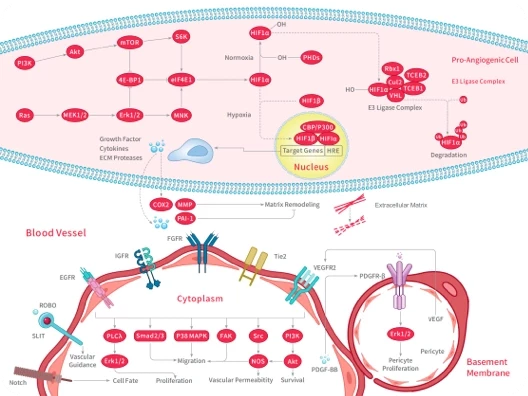
(±)10(11)-DiHDPA, produced from cytochrome P450 epoxygenase action on docosahexaenoic acid, has demonstrated the ability to inhibit VEGF-induced angiogenesis in mice and may possess additional anti-inflammatory and anti-tumor effects.
  • $297
35 days
Size
QTY
(±)10(11)-EpDPA
T35493895127-65-8
Cytochrome P450 metabolism of polyunsaturated fatty acids produces numerous bioactive epoxide regioisomers. (±)10(11)-EpDPA is a docosahexaenoic acid epoxygenase metabolite, derived via epoxidation of the 10,11-double bond of DHA. It has been detected in rat brain and spinal cord, as well as human serum, and acts as a substrate for soluble epoxide hydrolase with a Km value of 5.1 μM. (±)10(11)-EpDPA and other epoxy metabolites of DHA are reported to demonstrate antihyperalgesic activity in inflammatory and neuropathic pain models and to potently inhibit angiogenesis and tumor growth in in vitro assays.
  • $142
35 days
Size
QTY
(±)13(14)-DiHDPA
T354951345275-24-2
(±)13(14)-DiHDPA is a metabolite of docosahexaenoic acid that is produced via oxidation by cytochrome P450 epoxygenases. Epoxygenase metabolites of DHA, including (±)13(14)-DiHDPA, are reported to inhibit angiogenesis, tumor growth, and metastasis.
  • $297
35 days
Size
QTY
(±)13(14)-EpDPA
T35496895127-64-7
Cytochrome P450 metabolism of polyunsaturated fatty acids produces numerous bioactive epoxide regioisomers. (±)13(14)-EpDPA is a docosahexaenoic acid epoxygenase metabolite, derived via epoxidation of the 13,14-double bond of DHA. It has been detected in rat brain and spinal cord and is a preferred substrate for soluble epoxide hydrolase with a Km value of 3.2 μM. (±)13(14)-EpDPA demonstrates antihyperalgesic activity in inflammatory and neuropathic pain models. (±)13(14)-EpDPA and other epoxy metabolites of DHA are also reported to potently inhibit angiogenesis and tumor growth in in vitro assays.
  • $142
35 days
Size
QTY
(±)7(8)-EpDPA
T35497895127-66-9
Docosahexaenoic acid is the most abundant ω-3 fatty acid in neural tissues, especially in the brain and retina. (±)7(8)-EpDPA is an epoxide derivative of DHA that is generated by the action of cytochrome P450 epoxygenases. It is naturally occurring in plasma and brain and spinal cord tissues and is increased following dietary supplementation with ω-3 fatty acids. (±)7(8)-EpDPA and other epoxy metabolites of DHA modulate receptor and channel activities to evoke diverse effects, such as promoting vasodilation, inhibiting angiogenesis, and decreasing inflammatory and neuropathic pain. (±)7(8)-EpDPA is a substrate of soluble epoxide hydrolase (KM = 15 μM), which converts it to the corresponding diol.
  • $142
35 days
Size
QTY
(±)10-HDHA
T3550490780-50-0
(±)10-HDHA is an autoxidation product of docosahexaenoic acid (DHA) in vitro.[1][2] It is also produced from incubations of DHA in rat liver, brain, and intestinal microsomes.[3][4][5] (±)10-HDHA is a potential marker of oxidative stress in brain and retina where DHA is an abundant polyunsaturated fatty acid. Reference:[1]. VanRollins, M., and Murphy, R.C. Autooxidation of docosahexaenoic acid: Analysis of ten isomers of hydroxydocosahexaenoate. J. Lipid Res. 25(5), 507-517 (1984).[2]. Reynaud, D., Thickitt, C.P., and Pace-Asciak, C.R. Facile preparation and structural determination of monohydroxy derivatives of docosahexaenoic acid (HDoHE) by α-tocopherol-directed autoxidation. Anal. Biochem. 214(1), 165-170 (1993).[3]. VanRollins, M., Baker, R.C., Sprecher, H., et al. Oxidation of docosahexaenoic acid by rat liver microsomes. J. Biol. Chem. 259(9), 5776-5783 (1984).[4]. Yamane, M., Abe, A., and Yamane, S. High-performance liquid chromatography-thermospray mass spectrometry of epoxy polyunsaturated fatty acids and epoxyhydroxy polyunsaturated fatty acids from an incubation mixture of rat tissue homogenate. J. Chromatogr. 652(2), 123-136 (1994).[5]. Kim, H.Y., Karanian, J.W., Shingu, T., et al. Sterochemical analysis of hydroxylated docosahexaenoates produced by human platelets and rat brain homogenate. Prostaglandins 40(5), 473-490 (1990).
  • $279
35 days
Size
QTY