




























Shopping Cart
Remove All Your shopping cart is currently empty
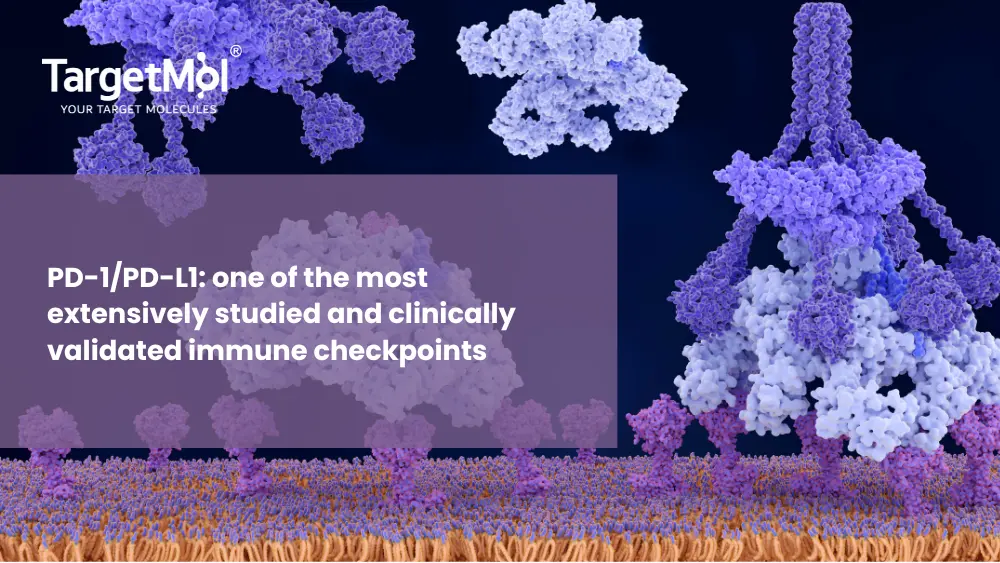
Awakening the “Killer” Instinct of the Immune System!Overview of the PD-1/PD-L1 Immune Checkpoint Mechanism and Targeted Research Tools
In the long battle against cancer, the body’s own immune T cells are meant to serve as powerful and relentless “killers.” However, traditional tumor-killing studies have long faced a major challenge: tumor cells that can be easily eliminated in vitro are often able to survive and proliferate in vivo.
The tumor microenvironment (TME) is remarkably sophisticated. It can induce and maintain a state of “immune tolerance,” driving immune cells into deep exhaustion and dysfunction. Today, we will explore one of the key masterminds behind tumor immune evasion — the PD-1/PD-L1 signaling pathway.
Core Mechanism of the PD-1/PD-L1 Pathway
The PD-1 (Programmed Death-1) receptor and its ligand PD-L1 pathway play a central role in the induction and maintenance of immune tolerance within the tumor microenvironment. Under normal physiological conditions, this pathway functions as a critical “immune checkpoint” that prevents excessive autoimmune responses. However, in the tumor microenvironment:
1. Formation of Immune Evasion: Tumor cells can highly express the PD-L1 ligand. When PD-L1 binds to the PD-1 receptor on T cells, this “immune brake” becomes strongly activated, allowing tumor cells to evade immune surveillance.
2. Exhaustion of Anti-Tumor Immunity: Activation of the PD-1/PD-L1 signaling pathway directly suppresses T-cell activation, proliferation, and the secretion of cytotoxic cytokines such as IFN-γ in cancer. As a result, anti-tumor immune responses become weakened, exhausted, or may even lead to T-cell apoptosis.
How to Choose PD-1/PD-L1 Targeted Modulators?
The key to breaking through the tumor’s defense lies in “releasing the brakes” on the immune system. By using targeted agents to block the interaction between PD-1 and PD-L1, it is possible to relieve tumor-induced immune suppression and restore antitumor immune responses. Current intervention strategies targeting this pathway are mainly divided into two major approaches.
|
Mechanism |
Monoclonal Antibodies |
Small Molecule Inhibitors |
|
Advantages |
- Highly specific target selectivity - Long half-life with sustained in vivo efficacy - Clinically well-established and widely used as a classic positive control standard |
- Strong tissue penetration, enabling deep access into solid tumors; - Low immunogenicity, reducing the likelihood of anti-drug antibody (ADA) generation; - Oral bioavailability with relatively lower production costs |
|
Applications |
- Validation using classic in vivo tumor immunology animal models (such as humanized mouse models); - Parallel comparative studies for novel biologic drug development; |
- Research on tumor microenvironment penetration in solid tumors - Development of novel oral immune checkpoint therapeutics - Synergy and combination screening with other targeted small molecules |
What is the workflow for evaluating PD-1/PD-L1 blocking activity?
When assessing the in vitro biological activity of PD-1/PD-L1 inhibitors (including antibodies or small molecules), the most classical approach is a co-culture assay involving T cells and tumor cells.
Typically, tumor cells overexpressing PD-L1 are co-cultured with activated T cells (or PBMCs) in the presence of the test compound. Since the inhibitor blocks the PD-1/PD-L1 interaction and relieves immune suppression, the cytotoxic function of T cells can be reactivated.
Subsequently, ELISA kits are commonly used to measure the restored secretion levels of cytokines such as IFN-γ or IL-2 in the culture supernatant. In addition, flow cytometry can be employed to directly analyze the expression of T-cell activation markers, such as CD69, on the cell surface. Together, these assays provide clear evidence for the recovery of immune-mediated cytotoxic activity.
Related Products
|
TSID |
Product |
|
T3655 |
BMS-1 (A classic small-molecule inhibitor of the PD-1/PD-L1 interaction, widely used as a positive control in small-molecule mechanism studies.) |
|
T12378L |
CA-170 (An orally active dual small-molecule antagonist targeting PD-L1 and VISTA that potently restores T-cell proliferation and cytokine production.) |
|
T36899 |
INCB086550 (A potent, highly selective oral small-molecule PD-L1 inhibitor that blocks PD-L1 dimerization and disrupts the interaction between PD-L1 and PD-1.) |
|
T9907 |
Nivolumab (Clinically approved anti-PD-1 humanized IgG4 monoclonal antibody, research-grade reference standard for scientific research use.) |
|
T9908 |
Pembrolizumab (Classic anti-PD-1 humanized IgG4 monoclonal antibody, research-grade control for scientific research use.) |
|
T9902 |
Atezolizumab (Humanized monoclonal antibody targeting PD-L1, for research use only (RUO) reference standard.) |
|
L2170 |
Immuno-Oncology Compound Library (Tumor Immunotherapy Small Molecule Compound Library, featuring 500+ active small molecules targeting immune-related targets.) |
An essential round-up of science news, opinion and analysis, delivered to your inbox every weekday.
 Feedback
 Hello! How can I help you today?
Copyright © 2015-2026 TargetMol Chemicals Inc. All Rights Reserved.