
Shopping Cart
Remove All Your shopping cart is currently empty
TargetMol Star Molecule—Indomethacin (T0458, CAS: 53-86-1), : A Multifaceted Regulator of Inflammation and Cancer
Background
Indomethacin , is a potent nonsteroidal anti-inflammatory drug (NSAID) that exerts its primary mechanism of action through the non-selective inhibition of cyclooxygenase enzymes COX-1 and COX-2, with IC₅₀ values of 18 nM and 26 nM, respectively.

Molecular formula of indomethacin
By inhibiting these key enzymes in the cyclooxygenase (COX) pathway, Indomethacin effectively reduces the biosynthesis of prostaglandins, lipid mediators that play critical roles in inflammation and pain signaling. Beyond COX inhibition, Indomethacin also interacts with other components of related signaling pathways, including phosphodiesterases (PDEs), phospholipase A2 (PLA2), and autophagy-related processes, thereby modulating cellular responses to stress and inflammation. Its ability to cross the blood-brain barrier further implicates it in central nervous system studies, particularly those investigating neuroinflammation and neurodegeneration.
The COX pathway, central to Indomethacin’s activity, involves the conversion of arachidonic acid into prostaglandin H2, a precursor for various prostanoids. By blocking COX-1 and COX-2, Indomethacin disrupts this conversion, leading to decreased prostaglandin levels and downstream signaling. Additionally, its influence on PLA2, which catalyzes the release of arachidonic acid from membrane phospholipids, suggests a broader regulatory role in lipid mediator synthesis. The involvement of PDE2 in cyclic nucleotide metabolism links Indomethacin to modulation of intracellular signaling cascades that govern inflammation and autophagy, a cellular degradation pathway critical for maintaining homeostasis under stress conditions.
In the field of scientific research, indomethacin is widely used to simulate inflammatory processes and elucidate the molecular mechanisms underlying cancer, viral infections, and autophagy regulation. Furthermore, its well-defined inhibitory effect on COX enzymes makes it a valuable tool for studying prostaglandin-mediated signaling and its impact on the tumor microenvironment and immune responses. Furthermore, the indomethacin-induced animal model of gastric ulcers provides a stable experimental platform for studying the mechanisms of mucosal damage and protective pathways, and its regulation of the autophagy pathway offers a new perspective for exploring the mechanisms of cell survival and death under pathological conditions.
Overall, Indomethacin’s multifaceted interactions with the COX, PDE, PLA2, and autophagy pathways underscore its utility as a biochemical probe in inflammation and cancer research. Its potent enzymatic inhibition combined with blood-brain barrier permeability enables detailed studies of both peripheral and central inflammatory signaling. Consequently, Indomethacin remains a cornerstone compound for elucidating the complex interplay between lipid mediators, intracellular signaling, and cellular stress responses in various biological systems. [1,2]
Literature review
2.1 Indomethacin Disrupts Autophagic Flux by Inducing Lysosomal Dysfunction in Gastric Cancer Cells and Increases Their Sensitivity to Cytotoxic Drugs
Indomethacin (T0458) in this study demonstrated the ability to disrupt autophagic flux in gastric cancer cells by inhibiting the degradation of newly formed autophagosomes through lysosomal dysfunction. When combined with the lysosomotropic drug chloroquine, indomethacin potentiated chloroquine's inhibitory effects on lysosome activity and autophagy. Experimental results showed that indomethacin treatment increased the LC3-II/LC3-I ratio and elevated levels of autophagy-related proteins such as LC3-II, total LC3, and ATG5, which suggests accumulation of autophagosomes likely due to impaired autophagic degradation.
Furthermore, indomethacin did not increase autophagosome numbers in cells already treated with chloroquine, confirming its inhibitory action on autophagic flux. This effect was corroborated by the accumulation of ubiquitinated proteins after indomethacin exposure. Importantly, indomethacin enhanced the cytotoxic effect of the antineoplastic agent oxaliplatin by increasing apoptosis and necrosis while reducing cell viability, an effect that coincided with a decrease in autophagic activity. The combination of indomethacin and chloroquine amplified these actions. Thus, the primary effect of indomethacin observed in the study was inhibition of autophagic flux, which contributed to increased sensitivity of gastric cancer cells to cytotoxic drugs.[3]
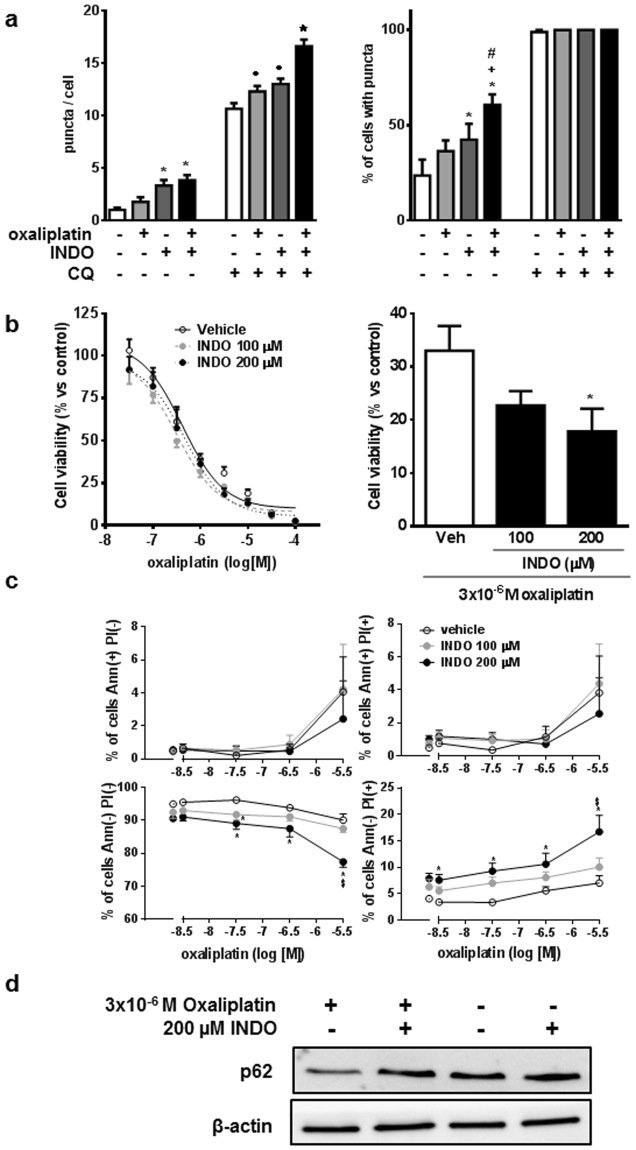
Indomethacin enhances oxaliplatin-induced apoptosis in AGS cells
2.2 Indomethacin Inhibits Cancer Cell Migration via Attenuation of Cellular Calcium Mobilization
Indomethacin (T0458) at a low dose of 5 μM did not inhibit EGF-induced COX-2 gene expression or protein levels but was sufficient to significantly block EGF-mediated cancer cell migration. While the gene expression and protein level of COX-2 remained unaffected, it was suggested that indomethacin may target the enzyme activity of COX-2.
Notably, indomethacin reduced intracellular calcium concentration by affecting calcium mobilization pathways, specifically through stimulation of endoplasmic reticulum calcium release and increased calcium entry into mitochondria, which collectively inhibited bulk cytosolic calcium concentration. This modulation of calcium signaling by Indomethacin involved small increases in intracellular calcium signals. These effects on calcium mobilization and signaling correlate with the inhibition of cancer cell migration observed in the study, suggesting that Indomethacin’s suppression of migration is linked to interference with calcium-dependent cellular mechanisms rather than suppression of COX-2 gene or protein expression.[4]
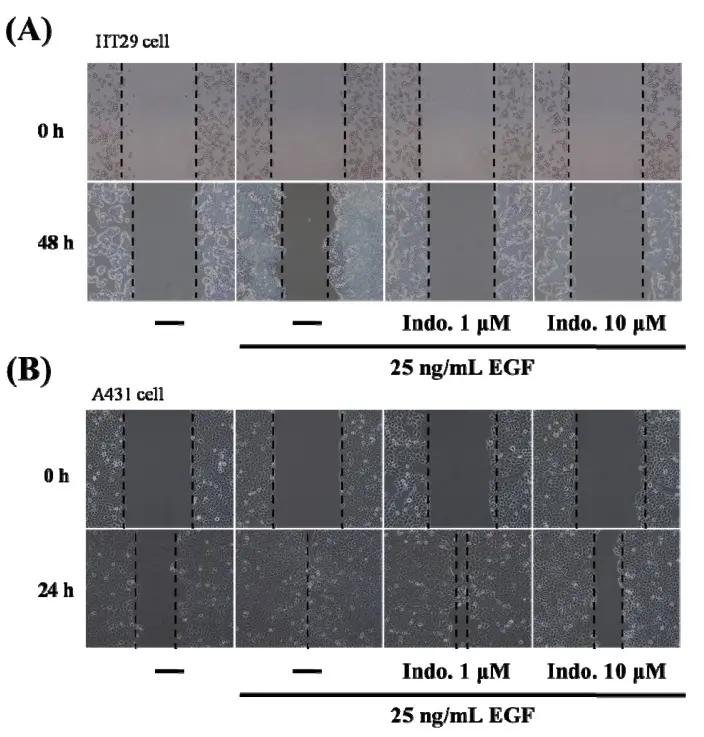
Indomethacin inhibits cell migration
Conclusion
Indomethacin primarily exerts its effects by non-selectively inhibiting cyclooxygenase enzymes COX-1 and COX-2, thereby reducing prostaglandin biosynthesis and downstream inflammatory signaling. Additionally, it modulates phospholipase A2, phosphodiesterases, and autophagy pathways, influencing cellular responses to stress and inflammation. Key findings demonstrate that Indomethacin disrupts autophagic flux in gastric cancer cells by inducing lysosomal dysfunction, which increases their sensitivity to cytotoxic drugs. It also inhibits cancer cell migration via attenuation of calcium mobilization without affecting COX-2 expression, and suppresses platelet activation to reduce thrombus formation during hemodialysis.
Future research could explore Indomethacin’s potential as a therapeutic agent targeting autophagy and calcium signaling in cancer, as well as its applications in preventing thrombosis in extracorporeal treatments. Further investigation into its blood-brain barrier permeability may expand its utility in neuroinflammation and neurodegenerative disease models.
Q&A
Q1: What is the main mechanism of action of Indomethacin?
A1: Indomethacin primarily acts by non-selectively inhibiting cyclooxygenase enzymes COX-1 and COX-2, reducing prostaglandin biosynthesis and inflammatory signaling.
Q2: How does Indomethacin affect autophagy in gastric cancer cells?
A2: Indomethacin disrupts autophagic flux by inducing lysosomal dysfunction, leading to autophagosome accumulation and increased sensitivity of gastric cancer cells to cytotoxic drugs.
Q3: What role does Indomethacin play in platelet activation and thrombus formation?
A3: Indomethacin suppresses platelet activation, inducing platelet spherification, which reduces thrombus volume during hemodialysis and delays clot formation.
Reference
[1] Vane JR, Botting RM. Mechanism of action of nonsteroidal anti-inflammatory drugs. Am J Med. 1998;104(3A):2S-8S.
[2] Ricciotti E, FitzGerald GA. Prostaglandins and inflammation. Arterioscler Thromb Vasc Biol. 2011 May;31(5):986-1000.
[3] Vallecillo-Hernández J, Barrachina M, Ortiz-Masiá D, Coll S, Esplugues J, Calatayud S, et al.. Indomethacin Disrupts Autophagic Flux by Inducing Lysosomal Dysfunction in Gastric Cancer Cells and Increases Their Sensitivity to Cytotoxic Drugs. Scientific Reports. 2018;8(1):.
[4] Guo Y, Chang C, Hsu W, Chiu S, Tsai Y, Chou Y, et al.. Indomethacin Inhibits Cancer Cell Migration via Attenuation of Cellular Calcium Mobilization. Molecules. 2013;18(6):6584-6596.

An essential round-up of science news, opinion and analysis, delivered to your inbox every weekday.
 Feedback
 Hello! How can I help you today?
Copyright © 2015-2026 TargetMol Chemicals Inc. All Rights Reserved.