












Shopping Cart
Remove All Your shopping cart is currently empty
TargetMol Star Molecule—Oxaliplatin (Cat. No. T0164, CAS 61825-94-3), A Platinum-Based DNA Cross-Linking Agent for DNA Damage Response and cGAS-STING Research
Background
Oxaliplatin (T0164) is a platinum-based DNA alkylating agent that exerts its biological effects primarily through the formation of DNA cross-links, which inhibit DNA synthesis and disrupt both replication and transcription processes. By covalently binding to DNA, Oxaliplatin induces inter- and intra-strand cross-links that create physical barriers to the progression of DNA polymerases and RNA polymerases, ultimately leading to replication fork stalling and transcriptional arrest. This DNA damage triggers a cascade of cellular responses, including activation of DNA damage checkpoints and induction of programmed cell death pathways such as apoptosis. In addition to these canonical effects, Oxaliplatin has been shown to induce autophagy, a cellular catabolic process that degrades damaged organelles and macromolecules, which may represent a cellular attempt to mitigate the cytotoxic stress induced by DNA cross-linking. The interplay between Oxaliplatin-induced DNA damage and autophagy involves complex signaling pathways, including the activation of DNA damage sensors and autophagy regulators, which dynamically modulate cell fate decisions. In research contexts, Oxaliplatin is widely utilized as a tool compound to investigate mechanisms of DNA damage response, replication stress, and the crosstalk between apoptosis and autophagy. Its ability to induce DNA cross-linking makes it valuable for studying the cellular consequences of replication interference and transcriptional inhibition. Furthermore, Oxaliplatin’s induction of autophagy provides a model to explore how autophagic pathways are engaged in response to genotoxic stress and how they influence cell survival or death. These properties render Oxaliplatin a critical reagent in molecular and cellular biology research focused on DNA/RNA synthesis pathways, DNA repair mechanisms, and programmed cell death signaling networks [1,2].
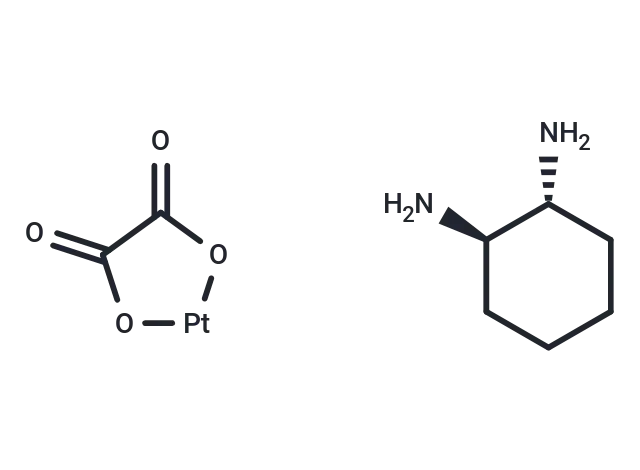
Molecular Structure of Oxaliplatin
Literature review
2.1 SIRT7-mediated NRF2 deacetylation promotes antioxidant response and protects against chemodrug-induced liver injury
Oxaliplatin(T0164) treatment induced significant reactive oxygen species (ROS) accumulation in wild type cells, an effect that was further exacerbated in SIRT7 knockout primary mouse hepatocytes (PMH). The study showed that Oxaliplatin significantly increased NRF2 protein levels and the expression of NRF2 target genes in vitro. However, knockout of SIRT7 impaired this Oxaliplatin-induced upregulation of NRF2 and its target genes. Cells lacking SIRT7 displayed increased cell death upon Oxaliplatin exposure as measured by TUNEL positivity. Conversely, overexpression of SIRT7 effectively reduced Oxaliplatin-induced ROS accumulation and cell death, effects that were reversed upon NRF2 knockdown. These findings indicate that Oxaliplatin elevates NRF2-dependent antioxidant responses, which are modulated by the presence of SIRT7, thereby influencing cellular oxidative stress and survival under Oxaliplatin exposure.[3]
2.2 Death domain-associated protein (Daxx) impairs colon cancer chemotherapy by inhibiting the cGAS-STING pathway
Oxaliplatin(T0164) in this study demonstrated a significant role in accelerating the degradation of the nuclear protein Daxx and reducing the formation of Daxx specks in colorectal cancer (CRC) cells. The genetic removal or knockdown of Daxx enhanced the suppressive effects of oxaliplatin on CRC cell proliferation and migration. Additionally, in a murine tumor model, Daxx knockdown potentiated oxaliplatin-mediated tumor growth inhibition by promoting the activation of the STING pathway and eliciting immune responses. Mechanistically, Daxx supports DNA damage repair through homologous recombination, which inhibits downstream activation of the cGAS-STING signaling cascade. Therefore, oxaliplatin’s induction of Daxx degradation facilitates cGAS-STING pathway activation, ultimately enhancing its anti-tumor effects by promoting immune responses and tumor growth suppression. This study reveals that oxaliplatin’s impact on Daxx modulation is a key factor in activating the cGAS-STING immune pathway and amplifying the drug’s inhibitory effects on tumor progression.[4]
Reference
[1] 1. Raymond E, Faivre S, Chaney S, Woynarowski JM, Cvitkovic E. Cellular and molecular pharmacology of oxaliplatin. Mol Cancer Ther. 2002;1(3):227-35.
[2] 2. Kanzawa T, Germano IM, Komata T, Ito H, Kondo Y, Kondo S. Role of autophagy in temozolomide-induced cytotoxicity for malignant glioma cells. Cell Death Differ. 2004;11(4):448-57.
[3] Yu T, Ding C, Peng J, Liang G, Tang Y, Zhao J, et al.. SIRT7-mediated NRF2 deacetylation promotes antioxidant response and protects against chemodrug-induced liver injury. Cell Death & Disease. 2025;16(1):.
[4] ZHU X, HUANG K, KAO X, TANG Z, GUO W, WU T, et al.. Death domain-associated protein (Daxx) impairs colon cancer chemotherapy by inhibiting the cGAS-STING pathway. Oncology Research. 2025;33(5):1149-1159.

An essential round-up of science news, opinion and analysis, delivered to your inbox every weekday.
 Feedback
 Hello! How can I help you today?
Copyright © 2015-2026 TargetMol Chemicals Inc. All Rights Reserved.