































Shopping Cart
Remove All Your shopping cart is currently empty
TargetMol Star Molecule—Neomycin sulfate (Cat. No. T0950, CAS 1405-10-3), suitable for prokaryotic screening, a reliable aminoglycoside antibiotic
Neomycin sulfate, T0950, CAS1405-10-3, also known as Framycin sulfate or Neomycin sulphate.
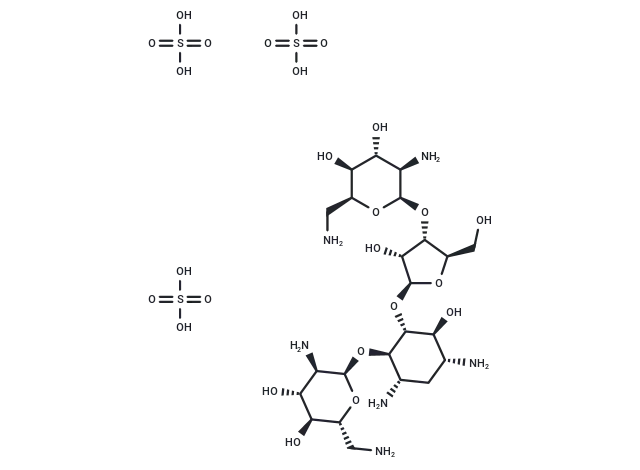
Molecular Structure of Neomycin Sulfate
1. Background
Aminoglycoside antibiotics are a class of basic antibiotics in which an aminocyclitol ring is linked to an amino sugar molecule via a glycosidic bond. They are primarily produced by microorganisms such as Streptomyces and Micrococcus and represent an indispensable category in clinical antimicrobial therapy. These drugs possess broad-spectrum antibacterial activity, particularly against aerobic Gram-negative bacilli, while also exhibiting inhibitory or bactericidal effects against certain Gram-positive bacteria. Due to their potent bactericidal effects, they play a crucial role in the treatment of severe bacterial
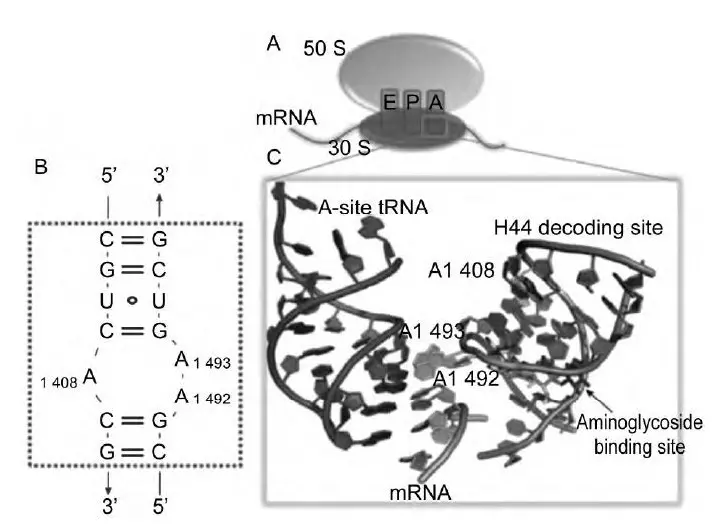
Aminoglycoside antibiotic binding site on the 16S rRNA [1]
The mechanism of action of neomycin sulfate is consistent with that of other aminoglycoside antibiotics; it is a bactericidal agent that acts on growing /log-phase bacteria. Its primary mechanism involves inhibiting bacterial protein synthesis while disrupting the barrier function of the bacterial cell membrane, ultimately leading to bacterial death. The specific process consists of three key steps:
1. Inhibition of the initiation phase of protein synthesis: After the drug is actively transported across the bacterial cell membrane, it irreversibly binds to the 16S rRNA of the 30S ribosomal subunit of the bacterial ribosome, interfering with the formation of the initiation complex between mRNA and the 30S subunit and preventing the initiation of protein synthesis;
2. Interference with the peptide chain elongation process: After binding to the 30S subunit of the ribosome, it causes structural distortion of the ribosomal A site, leading to miscoding of the mRNA and the synthesis of abnormal or non-functional proteins;
3. Blocking the termination phase of protein synthesis: It prevents termination factors from entering the A site of the ribosome, thereby preventing the release of the peptide chain and the dissociation of the 70S ribosomal subunits, completely halting protein synthesis. Simultaneously, the abnormal proteins become embedded in the bacterial cell membrane, leading to increased membrane permeability. The bacteria die as a result of nutrient leakage and metabolic disruption.
2. Selected Literature
2.1 Article Titles

Study Overview: This study demonstrates that neomycin sulfate induces reactive oxygen species (ROS) accumulation and apoptosis by inhibiting the PI3K/Akt signaling pathway, significantly disrupting the development of the cardiovascular and hematopoietic systems in zebrafish larvae and leading to systemic morphological abnormalities and impaired motor function; It was also found that even at environmentally relevant concentrations, clear developmental toxicity can occur, suggesting that exposure to neomycin sulfate poses potential risks to early embryonic development, thereby providing critical experimental evidence for clinical safety management and environmental risk assessment. [2]
This study confirms that at environmentally relevant concentrations, neomycin sulfate can induce excessive ROS accumulation and apoptosis in zebrafish larvae by inhibiting the PI3K/Akt signaling pathway, thereby causing systemic developmental malformations, damage to cardiovascular structure and function, suppression of the hematopoietic system, and reduced motor ability. Molecular docking analysis revealed that neomycin sulfate directly binds to PI3Kα and Akt1, indicating clear developmental toxicity in early embryos. This provides important experimental evidence for the clinical safety of neomycin sulfate, risk management during pregnancy, and the assessment of its environmental and ecological hazards.
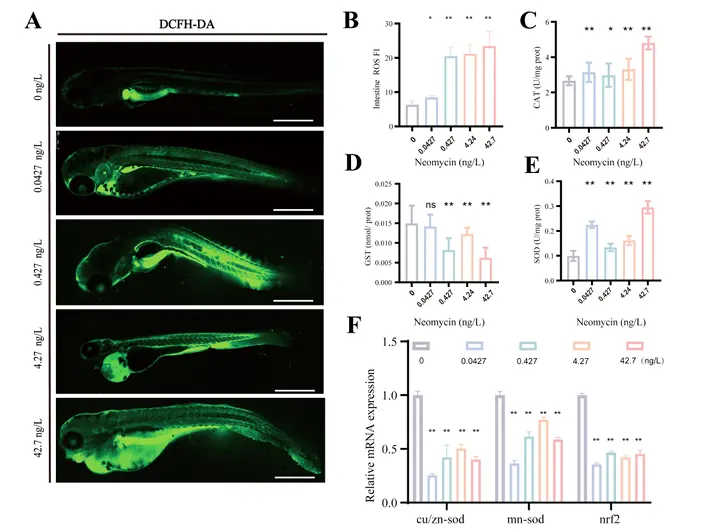
Neomycin-Induced Systemic Apoptosis in Zebrafish
2.2 Article Title:Neomycin Sulfate Improves the Antimicrobial Activity of Mupirocin-Based Antibacterial Ointments

Study Overview: This study demonstrated that neomycin sulfate significantly enhances the antibacterial activity of mupirocin by inhibiting the RNase P function of Staphylococcus aureus, with the combination of the two agents exhibiting an additive effect; In mouse models of nasal colonization clearance and skin wound infection, this compound ointment demonstrated significantly superior efficacy compared to mupirocin alone. It effectively overcomes low- and high-level mupirocin-resistant strains, MRSA, and neomycin-resistant strains, without affecting wound healing and with good safety, providing a novel topical combination strategy for the prevention and control of clinically resistant Staphylococcus aureus infections. [3]
In this study, three strains of Staphylococcus aureus and BALB/c mice were used as models. A PEG-based matrix was employed to prepare 2% mupirocin, 1% neomycin sulfate, and their combination ointment. Efficacy was evaluated through screening of the FDA drug library, MIC/FIC determination, zone of inhibition assays, RNase P activity experiments, and mouse nasal/wound infection models. The results demonstrated that neomycin significantly enhances the antibacterial activity of mupirocin by inhibiting the RNase P function of Staphylococcus aureus.
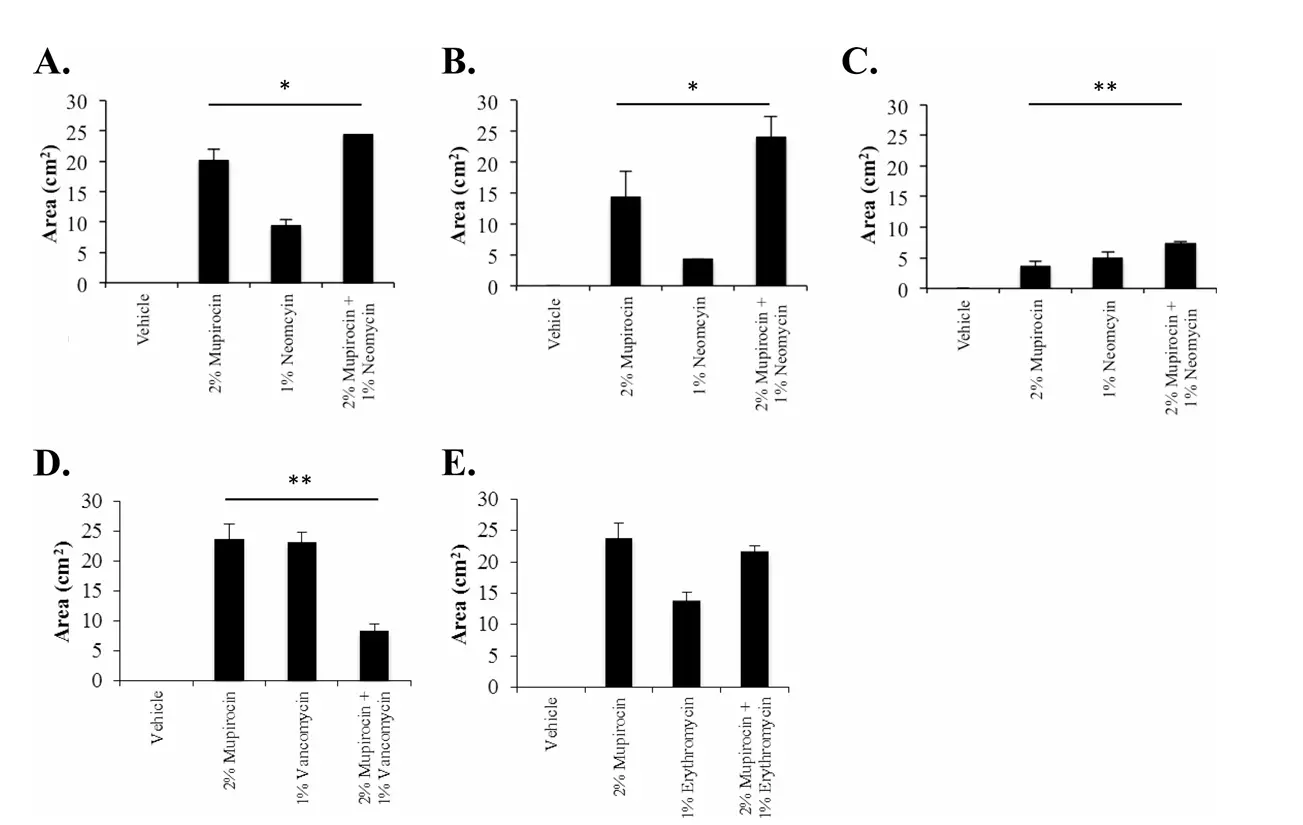
Neomycin Inhibits function of Staphylococcus aureus RNase P
2.3 Article Title

Research Overview: This study utilized PVA/PVP/SA as the matrix and employed the freeze-thaw method to prepare a neomycin sulfate-loaded hydrogel dressing; The optimized formulation (drug:PVA:PVP:SA = 1:10:0.8:0.8) exhibits high swelling capacity, strong adhesion, good mechanical properties, and rapid drug release; in a diabetic rat wound model, this dressing demonstrated significantly superior wound-healing effects compared to commercially available products, accelerating epithelialization and eliminating granulation tissue, thereby providing a safe and effective novel dressing solution for infected wounds.
In this study, a neomycin sulfate hydrogel dressing was prepared using PVA, PVP, and SA as a composite matrix via the freeze-thaw method, with a fixed drug-to-PVA ratio and an optimized formulation. In vitro evaluations of swelling, mechanical properties, adhesion, and drug release performance were conducted. A dorsal wound model was established in STZ-induced diabetic rats to assess healing efficacy. The results showed that the formulation with a PVA/PVP/SA ratio of 10:0.8:0.8 exhibited the best overall performance, with rapid and complete drug release. The healing rate of the drug-loaded hydrogel was significantly higher than that of commercially available products and the control group. Histopathological analysis revealed complete epithelialization and regression of granulation tissue, indicating good potential for clinical application.
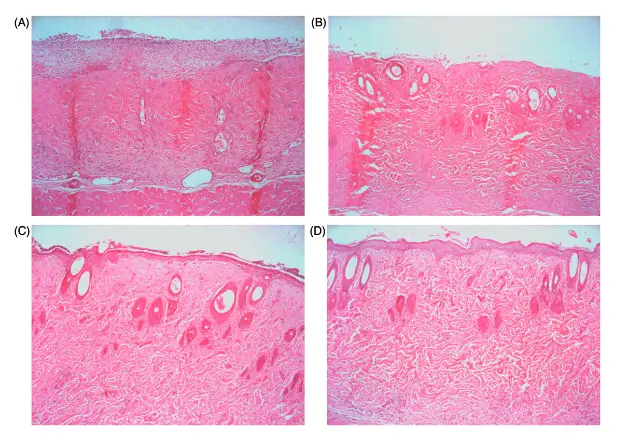
The wound in the drug-loaded group has completely scabbed over, and epidermal regeneration is normal.
References
[1]许桓,唐春雷,范为正.氨基糖苷类抗生素的研究进展[J].中国新药杂志,2019(15):8.DOI:10.3969/j.issn.1003-3734.2019.15.008.
[2]Lin Y,Zhang Q,Chen L,et al.Neomycin affects cardiovascular and hematopoietic system via the PI3K/Akt pathway in zebrafish larvae.Ecotoxicol Environ Saf.2025,296:118203.doi:10.1016/j.ecoenv.2025.118203
[3]Blanchard C,Brooks L,Beckley A,Colquhoun J,Dewhurst S,Dunman PM.Neomycin Sulfate Improves the Antimicrobial Activity of Mupirocin-Based Antibacterial Ointments.Antimicrob Agents Chemother.2015,60(2):862-872.Published2015Nov23.doi:10.1128/AAC.02083-15
[4]Choi JS,Kim DW,Kim DS,et al.Novel neomycin sulfate-loaded hydrogel dressing with enhanced physical dressing properties and wound-curing effect.Drug Deliv.2016,23(8):2806-2812.doi:10.3109/10717544.2015.1089958
An essential round-up of science news, opinion and analysis, delivered to your inbox every weekday.
 Feedback
 Hello! How can I help you today?
Copyright © 2015-2026 TargetMol Chemicals Inc. All Rights Reserved.

![[TargetMol Star Molecule] - Meropenem: Targeting Bacterial Cell Wall Synthesis to Combat Multidrug Resistance](https://cdn.targetmol.com/group9/newyun/20260525/s/daloama4neet9vcastg3rvjes.png)
![[TargetMol Star Molecule] - Acarbose: A Key Enzyme Inhibitor Modulating Blood Glucose and Metabolic Pathways](https://cdn.targetmol.com/group9/newyun/20260525/c/17dqa1mmpq3ysri7zb6kubu5f.png)