































Shopping Cart
Remove All Your shopping cart is currently empty
[TargetMol Star Molecule] - Acarbose: A Key Enzyme Inhibitor Modulating Blood Glucose and Metabolic Pathways
Background
Acarbose (T0247), CAS: 56180-94-0, is a potent inhibitor of α-glucosidase enzymes, exhibiting an IC50 of approximately 11 nM.
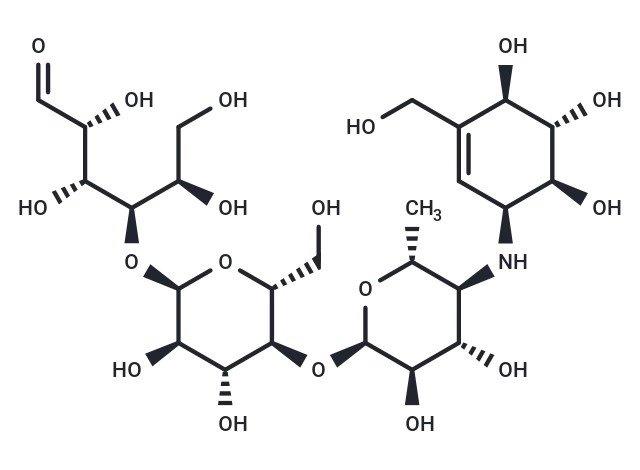
Molecular formula of acarbose
α-Glucosidases are key enzymes involved in the hydrolysis of terminal, non-reducing α-1,4-linked glucose residues in oligosaccharides, facilitating the final step of carbohydrate digestion in the small intestine. By competitively inhibiting these enzymes, Acarbose effectively delays the breakdown of complex carbohydrates into absorbable monosaccharides, thereby modulating postprandial glucose levels.
This biochemical interaction occurs within the glucosidase/glycosidase pathway, which plays a critical role in carbohydrate metabolism and glucose homeostasis. The pathway’s key components include various α-glucosidase isoforms localized on the brush border of enterocytes, which catalyze the cleavage of maltose, maltotriose, and other oligosaccharides into glucose units.
In a research context, Acarbose serves as a valuable tool for dissecting the enzymatic mechanisms underlying carbohydrate digestion and absorption. Its high specificity and potency allow for precise modulation of α-glucosidase activity, enabling studies on glucose flux, intestinal enzyme kinetics, and the downstream effects on insulin signaling pathways.
Moreover, Acarbose’s ability to enhance the hypoglycemic effect of sulfonylureas or insulin in experimental models underscores its utility in investigating synergistic interactions within glucose regulatory networks. By attenuating the rate of glucose release into the bloodstream, Acarbose indirectly influences signaling cascades associated with glucose sensing and insulin secretion, providing insights into metabolic regulation and potential dysregulation in diabetic states.
The dynamic interaction of Acarbose with the glucosidase pathway exemplifies a targeted enzymatic inhibition that alters substrate availability and metabolic flux. This modulation can be exploited to study the temporal dynamics of postprandial glucose excursions and their impact on cellular signaling pathways, including those mediated by insulin receptor substrates and downstream effectors such as PI3K and AKT. Furthermore, Acarbose’s role in research extends to exploring the gut microbiota’s response to altered carbohydrate digestion, as undigested oligosaccharides reach the colon and influence microbial composition and metabolite production.
Overall, Acarbose (T0247) is a critical biochemical probe for elucidating the functional roles of α-glucosidases within the glucosidase/glycosidase pathway and for investigating the complex interplay between carbohydrate metabolism and glucose regulatory mechanisms. Its application in experimental settings facilitates a deeper understanding of enzymatic control points and metabolic adaptations relevant to glucose homeostasis and related pathophysiological conditions. [1,2]
Literature review
2.1 Pleiotropic effects of acarbose on atherosclerosis development in rabbits are mediated via upregulating AMPK signals
Acarbose (T0247) exerts inhibitory effects on atherosclerosis development in rabbits by multiple mechanisms. In vivo, treatment with Acarbose significantly reduced the severity of aortic atheroma and diminished neointimal expression of α-actin, proliferating cell nuclear antigen (PCNA), interleukin-6 (IL-6), tumor necrosis factor alpha (TNF-α), Ras, and β-galactosidase, which are associated with inflammation, cell proliferation, and senescence.
Concurrently, Acarbose increased the expression of inducible nitric oxide synthase (iNOS) and phosphorylated AMP-activated protein kinase (p-AMPK), key markers linked to vascular homeostasis. Importantly, serum levels of glucose, total cholesterol, and LDL cholesterol remained unaffected by Acarbose treatment. Complementary in vitro experiments with TNF-α-treated A7r5 vascular smooth muscle cells demonstrated that Acarbose dose-dependently decreased the expression of β-galactosidase and Ras while increasing p-AMPK expression. Furthermore, Acarbose restored p-AMPK and iNOS levels in cells inhibited for AMPK and iNOS, respectively.
These findings collectively indicate that Acarbose inhibits atherosclerosis progression by reducing inflammation, cellular senescence, and vascular smooth muscle cell proliferation and migration through upregulating AMPK signaling pathways.[3]
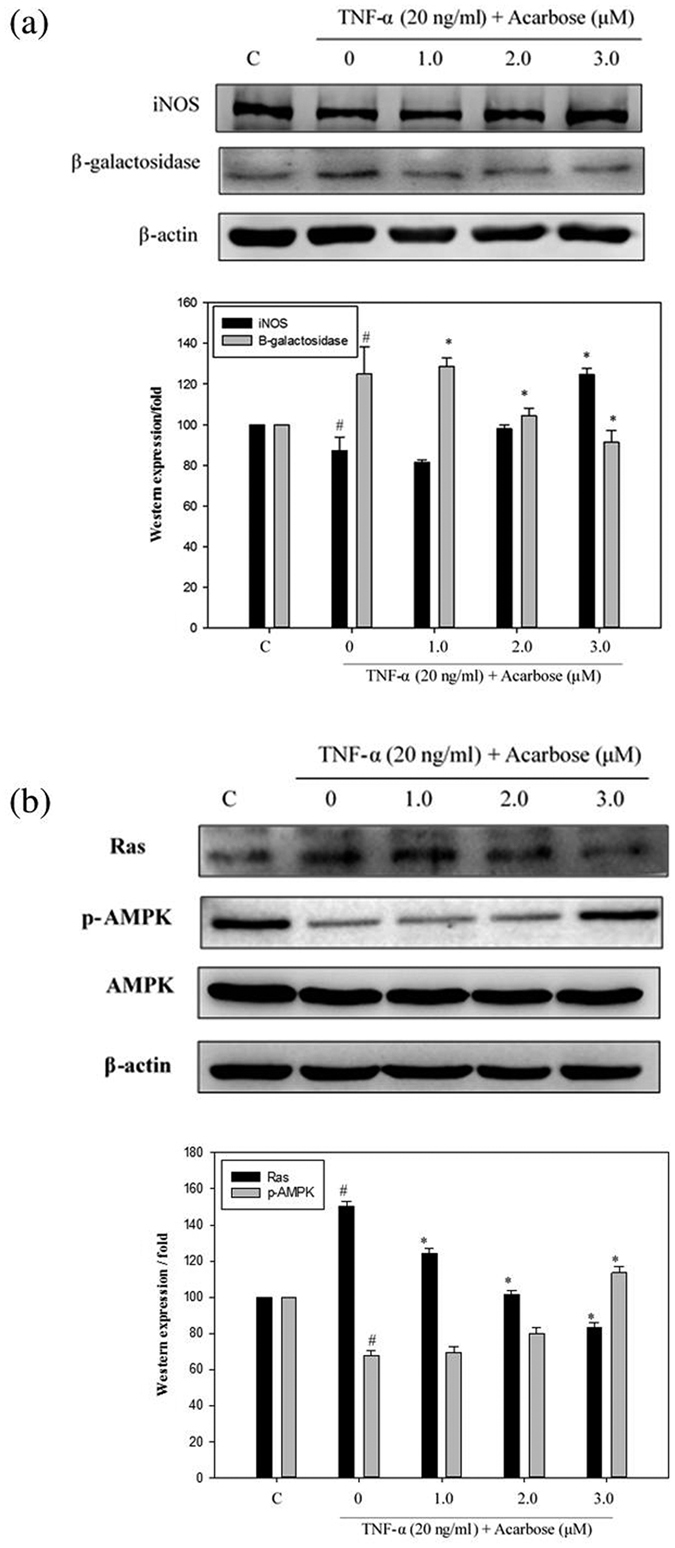
The effect of acarbose on the expression of iNOS and β-galactosidase in A7r5 cells
24 hours after pretreatment with TNF-α
2.2 Acarbose Reduces Blood Glucose by Activating miR-10a-5p and miR-664 in Diabetic Rats
Acarbose (T0247) significantly decreased fasting blood glucose in diabetic rats after 8 weeks of treatment. Both low dose and high dose acarbose groups exhibited significant reductions in blood glucose at 30, 60, and 120 minutes following oral glucose administration during oral glucose tolerance tests. The high dose acarbose group showed up-regulation of specific miRNAs including miR-151*, miR-10a-5p, miR-205, miR-17-5p, miR-145, and miR-664, while miR-541 and miR-135b were down-regulated. These miRNA changes were associated with suppression of proinflammatory cytokines IL6 and TNF and the signaling molecule MAPK1 in the ileum, verified by real-time PCR and immunohistochemistry.
Specifically, acarbose activated miR-10a-5p and miR-664, leading to down-regulation of IL6, TNF, and MAPK1 expression. Immunohistochemical analysis demonstrated statistically significant decreases in the immunoreactivities of TNF-a, IL-6, and MAPK1 proteins in the ileum tissue of the high dose acarbose group. These findings demonstrate that acarbose reduces blood glucose levels and suppresses intestinal expression of inflammatory cytokines and signaling molecules through modulation of miRNA expression.[4]
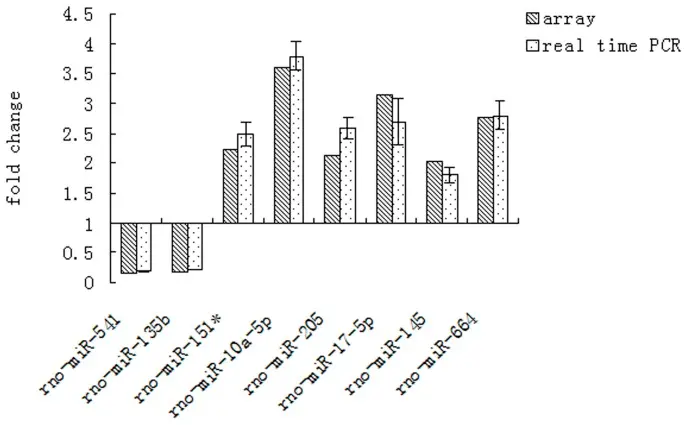
Differential miRNA Expression in Gene Arrays and qPCR
2.3 Discovery of TRPV4-Targeting Small Molecules with Anti-Influenza Effects Through Machine Learning and Experimental Validation
Acarbose (T0247) demonstrated a significant effect in slowing the rate of weight loss in virus-infected mice, indicating a protective role against infection-associated weight decline. While the study compared several drug candidates, acarbose was explicitly identified alongside other compounds to slow weight loss in infected animals; however, no explicit mention was made of improved survival rates, viral load reduction, or histopathological improvements specifically for acarbose. Taken together, within the scope of this research, acarbose exerted a protective effect reflected primarily by the attenuation of weight loss in infected mice.[5]
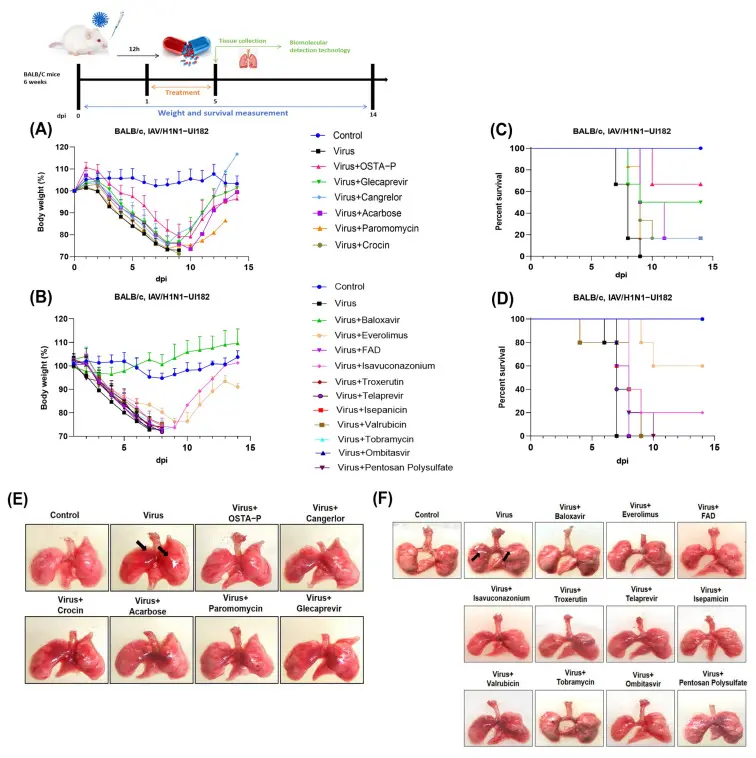
Drug candidates for mice infected with the deadly H1N1 virus
Conclusion
Acarbose functions as a potent competitive inhibitor of α-glucosidase enzymes, delaying the hydrolysis of complex carbohydrates into absorbable glucose units and thus regulating postprandial blood glucose levels. Literature findings demonstrate its multifaceted biological effects, including inhibition of atherosclerosis progression via upregulation of AMPK signaling, reduction of blood glucose through activation of specific miRNAs that suppress intestinal inflammation, and a protective role in viral infection models by mitigating weight loss.
Additionally, Acarbose serves as a benchmark compound in α-glucosidase inhibition assays. Future research could explore its synergistic potential with other antidiabetic agents, detailed mechanisms underlying miRNA-mediated anti-inflammatory effects, and its influence on gut microbiota dynamics. Further investigation into its broader metabolic and immunomodulatory roles may also enhance therapeutic applications.
Q&A
Q1: What is the primary mechanism by which Acarbose regulates blood glucose levels?
A1: Acarbose competitively inhibits α-glucosidase enzymes in the small intestine, delaying the breakdown of complex carbohydrates into glucose, thereby modulating postprandial blood glucose levels.
Q2: How does Acarbose influence atherosclerosis development according to the literature?
A2: Acarbose inhibits atherosclerosis progression by upregulating AMPK signaling, which reduces inflammation, cellular senescence, and vascular smooth muscle cell proliferation and migration.
Q3: What role do miRNAs play in Acarbose’s hypoglycemic effect in diabetic rats?
A3: Acarbose activates miR-10a-5p and miR-664, leading to down-regulation of proinflammatory cytokines IL6 and TNF and signaling molecule MAPK1 in the ileum, which contributes to reduced blood glucose levels.
Reference
[1] Lenzen S. The mechanisms of alloxan- and streptozotocin-induced diabetes. Diabetologia. 2008;51(2):216-226.
[2] Kato Y, et al. Acarbose, an α-glucosidase inhibitor, enhances insulin secretion in pancreatic β-cells. J Pharmacol Sci. 2010;114(1):69-75.
[3] Chan K, Yu M, Lin M, Huang C, Chung D, Lee Y, et al.. Pleiotropic effects of acarbose on atherosclerosis development in rabbits are mediated via upregulating AMPK signals. Scientific Reports. 2016;6(1):.
[4] Zhang Q, Xiao X, Li M, Li W, Yu M, Zhang H, et al.. Acarbose Reduces Blood Glucose by Activating miR-10a-5p and miR-664 in Diabetic Rats. PLoS ONE. 2013;8(11):e79697.
[5] Sun Y, Wu J, Shen B, Yang H, Cui H, Han W, et al.. Discovery of TRPV4-Targeting Small Molecules with Anti-Influenza Effects Through Machine Learning and Experimental Validation. International Journal of Molecular Sciences. 2025;26(3):1381.
[6] Chen X, Lin L, Zhao J, Chen L, Tang Y, Luo D, et al.. Isolation, Structural Elucidation, and α-Glucosidase Inhibitory Activities of Triterpenoid Lactones and Their Relevant Biogenetic Constituents from Ganoderma resinaceum. Molecules. 2018;23(6):1391.
An essential round-up of science news, opinion and analysis, delivered to your inbox every weekday.
 Feedback
 Hello! How can I help you today?
Copyright © 2015-2026 TargetMol Chemicals Inc. All Rights Reserved.
![[TargetMol Star Molecule] - Meropenem: Targeting Bacterial Cell Wall Synthesis to Combat Multidrug Resistance](https://cdn.targetmol.com/group9/newyun/20260525/s/daloama4neet9vcastg3rvjes.png)
![[TargetMol Star Molecule] - Acarbose: A Key Enzyme Inhibitor Modulating Blood Glucose and Metabolic Pathways](https://cdn.targetmol.com/group9/newyun/20260525/c/17dqa1mmpq3ysri7zb6kubu5f.png)
![[TargetMol Star Molecule] - Artesunate: A Multifunctional Modulator of Ferroptosis, Immunity, and Viral Protease Inhibition](https://cdn.targetmol.com/group9/newyun/20260525/v/2pda6kh6imzsy1lskw0ptgitt.png)
![[TargetMol Star Molecule] - Probenecid: A Multifunctional Modulator of Ion Channels and Pathogen Mechanisms](https://cdn.targetmol.com/group9/newyun/20260525/k/cy2l4fpvt8fzekalm45rwxr1.png)