































Shopping Cart
Remove All Your shopping cart is currently empty
TargetMol—Natural Product—Bleomycin Sulfate (Cat. No. T6116, CAS. 9041-93-4), DNA-cutting scissors
1. Product Introduction
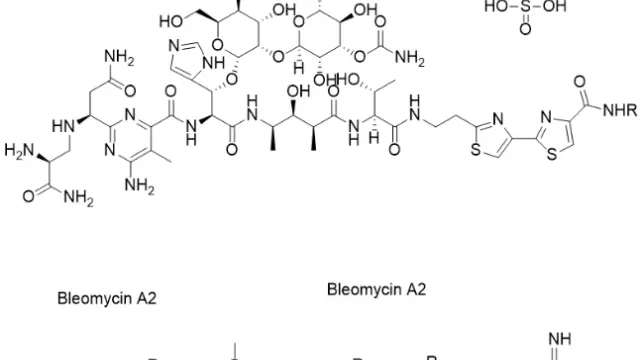
Bleomycin Sulfate (Cat. No. T6116, CAS. 9041-93-4), also known as NSC125066, Blenoxane. Bleomycin Sulfate is a glycopeptide antibiotic with antitumor activity. It is a commonly used DNA-damaging agent and DNA synthesis inhibitor. It works by causing DNA strand breaks without affecting the RNA strand. Bleomycin Sulfate is commonly used in antitumor research and is also widely used in the establishment of animal models of pulmonary fibrosis.
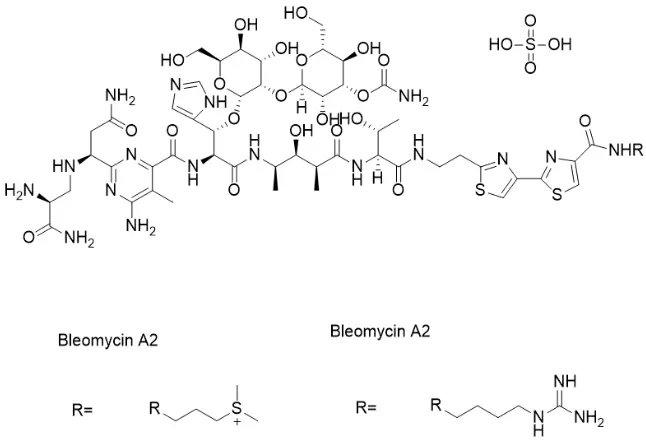
Molecular structure of Bleomycin Sulfate
2. Background Introduction
The targets of many antitumor drugs are often the key biological macromolecules or signaling pathways in cells, and their imbalance will lead to tumor characteristics such as uncontrolled cell proliferation and apoptosis inhibition. Among them, DNA, as the core carrier of cell division and gene expression, is a highly lethal antitumor drug target. DNA-damaging drugs interfere with DNA replication and transcription by binding to DNA, triggering strand breaks or cross-linking, thereby preventing tumor cell proliferation and inducing its death. Such strategies are widely used in clinical practice, mainly using the characteristics of active tumor cell division and sensitivity to DNA damage to achieve curative effect. Its typical representatives include alkylating agents, platinum compounds and antitumor antibiotics ( such as actinomycin ), which directly destroy DNA structure through different chemical reactions, thereby stimulating cell stress response and inducing apoptosis. [1]
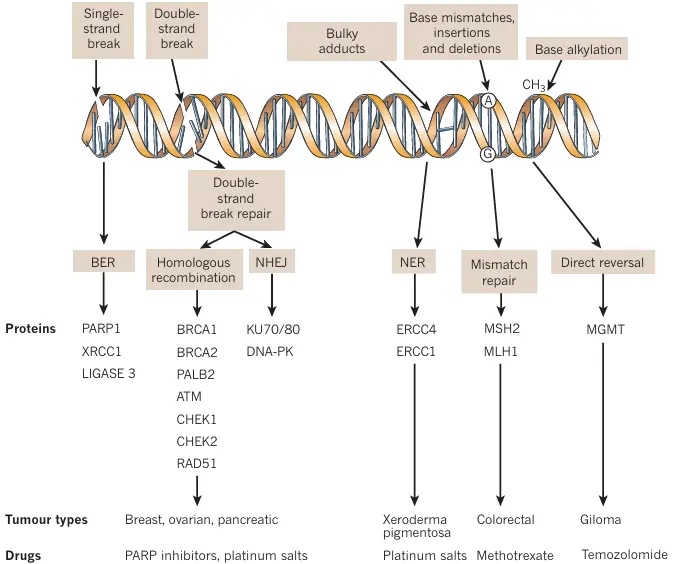
Multiple DNA repair mechanisms maintain genomic stability [1]
Bleomycin Sulfate is a glycopeptide antibiotic with potent antitumor activity against a variety of lymphomas, head and neck cancers, and germ cell tumors. The therapeutic effect of bleomycin is limited by the occurrence of pulmonary fibrosis. The cytotoxicity and mutagenic effects of bleomycin are considered to be related to its ability to mediate single-strand and double-strand DNA damage, which requires the presence of specific cofactors ( transition metals, oxygen, and single-electron reducing agents ). Advances in understanding the mechanism of therapeutic effect of bleomycin and its biosynthetic pathway have laid a foundation for the development of more potent and less toxic therapeutic drugs. [2]
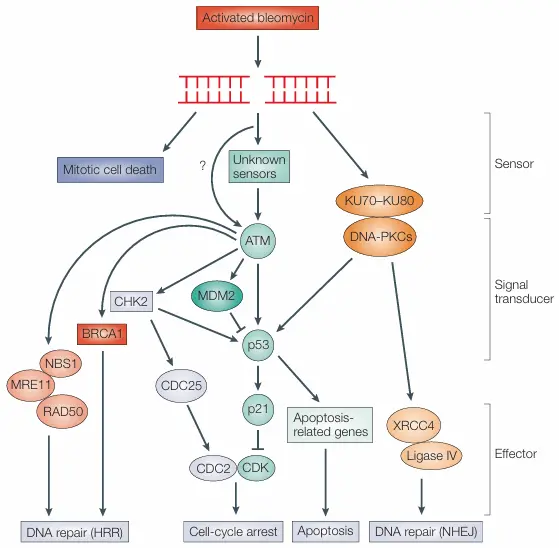
Intracellular response network to Bleomycin damage [2]
3. Application References
ROS-mediated lysosomal membrane permeabilization and autophagy inhibition regulate bleomycin-induced cellular senescence
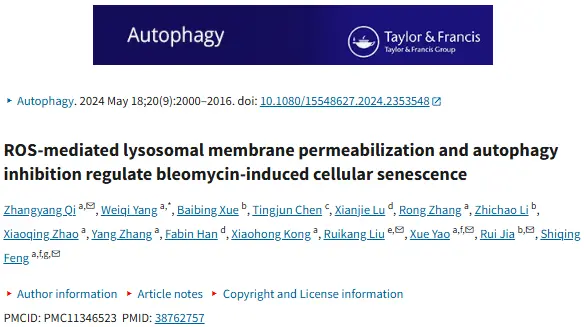
Research Overview:
This study explored the mechanism of Bleomycin-induced cell senescence. Reactive oxygen species (ROS) produced during Bleomycin activation impedes autophagy flux by inducing lysosomal membrane permeabilization (LMP) and hindering lysosomal degradation. Through in vitro cell models, it was found that Bleomycin treatment significantly increased intracellular ROS levels, which in turn triggered lysosomal membrane rupture, allowing proteases in the lysosome to be released into the cytoplasm, leading to lysosomal dysfunction. At the same time, ROS excess and LMP events inhibit autophagy flux, so that damaged organelles and metabolic waste cannot be effectively removed, forming a continuous cellular stress state. This study reveals that Bleomycin-induced cell senescence is not only dependent on its classical DNA cleavage, but also through ROS-mediated lysosomal homeostasis destruction and autophagy imbalance to synergistically amplify damage signals, which provides new molecular evidence for understanding the cytotoxicity of Bleomycin and its mechanism of action in fibrosis and aging-related disease models. [3]
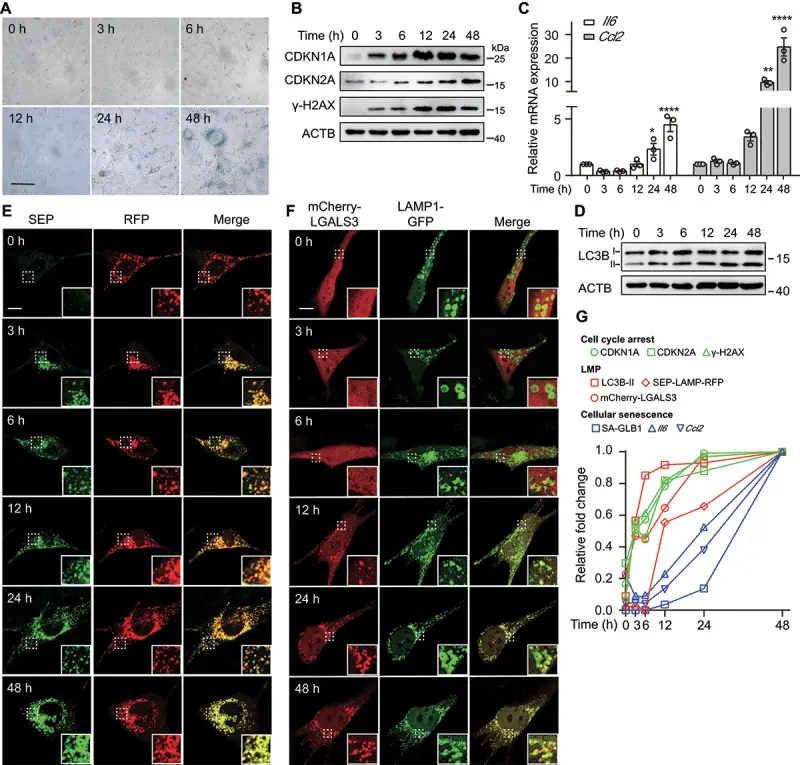
Bleomycin-induced LMP and autophagy defects precede cell senescence [3]
Asparaginase and Autophagy Inhibitors Effectively Remove Senescent Cells by Synergistically Limiting Asparagine Supply
Research Overview:
This study explored a new strategy for synergistic clearance of senescent cells through metabolic restriction and autophagy inhibition. Studies have found that senescent cells are highly dependent on asparagine at the metabolic level to maintain protein homeostasis and viability, and the supply of exogenous asparagine plays a key role in it. The use of asparaginase to deplete extracellular asparagine, combined with autophagy inhibitors to block the ability of cells to recover amino acids through the autophagy pathway, can limit the source of asparagine in senescent cells at a double level. The results showed that the synergistic intervention of ' nutritional deprivation + autophagy blockade ' significantly reduced the survival rate of senescent cells, but had little effect on normal cells. Mechanistically, this strategy leads to blocked protein synthesis, increased metabolic stress, and collapse of intracellular amino acid homeostasis, and ultimately selectively induces senescent cell death. This study proposes a senolytic strategy based on metabolic vulnerability, which provides a new experimental basis for the intervention of aging-related diseases. [4]
In this study, Bleomycin ( Cat. No. T6116 ) was used as a tool drug to construct an oxidative stress-DNA damage cell senescence model to reveal the mechanism of lysosomal homeostasis and autophagy imbalance in senescence. Researchers used Bleomycin as a classic DNA damage and oxidative stress-inducing drug to stably trigger ROS overproduction and DNA breakage in an in vitro cell model, thereby establishing a repeatable aging model.
4. References
[1] Lord CJ, Ashworth A. The DNA damage response and cancer therapy. Nature. 2012 Jan 18;481(7381):287-94. doi: 10.1038/nature10760
[2] Chen J, Stubbe J. Bleomycins: towards better therapeutics. Nat Rev Cancer. 2005 Feb;5(2):102-12. doi: 10.1038/nrc1547
[3] Qi Z, Yang W, Xue B, Chen T, Lu X, Zhang R, Li Z, Zhao X, Zhang Y, Han F, Kong X, Liu R, Yao X, Jia R, Feng S. ROS-mediated lysosomal membrane permeabilization and autophagy inhibition regulate bleomycin-induced cellular senescence. Autophagy. 2024 Sep;20(9):2000-2016. doi: 10.1080/15548627.2024.2353548. Epub 2024 May 18. PMID: 38762757; PMCID: PMC11346523.
[4] Huang Z, Liu X, Zhou X, Chen K, Diao H, Wang M, Wei J, Li Z, Yang Y, Mao Z, Yu W. Asparaginase and Autophagy Inhibitors Effectively Remove Senescent Cells by Synergistically Limiting Asparagine Supply. Aging Cell. 2025 Oct;24(10):e70203. doi: 10.1111/acel.70203
An essential round-up of science news, opinion and analysis, delivered to your inbox every weekday.
 Feedback
 Hello! How can I help you today?
Copyright © 2015-2026 TargetMol Chemicals Inc. All Rights Reserved.
![[TargetMol Star Molecule] - Meropenem: Targeting Bacterial Cell Wall Synthesis to Combat Multidrug Resistance](https://cdn.targetmol.com/group9/newyun/20260525/s/daloama4neet9vcastg3rvjes.png)
![[TargetMol Star Molecule] - Acarbose: A Key Enzyme Inhibitor Modulating Blood Glucose and Metabolic Pathways](https://cdn.targetmol.com/group9/newyun/20260525/c/17dqa1mmpq3ysri7zb6kubu5f.png)
![[TargetMol Star Molecule] - Artesunate: A Multifunctional Modulator of Ferroptosis, Immunity, and Viral Protease Inhibition](https://cdn.targetmol.com/group9/newyun/20260525/v/2pda6kh6imzsy1lskw0ptgitt.png)
![[TargetMol Star Molecule] - Probenecid: A Multifunctional Modulator of Ion Channels and Pathogen Mechanisms](https://cdn.targetmol.com/group9/newyun/20260525/k/cy2l4fpvt8fzekalm45rwxr1.png)