






























Shopping Cart
Remove All Your shopping cart is currently empty
TargetMol—Signaling Pathway—Ferrostatin-1 (Cat. No. T6500, CAS. 347174-05-4), an Important Inhibitor of Ferroptosis
1. Product Introduction
Ferrostatin-1 (Cat. No. T6500, CAS. 347174-05-4), also known as Ferrostatin-1 (Fer-1), Ferrostatin-1. Ferrostatin-1 (Fer-1) is a potent and selective ferroptosis inhibitor. Ferrostatin-1 effectively inhibited Erastin-induced ferroptosis in HT-1080 cells (EC50 = 60 nM). Ferrostatin-1 also has antioxidant and antifungal activities.
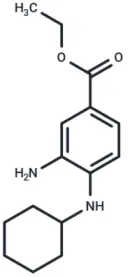
Molecular structure of Ferrostatin-1
2. Background Introduction
Ferrostatin-1 (Fer-1) is a synthetic small molecule ferroptosis inhibitor, which was first identified by high-throughput screening to effectively inhibit cell death caused by iron-dependent lipid peroxidation. Ferroptosis is a non-apoptotic form of programmed cell death driven by iron ions and lipid peroxidation. Unlike traditional apoptosis and necrosis, ferroptosis has important biological significance in tumors, physiological stress and neurodegenerative diseases. Fer-1 can significantly inhibit Erastin-induced ferroptosis in HT-1080 cells in vitro, showing high efficiency and selectivity, and is an important tool molecule for studying the mechanism of ferroptosis.
The main mechanism of Fer-1 is to block the key driving process of ferroptosis (lipid peroxidation). The core trigger of ferroptosis is the formation of lipid peroxides catalyzed from cellular membrane polyunsaturated fatty acids (PUFAs) by iron-dependent reactions. The accumulation of these peroxides destroys membrane integrity and eventually leads to cell death. As a fat-soluble antioxidant, Fer-1 can directly scavenge or neutralize free radicals produced by lipid peroxidation, block the chain reaction of lipid peroxidation, thereby protecting cell membrane structure and inhibiting ferroptosis. [1]
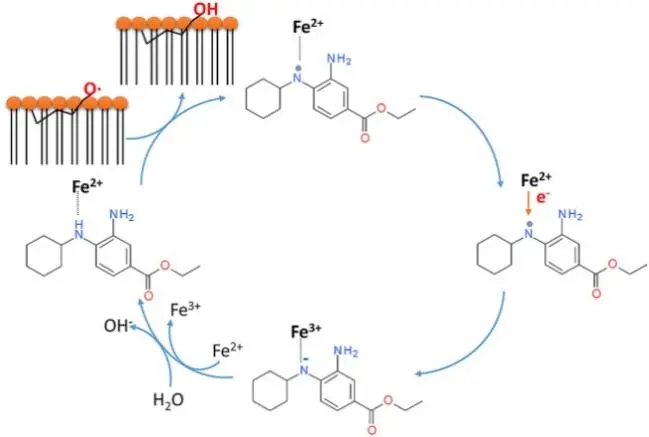
The mechanism of Fer-1 inhibiting ferroptosis [1]
3. Application References
Ferrostatin-1 attenuates pathological angiogenesis in oxygen-induced retinopathy via inhibition of ferroptosis
Research Overview:
This study evaluated the effect of Ferrostatin-1 on pathological angiogenesis in a mouse model of oxygen-induced retinopathy (OIR). It was found that there were significant iron-dependent lipid peroxidation and ferroptosis in retinal tissue under OIR conditions, including down-regulation of GPX4, inhibition of SLC7A11 expression and accumulation of lipid peroxidation products. After treatment with Ferrostatin-1, these ferroptosis markers were significantly reversed, the level of lipid peroxidation decreased, and the area of abnormal retinal neovascularization decreased significantly, suggesting that ferroptosis is involved in pathological angiogenesis. The results suggest that iron-dependent ferroptosis is involved in pathological angiogenesis and may be a promising target for ROP treatment. [2]
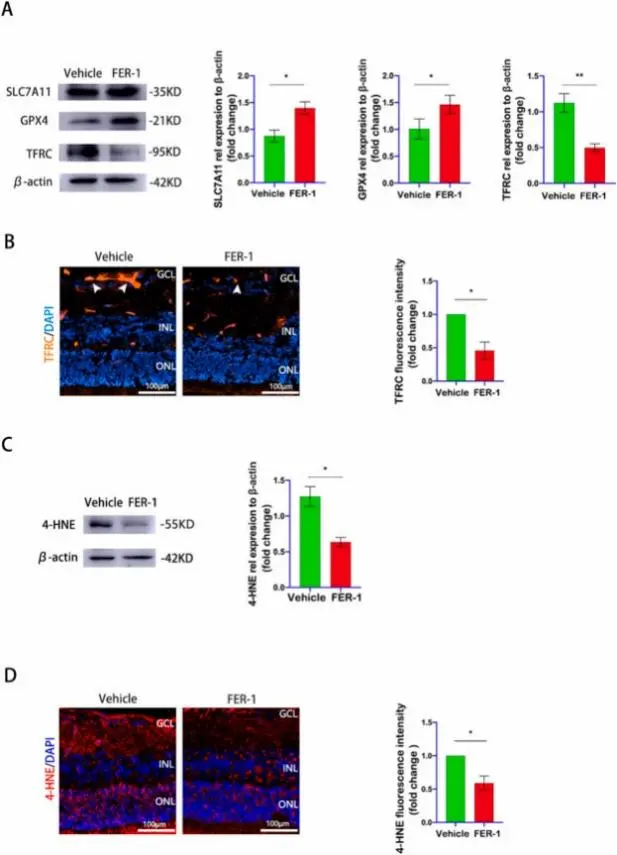
Fer-1 inhibited ferroptosis in the retina of OIR mice. [2]
Ferrostatin-1 inhibits osteoclast differentiation and prevents osteoporosis by suppressing lipid peroxidation

Research Overview:
This study found that Fer-1 inhibits osteoclast differentiation by reducing the level of lipid peroxidation regulated by ACSL4. This effect seems to be mediated by inhibiting the p38/JNK/MAPK signaling pathway. In addition, Fer-1 enhances the coupling of osteogenesis and angiogenesis while inhibiting osteoclast differentiation, and has an anti-osteoporosis effect in vivo. These findings suggest that drugs that inhibit lipid peroxidation, such as Fer-1, have the potential to treat osteoporosis by targeting osteoclast differentiation. [3]
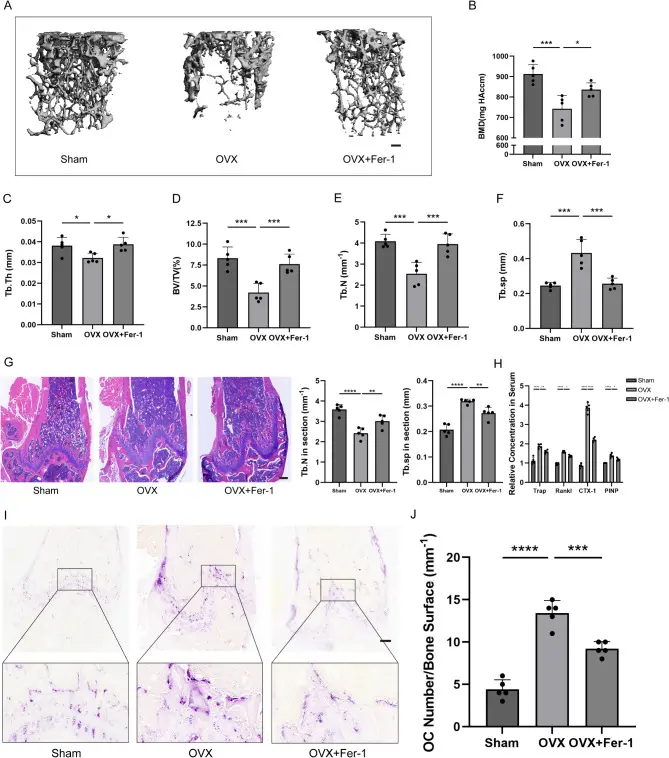
Fer-1 can inhibit osteoporosis in OVX mice. [3]
The HDAC inhibitor romidepsin renders liver cancer vulnerable to RTK targeting and immunologically active
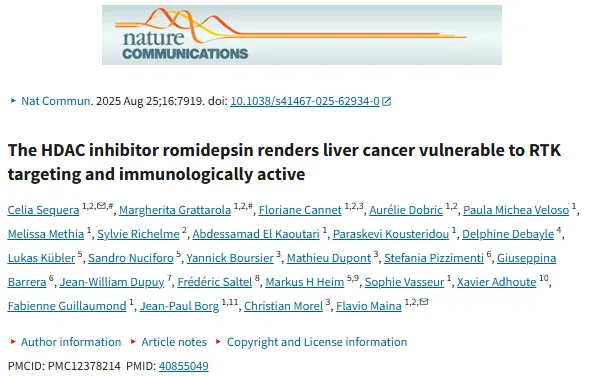
Researchers have found that the expression of histone deacetylase HDAC1/2 is increased in patients with hepatocellular carcinoma and is associated with poor prognosis. It has been proved that the HDAC inhibitor romidepsin can change the lipid metabolism, spindle structure and cell cycle/survival signal of hepatocellular carcinoma cells, so that hepatocellular carcinoma cells enter a fragile state dependent on receptor tyrosine kinase (RTK) signal, so that hepatocellular carcinoma resistant to RTK inhibitors (such as cabozantinib) becomes sensitive to it. [4]
In this study, Ferrostatin-1 was used as a ferroptosis inhibitor to test whether the mechanism of cell death is involved in ferroptosis. When comparing the cell death induced by combined treatment (romidepsin + cabozantinib), researchers found that a pan-caspase inhibitor (Z-VAD-FMK) significantly rescued cell survival, while Ferrostatin-1 did not, indicating that the cell death induced by combined treatment was mainly through apoptosis rather than ferroptosis.
4. References
[1] Miotto G, Rossetto M, Di Paolo ML, Orian L, Venerando R, Roveri A, Vučković AM, Bosello Travain V, Zaccarin M, Zennaro L, Maiorino M, Toppo S, Ursini F, Cozza G. Insight into the mechanism of ferroptosis inhibition by ferrostatin-1. Redox Biol. 2020 Jan;28:101328. doi: 10.1016/j.redox.2019.101328. Epub 2019 Sep 20. PMID: 31574461; PMCID: PMC6812032.
[2] Liu CQ, Liu XY, Ouyang PW, Liu Q, Huang XM, Xiao F, Cui YH, Zhou Q, Pan HW. Ferrostatin-1 attenuates pathological angiogenesis in oxygen-induced retinopathy via inhibition of ferroptosis. Exp Eye Res. 2023 Jan;226:109347. doi: 10.1016/j.exer.2022.109347. Epub 2022 Dec 9. PMID: 36502924.
[3] Xu W, Lv S, Wang X, Song C, Xi C, Yan J. Ferrostatin-1 inhibits osteoclast differentiation and prevents osteoporosis by suppressing lipid peroxidation. J Orthop Surg Res. 2025 Jan 30;20(1):117. doi: 10.1186/s13018-025-05544-2. PMID: 39885539; PMCID: PMC11780991.
[4] Sequera C, Grattarola M, Cannet F, Dobric A, Michea Veloso P, Methia M, Richelme S, El Kaoutari A, Kousteridou P, Debayle D, Kübler L, Nuciforo S, Boursier Y, Dupont M, Pizzimenti S, Barrera G, Dupuy JW, Saltel F, Heim MH, Vasseur S, Adhoute X, Guillaumond F, Borg JP, Morel C, Maina F. The HDAC inhibitor romidepsin renders liver cancer vulnerable to RTK targeting and immunologically active. Nat Commun. 2025 Aug 25;16(1):7919. doi: 10.1038/s41467-025-62934-0. PMID: 40855049; PMCID: PMC12378214.
An essential round-up of science news, opinion and analysis, delivered to your inbox every weekday.
 Feedback
 Hello! How can I help you today?
Copyright © 2015-2026 TargetMol Chemicals Inc. All Rights Reserved.



![[TargetMol Star Molecule] - Meropenem: Targeting Bacterial Cell Wall Synthesis to Combat Multidrug Resistance](https://cdn.targetmol.com/group9/newyun/20260525/s/daloama4neet9vcastg3rvjes.png)
![[TargetMol Star Molecule] - Acarbose: A Key Enzyme Inhibitor Modulating Blood Glucose and Metabolic Pathways](https://cdn.targetmol.com/group9/newyun/20260525/c/17dqa1mmpq3ysri7zb6kubu5f.png)