Shopping Cart
Remove All Your shopping cart is currently empty
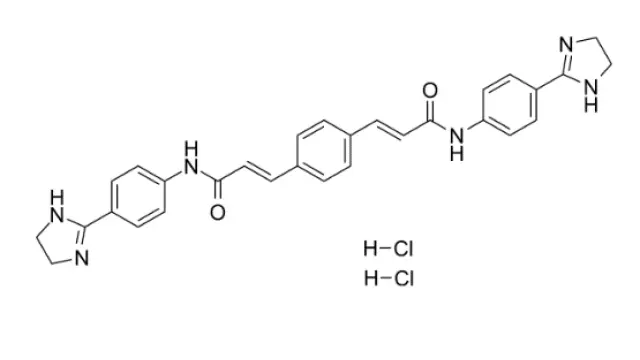
TargetMol—Star Molecule — GW4869 (Catalog No. T3640, CAS 6823-69-4), The “Gatekeeper” in Exosome Mechanism Research, a Classic N-SMase Inhibitor
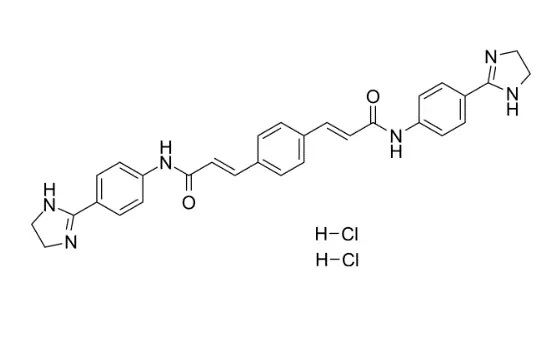
GW4869 (GW69A) is a selective, non-competitive inhibitor of neutral sphingomyelinase (N-SMase) (IC50 = 1 μM). GW4869 also inhibits exosome synthesis and release and is commonly used in exosome-related research. This compound is typically formulated as a suspension for experimental use.
1. Background
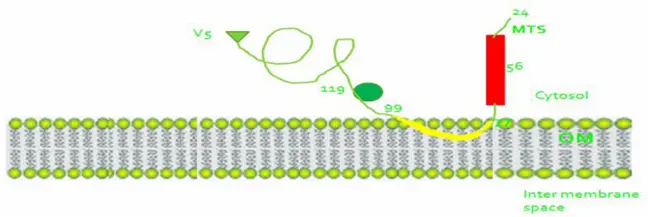
Neutral sphingomyelinase (nSMase) is a class of sphingomyelin-hydrolyzing enzymes that exhibit catalytic activity under neutral pH conditions and are primarily localized to structures such as the cell membrane, endoplasmic reticulum, and nuclear membrane. Its core function is to specifically catalyze the hydrolysis of sphingomyelin, producing ceramides and phosphatidylcholine, making it a key molecule in regulating cellular sphingolipid metabolism. As important lipid second messengers, ceramides can mediate various biological processes, including inflammatory responses, oxidative stress, apoptosis, and cell proliferation and differentiation. Studies have demonstrated that abnormal activation of nSMase can promote ceramide accumulation, activate downstream signaling pathways such as NF-κB and the NLRP3 inflammasome, and exacerbate neuroinflammation, excessive microglial activation, and neuronal damage, thereby contributing to the pathological processes of various diseases including depression, neurodegenerative diseases, and cancer.
GW4869 is a cell-permeable, highly selective, non-competitive inhibitor of neutral sphingomyelinase (nSMase) with an IC₅₀ of approximately 1 μM. It exhibits no significant inhibitory effect on acid sphingomyelinase (A-SMase) or other hydrolases, demonstrating excellent specificity. Its core mechanism of action involves directly inhibiting nSMase activity, thereby blocking the hydrolysis of sphingomyelin into ceramides. This, in turn, reduces ceramide-mediated endocytosis of multivesicles and the synthesis and release of exosomes. Concurrently, it inhibits the activation of downstream signaling pathways such as NF-κB and the NLRP3 inflammasome, thereby reducing the release of pro-inflammatory factors and alleviating oxidative stress and apoptosis. In models of neuroinflammation, tumors, and depression-related diseases, GW4869 can inhibit the nSMase-ceramide axis to suppress excessive microglial activation, alleviate neuroinflammation, protect the blood-brain barrier, and delay tumor progression. It serves as a classic model compound for studying sphingolipid metabolism, exosome regulation, and inflammatory mechanisms.
2. Selected Literature
2.1 Article Title:Blockade of exosome generation by GW4869 inhibits the education of M2 macrophages in prostate cancer
Study Overview: This study investigates how GW4869 blocks M2 macrophage polarization induced by prostate cancer (PCa) exosomes by inhibiting exosome biogenesis. Exosomes were isolated from PCa cells in vitro, and it was demonstrated that they activate the AKT/STAT3 pathway and induce M2 macrophage polarization. GW4869 significantly reduced exosome release, attenuated M2 polarization, and diminished the exosomes’ ability to promote tumor invasion and angiogenesis. In vivo experiments showed that GW4869 inhibited tumor growth and reduced the number of CD206+ M2 macrophages within the tumor. [2]
In this study, exosomes were isolated from the culture supernatants of two types of prostate cancer cells and were identified as meeting standards via electron microscopy, particle size analysis, and Western blot. The exosomes can induce macrophage polarization toward the M2 phenotype. GW4869 significantly inhibited the release of cancer cell-derived exosomes, reduced the number of CD206+ M2 macrophages, diminished their ability to promote tumor invasion and angiogenesis, and suppressed the activation of the AKT/STAT3 pathway. In vivo experiments demonstrated that GW4869 inhibited tumor growth and the infiltration of M2 macrophages within tumors.
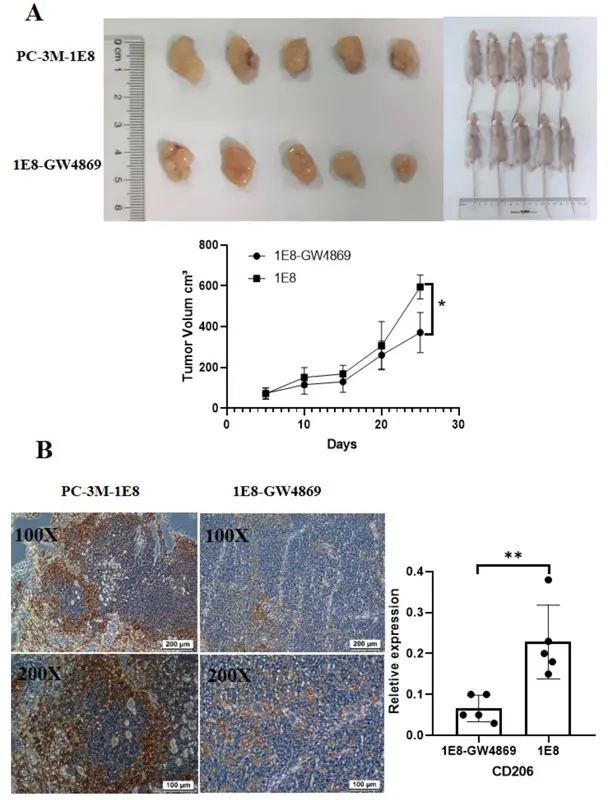
GW4869 Inhibits Tumor Growth and Intratumoral M2 Macrophage Infiltration
2.2 Article Title:GW4869 Can Inhibit Epithelial-Mesenchymal Transition and Extracellular HSP90αin Gefitinib-Sensitive NSCLC Cells
Study Overview: This study investigates the role of GW4869 (an exosome inhibitor) in gefitinib-sensitive non-small cell lung cancer (NSCLC). The aim is to demonstrate that GW4869 can inhibit epithelial-mesenchymal transition (EMT) and extracellular HSP90α (eHSP90α), thereby enhancing the efficacy of gefitinib and delaying the development of resistance. [3]
In this study, HCC827 and PC9 cells were treated with GW4869 at various concentrations. Western blot (WB) analysis revealed that GW4869 dose-dependently inhibited eHSP90α and reversed EMT. When GW4869 was added following TGF-β1 induction, it similarly reduced eHSP90α and inhibited EMT. Scratch and Transwell assays confirmed that GW4869 significantly inhibited cell migration and invasion. Nude mouse experiments indicated that the combination of GW4869 and gefitinib reduced tumor size, decreased eHSP90α levels, and improved EMT.
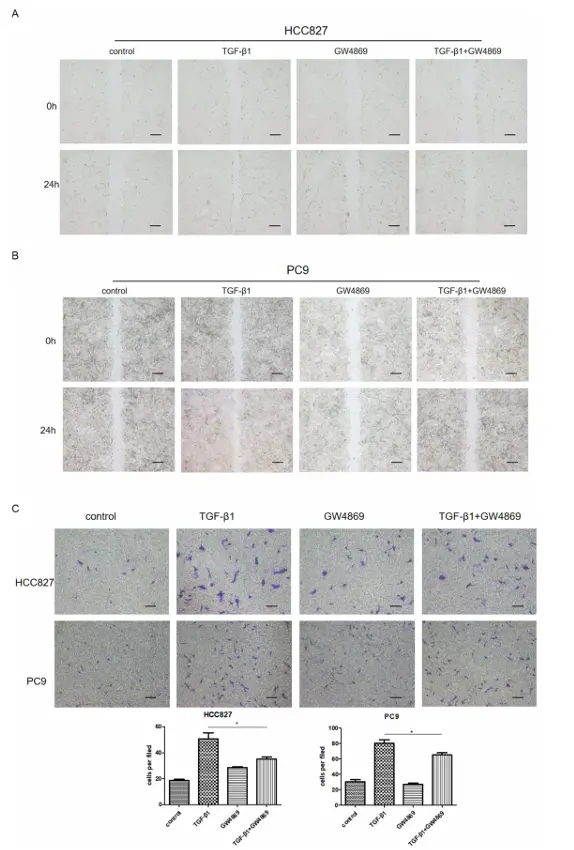
GW4869 inhibits lung cancer cell migration
2.3 Article Title:GW4869 inhibitor affects vector competence and tick-borne flavivirus acquisition and transmission by blocking exosome secretion
Using nymphs and adult ticks as models, the study employed simultaneous treatment, pretreatment, and different dose interventions with GW4869 in combination with LGTV infection. Tissue viral loads were detected via qPCR, and experiments on tick blood feeding, viral acquisition and transmission, molting, and survival were conducted. The results showed that GW4869 significantly inhibited the spread of LGTV within nymphs and reduced viral load in their salivary glands. It also decreased the efficiency of viral acquisition by ticks, reduced the secretion of salivary gland exosomes and viral load, inhibited blood feeding and viral transmission, and reversed the virus-induced molting effect, thereby lowering molting rates and survival rates.
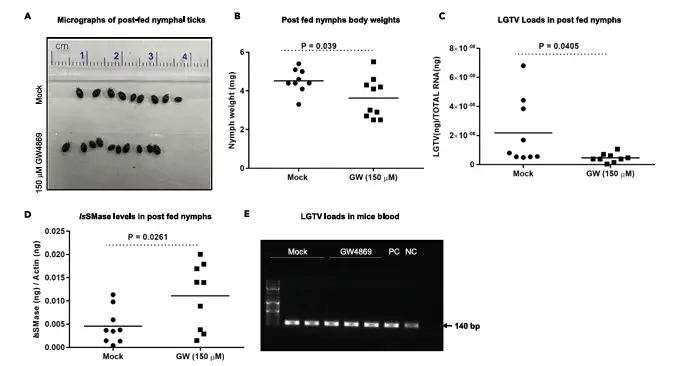
High-dose GW4869 inhibits tick blood feeding and virus acquisition
2.4 Article Title:Transcription factor EB-mediated mesenchymal stem cell therapy induces autophagy and alleviates spinocerebellar ataxia type 3 defects in neuronal cells model

Research Overview: This study focuses on spinocerebellar ataxia type 3 (SCA3/MJD). Its core objective is to investigate the mechanism by which mesenchymal stem cells (MSCs) activate the autophagy-lysosomal pathway through TFEB nuclear translocation, thereby clearing mutant ataxin-3 protein and alleviating neuronal toxicity, with the aim of providing a new stem cell therapy strategy for SCA3 and other neurodegenerative diseases.
GW4869 (Catalog No. T3640) served as a key control reagent in this study: it was used to block the release and function of exosomes in MSC culture supernatants, thereby validating that the therapeutic effects of MSCs are primarily mediated by exosomes; Upon addition of GW4869 in the experiments, the effects of MSCs in enhancing autophagy, clearing mutant proteins, and protecting neurons were significantly reversed, directly demonstrating that exosomes are a crucial vehicle for the action of MSCs.
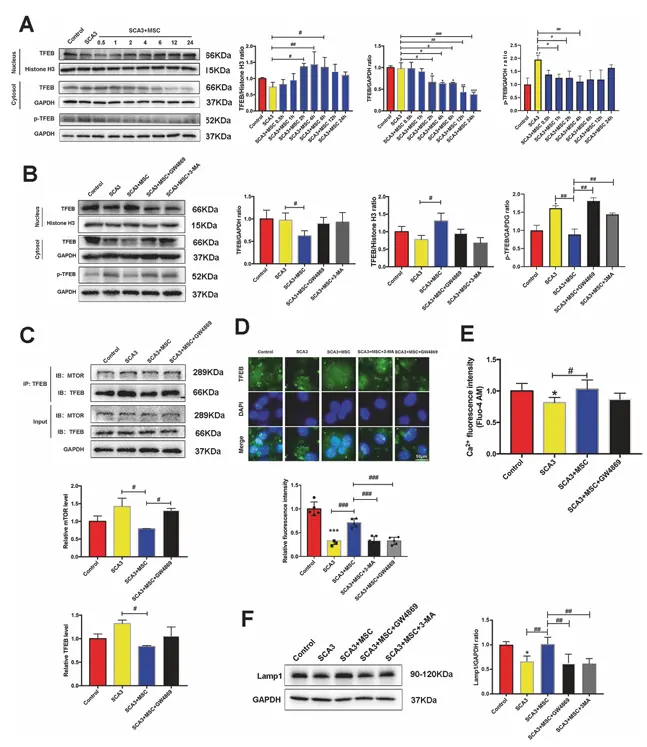
GW4869 and 3-MA confirm that exosomes mediate TFEB activation
References
[1]Rajagopalan V,Canals D,Luberto C,et al.Critical determinants of mitochondria-associated neutral sphingomyelinase(MA-nSMase)for mitochondrial localization.Biochim Biophys Acta.2015,1850(4):628-639.doi:10.1016/j.bbagen.2014.11.019
[2]Peng Y,Zhao M,Hu Y,et al.Blockade of exosome generation by GW4869 inhibits the education of M2 macrophages in prostate cancer.BMC Immunol.2022,23(1):37.Published2022Aug8.doi:10.1186/s12865-022-00514-3
[3] Wan X, Fang Y, Du J, Cai S, Dong H. GW4869 Can Inhibit Epithelial-Mesenchymal Transition and Extracellular HSP90α in Gefitinib-Sensitive NSCLC Cells. Onco Targets Ther. 2023;16:913-922. Published 2023 Nov 8. doi:10.2147/OTT.S428707
[4]Sultana H,Ahmed W,Neelakanta G.GW4869inhibitor affects vector competence and tick-borne flavivirus acquisition and transmission by blocking exosome secretion.iScience.2024,27(8):110391.Published2024Jun27.doi:10.1016/j.isci.2024.110391
[5]Han X, de Dieu Habimana J, Li AL, et al. Transcription factor EB-mediated mesenchymal stem cell therapy induces autophagy and alleviates spinocerebellar ataxia type 3 defects in neuronal cells model. Cell Death Dis. 2022;13(7):622. Published 2022 Jul 18. doi:10.1038/s41419-022-05085-0
An essential round-up of science news, opinion and analysis, delivered to your inbox every weekday.
 Feedback
 Hello! How can I help you today?
Copyright © 2015-2026 TargetMol Chemicals Inc. All Rights Reserved.