Shopping Cart
Remove All Your shopping cart is currently empty
TargetMol Star Molecule—L-Lactic Acid (T4845, CAS 79-33-4): From Metabolite to Hypoxia Indicator, the Gold Standard for Research-Grade Lactic Acid Detection
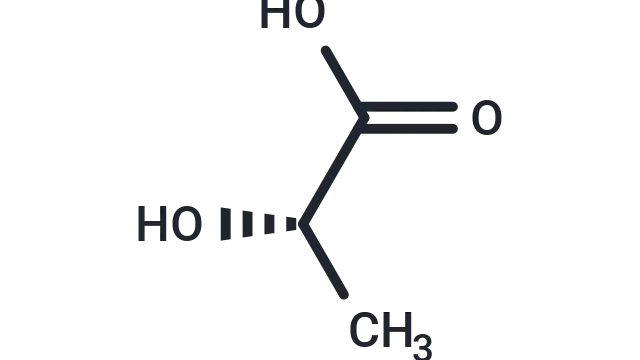
L-Lactic acid, Catalog No. T4845, CAS No. 79-33-4, also known as 2-Hydroxypropionic acid, L-(+)-Lactic acid, and (S)-2-Hydroxypropanoic acid.
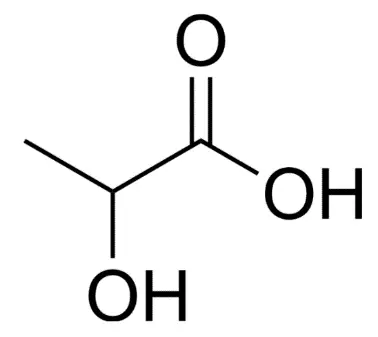
Molecular formula of L-Lactic acid
1. Background
Anaerobic glycolysis is a catabolic pathway for glucose that occurs in cells under hypoxic or anaerobic conditions; it is a rapid energy-generating process that does not require oxygen. The process begins with glucose, which is gradually broken down into pyruvate through a series of enzymatic reactions. In an anaerobic environment, pyruvate is further converted into lactate (in animal cells) or ethanol and carbon dioxide (in microorganisms), while producing a small amount of ATP. The entire process occurs in the cytoplasm and does not rely on mitochondria. Although its energy production efficiency is relatively low, it provides energy extremely rapidly, capable of meeting the urgent energy demands of intense muscle activity, hypoxic tissues, or anaerobic microorganisms. It is a crucial pathway for cells to obtain energy quickly and in the short term.
L-lactic acid is a naturally occurring levorotatory organic acid and a key metabolic product of anaerobic glycolysis in the human body. Due to its high biocompatibility, complete degradability, and excellent safety profile, it has become a critical raw material in the fields of biomedicine and biomaterials. Its core mechanism of action lies in its participation in cellular energy metabolism as a substrate, which can be completely broken down by the human body into carbon dioxide and water. Simultaneously, by regulating intracellular pH, modulating the inflammatory microenvironment, and promoting collagen synthesis and tissue repair, it performs dual roles in physiological regulation and material functionality.
In the biomedical field, L-lactic acid has a wide range of applications: it can serve as a pH and osmotic pressure regulator in intravenous and injectable solutions to correct metabolic acidosis; as a key monomer for synthesizing polylactic acid (PLLA), it is used to produce absorbable surgical sutures, bone fixation materials, tissue engineering scaffolds, and drug-releasing carriers; it is also used in medical aesthetic fillers to stimulate collagen regeneration and achieve soft tissue repair; furthermore, it plays a significant role in wound care, antimicrobial formulations, and cell culture systems, making it a multifunctional biomedical foundation substance spanning the three major areas of therapy, materials, and repair.
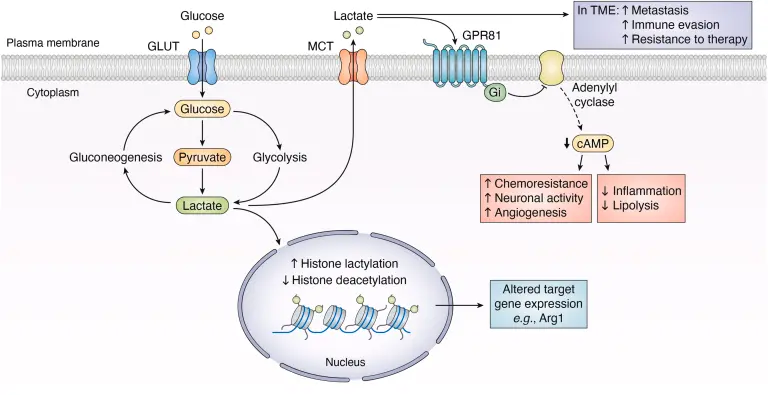
Lactic acid as a multifunctional signaling molecule [1]
2. Selected Literature
2.1 Article Titles:L-Poly(lactic acid)Production by Microwave Irradiation of Lactic Acid Obtained from Lignocellulosic Wastes

Research Overview: This study utilized lignocellulosic plum biomass as feedstock to prepare L-lactic acid via pressurized hot water pretreatment and simultaneous saccharification and fermentation (SSF), followed by microwave-assisted polymerization to synthesize L-polylactic acid (PLA), thereby establishing a green, low-cost, and industrially scalable route for the production of bio-based PLA. The results confirm that agricultural and forestry waste can be efficiently converted into PLA with high purity, high crystallinity, and high thermal stability, which can replace traditional petroleum-based plastics in applications such as packaging. [2]
In this study, plum tree branches were used as raw material. After pressurized hot water pretreatment at 180°C and 10 MPa to remove lignin and enrich high-purity cellulose, simultaneous saccharification and fermentation (SSF) was performed using the Lacticaseibacillus rhamnosus ATCC 746 strain, allowing cellulase hydrolysis and lactic acid fermentation to proceed concurrently. L-lactic acid was purified via extraction with ammonium sulfate and n-butanol. Using SnCl₂ as a catalyst, the acid was first dehydrated via azeotropic distillation to form lactide, which was then reacted under microwave conditions at 140°C for 30 minutes to synthesize PLA. The product was structurally characterized using ESI–MS, ¹H-NMR, FTIR, TGA, XRD, and SEM. The experimental results showed that under optimal fermentation conditions of 37°C and pH 5.5, the L-lactic acid yield reached 94.0 g/L, with a production rate of 2.04 g/L/h. ESI–MS analysis indicated that the PLA degree of polymerization ranged from 4 to 29. The ¹H-NMR spectrum exhibited characteristic peaks for methyl and methylene groups at 1.56 ppm and 5.16 ppm, respectively; the FTIR spectrum showed a characteristic carbonyl peak at 1749 cm⁻¹; TGA measurements indicated a thermal decomposition temperature of 361.62°C, indicating good thermal stability. XRD analysis revealed a crystallinity of 75% and an orthorhombic crystal structure, while SEM observation showed that the purified PLA had a smooth surface and uniform pore distribution.
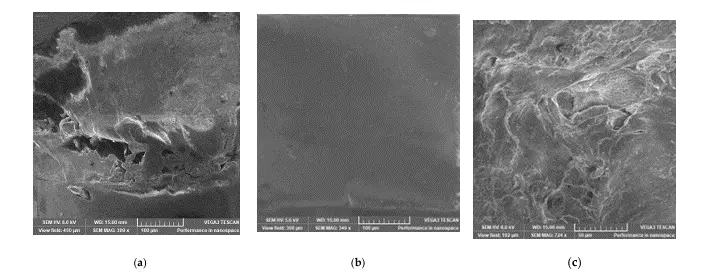
Purified L-poly(lactic acid) has a smooth surface and uniform porosity
2.2 Article Title:Metabolic Engineering and Adaptive Evolution for EfficientProduction of L-Lactic Acid in Saccharomyces cerevisiae

Research Overview: This study utilized Saccharomyces cerevisiae as a host organism and employed a three-step strategy—metabolic engineering, transporter engineering, and adaptive evolution—to achieve efficient production of L-lactic acid. First, the pyruvate metabolic pathway was redirected toward lactate production to reduce ethanol byproducts; second, lactate efflux was enhanced to alleviate intracellular acidosis; and finally, acid tolerance was improved through evolution under high-acid stress. This resulted in a high-yield strain capable of producing 121.5 g/L in a 5-L fermenter, providing a general approach for the efficient synthesis of organic acids. [3]
In this study, Saccharomyces cerevisiae CEN.PK2-1C was used as the host. Metabolic engineering was employed to knock out PDC1 and ADH1, and heterologous LDH and eutE were introduced to redirect carbon flux and enhance lactate production. Overexpression of the transporters JEN1, ADY2, and ESBP6 promoted lactate efflux, and acid-tolerant, high-yielding strains were obtained through gradient lactate adaptive evolution. Fermentation and HPLC analyses showed that the engineered strain achieved a lactate yield of 43.6 g/L, which increased to 51.4 g/L after transporter optimization and reached 60.4 g/L following evolutionary adaptation. In a 5-L fermenter, the maximum yield was 121.5 g/L with a yield of 0.81 g/g, significantly improving production efficiency. Corn oil does not affect feed intake or organic matter digestibility; it significantly reduces methane emissions, lowers ruminal dissolved hydrogen and methane levels, increases the proportion of acetic acid while decreasing that of propionic acid, promotes the hydrogenation of unsaturated fatty acids, enhances bacterial diversity and alters community structure, and simultaneously modifies the composition of methanogenic bacterial communities.
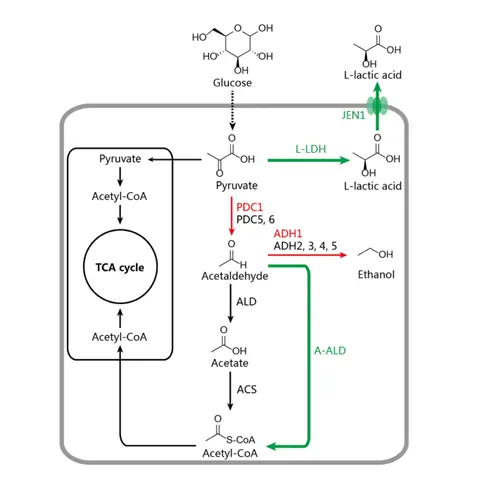
Restructuring the Lactate Synthesis Pathway
2.3 Article Title:Poly-L-Lactic Acid Fillers Improved Dermal Collagen Synthesis by Modulating M2Macrophage Polarizationin Aged Animal Skin

In this study, Poly-L-Lactic Acid microspheres were synthesized via ring-opening polymerization. Their morphology and degradation were observed using SEM. H₂O₂ was used to induce senescence in macrophages and fibroblasts, which were then treated with Poly-L-Lactic Acid or co-cultured in conditioned medium. Assays including SA-β-gal staining, Western blotting (WB), ELISA, and immunofluorescence were performed. Mice were administered subcutaneous injections of PLLA or saline, and skin tissue was harvested at 1, 3, and 28 days post-injection. Masson, Herovici, and Verhoeff staining, as well as immunohistochemistry and immunofluorescence, were performed to detect M1/M2 markers, cytokines, the collagen matrix, and related signaling proteins. Key Results: Poly-L-lactic acid upregulates IL-4/IL-13 to induce M2 polarization, reverses the M1/M2 imbalance in senescent macrophages and aged skin, activates the TGF-β/SMAD pathway to promote COL1A1 and COL3A1 synthesis, enhances fibroblast proliferation via the PI3K/AKT pathway, increases IL-10 and TIMP1 levels while inhibiting MMP2/3 to reduce collagen degradation, and significantly increases collagen and elastic fiber content in aged skin.
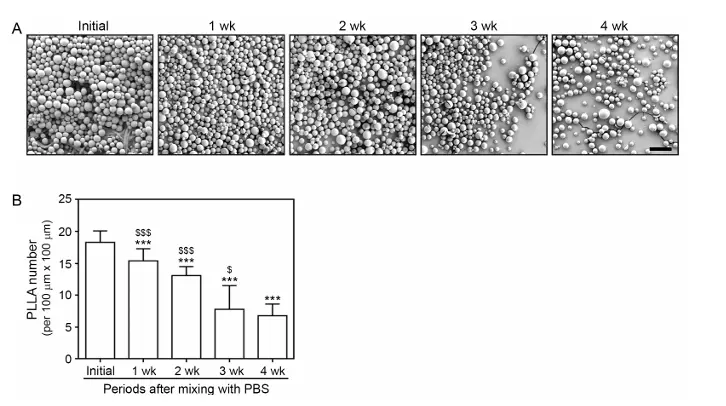
Poly-L-lactic acid upregulates IL-4/IL-13 to induce M2 polarization and reverse age-related dysregulation
References
[1]Kierans SJ,Taylor CT.Glycolysis:A multifaceted metabolic pathway and signaling hub.J Biol Chem.2024,300(11):107906. doi:10.1016/j.jbc.2024.107906
[2]Senila L,Cadar O,Kovacs E,et al.L-Poly(lactic acid)Production by Microwave Irradiation of Lactic Acid Obtained from Lignocellulosic Wastes.Int JMol Sci.2023,24(12):9817.Published2023Jun6.doi:10.3390/ijms24129817
[3]Zhu P,Luo R,Li Y,Chen X.Metabolic Engineering and Adaptive Evolution for Efficient Production of l-Lactic Acid in Saccharomyces cerevisiae.Microbiol Spectr.2022,10(6):e0227722.doi:10.1128/spectrum.02277-22
[4]Oh S,Lee JH,Kim HM,et al.Poly-L-Lactic Acid Fillers Improved Dermal Collagen Synthesis by Modulating M2Macrophage Polarization in Aged Animal Skin.Cells.2023,12(9):1320.Published2023May5.doi:10.3390/cells12091320
An essential round-up of science news, opinion and analysis, delivered to your inbox every weekday.
 Feedback
 Hello! How can I help you today?
Copyright © 2015-2026 TargetMol Chemicals Inc. All Rights Reserved.