Shopping Cart
Remove All Your shopping cart is currently empty
TargetMol—Polypeptide—Insulin (human) (Cat. No. T8221, CAS 11061-68-0), The key to the cell energy gate
1. Product Introduction
Insulin (human) (Cat. No. T8221, CAS. 11061-68-0), also known as INSULIN. Insulin (human) is a polypeptide hormone that promotes glycogen synthesis and regulates glucose levels in the blood. Insulin (human) has hypoglycemic activity and is clinically used to treat hyperglycemia in diabetic patients.
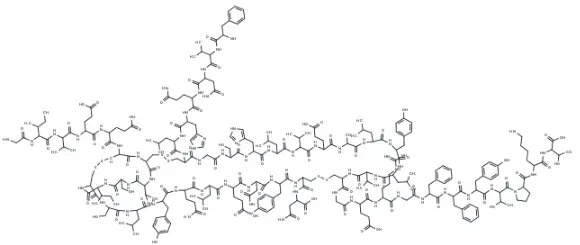
Molecular structure of Insulin (human)
2. Background Introduction
In the study of metabolic diseases, insulin receptor ( IR ) and its downstream signaling pathway are important drug targets. Insulin receptor is a transmembrane receptor tyrosine kinase, which is composed of two subunits, α and β, and is distributed on the cell membrane of liver, muscle, fat and other tissues. When insulin binds to the receptor, it can induce the activation of the receptor 's own tyrosine kinase activity, and then phosphorylate the effector molecules such as insulin receptor substrate ( IRS ), triggering signal transduction cascades such as PI3K / AKT and MAPK. These pathways jointly regulate glucose uptake, glycogen synthesis, lipid metabolism and cell proliferation. In human type 2 diabetes and insulin resistance, the function of IR signaling pathway is impaired, resulting in a decrease in the responsiveness of peripheral tissues to insulin, which is one of the key targets for the development of drugs for metabolic diseases. [1]
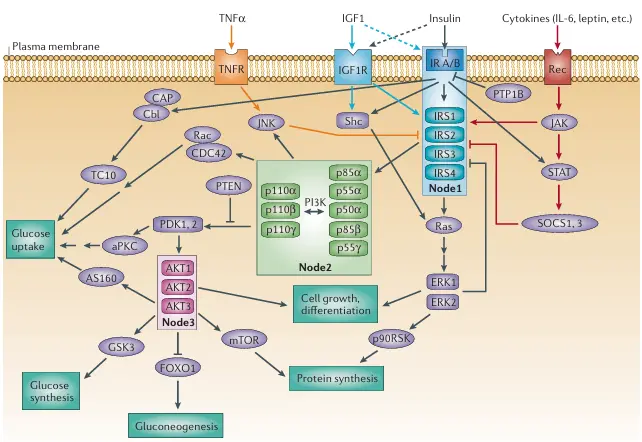
Key nodes in insulin signaling network [1]
Insulin is the main metabolic hormone, and its biological effects are mainly achieved by binding to insulin receptors and activating downstream signaling pathways. On the target cell membrane, insulin binds to the receptor, promotes the activation of the receptor 's tyrosine kinase structure, and causes tyrosine phosphorylation of the receptor itself and IRS protein. Subsequently, phosphorylated IRS recruits and activates PI3K ( phosphatidylinositol 3-kinase ), which further activates AKT ( protein kinase B ). AKT activation is a central hub for regulating glucose transport, glycogen synthesis and lipid metabolism. For example, AKT promotes the transport of GLUT4 transporters from intracellular vesicles to cell membranes, enhancing glucose uptake in muscle and adipose tissue; at the same time, AKT inhibits liver gluconeogenesis and promotes glycogen synthesis. In addition, insulin also affects gene expression and cell proliferation through the MAPK pathway. Under normal circumstances, this mechanism ensures blood glucose homeostasis; in the state of insulin resistance, these signaling cascades are weakened, resulting in hyperglycemia and metabolic abnormalities. Therefore, an in-depth understanding of the insulin signaling network is essential for the development of new treatments to improve insulin sensitivity. [2]
3. Application References
Restoration of insulin receptor improves diabetic phenotype in T2DM mice
Research Overview:
In this study, by restoring the expression and function of insulin receptor ( IR ) in a mouse model of type 2 diabetes, the decisive role of IR level in glucose metabolism homeostasis was verified. We used gene delivery and tissue-specific regulation strategies to increase IR expression in key metabolic tissues under the background of insulin resistance, and then combined with glucose tolerance test, insulin tolerance test and molecular signal detection to systematically evaluate metabolic phenotype changes. The results showed that the recovery of IR significantly enhanced the activity of IRS-PI3K-AKT signaling pathway, promoted glucose uptake in peripheral tissues and inhibited hepatic gluconeogenesis, thus effectively improving hyperglycemia and insulin resistance phenotype. This study proves that the decline of insulin receptor function is a key driving factor for the occurrence and development of T2DM from the causal level, and suggests that improving IR function or expression level may become a new strategy for the treatment of type 2 diabetes. [3]
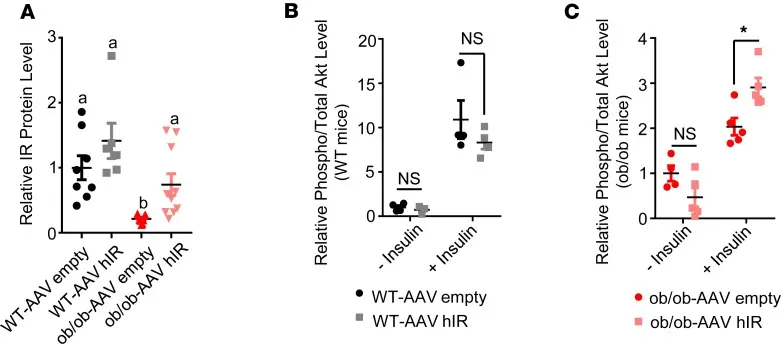
Injection of AAV-hIR increased IR protein and insulin-stimulated Akt phosphorylation in the liver of OB / OB mice [3]
Spatially constrained disulfide bond shuffling delays insulin aggregation and enhances neurotoxicity
Research Overview:
This study focused on the disulfide bond shuffling ( DBS ) phenomenon and its biological consequences of Insulin ( Cat.No.T8221 ) during abnormal folding and aggregation. Researchers have constructed a series of Insulin variants that limit the ability of disulfide bond rearrangement by space-restricted design and directional modification of Insulin disulfide bonds at the molecular level, and systematically evaluated their effects on protein aggregation behavior and cytotoxicity in combination with in vitro aggregation kinetics detection, structural analysis and nerve cell toxicity experiments. The results showed that limiting disulfide bond rearrangement could significantly delay the formation of amyloid fibrils by Insulin, but at the same time, it enhanced the toxicity of oligomers to nerve cells in the early stage of aggregation. This study reveals the importance of controlling DBS in insulin in therapeutic applications and provides insights into the role of disulfide bond dynamics in protein aggregation and cytotoxicity, which is important for insulin and the wider protein misfolding environment. [4]
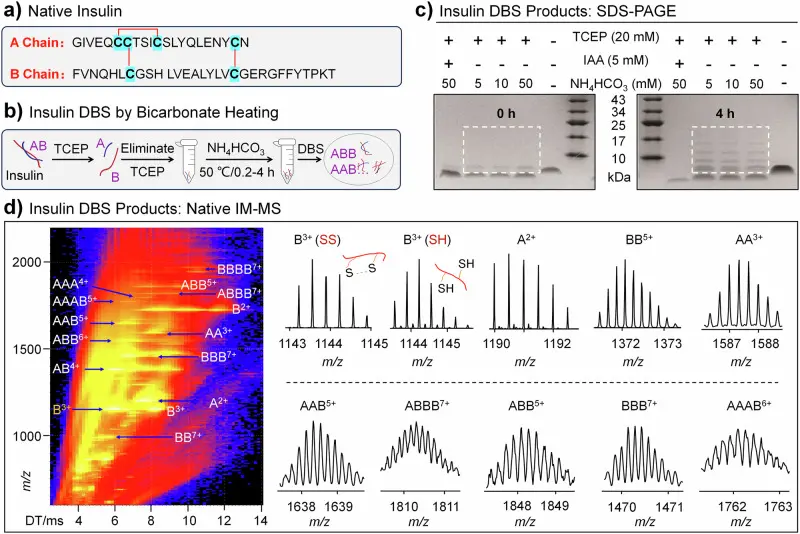
DBS of Insulin driven by bicarbonate heating [4]
4. References
[1] Taniguchi CM, Emanuelli B, Kahn CR. Critical nodes in signalling pathways: insights into insulin action. Nat Rev Mol Cell Biol. 2006 Feb;7(2):85-96. doi: 10.1038/nrm1837
[2] Samuel VT, Shulman GI. Mechanisms for insulin resistance: common threads and missing links. Cell. 2012 Mar 2;148(5):852-71. doi: 10.1016/j.cell.2012.02.017
[3] Wang Y, Zhou H, Palyha O, Mu J. Restoration of insulin receptor improves diabetic phenotype in T2DM mice. JCI Insight. 2019 Aug 8;4(15):e124945. doi: 10.1172/jci.insight.124945. PMID: 31391336; PMCID: PMC6693840.
[4] Qin W, Li R, Liu J, Liu J, Wang X, Hu B, Zheng Z, Yu Z, Li G. Spatially constrained disulfide bond shuffling delays insulin aggregation and enhances neurotoxicity. Nat Commun. 2025 Jul 25;16(1):6841. doi: 10.1038/s41467-025-62257-0

An essential round-up of science news, opinion and analysis, delivered to your inbox every weekday.
 Feedback
 Hello! How can I help you today?
Copyright © 2015-2026 TargetMol Chemicals Inc. All Rights Reserved.