Shopping Cart
Remove All
  • TargetMol
    Your shopping cart is currently empty

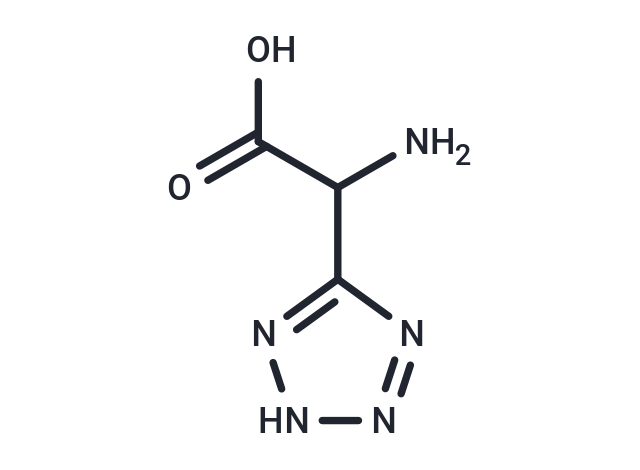
(RS)-(Tetrazol-5-yl)glycine (Alias: LY 285265, D,L-(tetrazol-5-yl)glycine)

Catalog No. T16801 Copy Product Info
🥰Excellent
(RS)-(Tetrazol-5-yl)glycine is a potent and selective N-methyl-D-aspartate (NMDA) receptor agonist that can induce seizure models and Fos expression in mice. Its EC50 values for GluN1/GluN2D and GluN1/GluN2A are 99 nM and 1.7 μM, respectively.

(RS)-(Tetrazol-5-yl)glycine

Copy Product Info
🥰Excellent
Catalog No. T16801
Alias LY 285265, D,L-(tetrazol-5-yl)glycine

(RS)-(Tetrazol-5-yl)glycine is a potent and selective N-methyl-D-aspartate (NMDA) receptor agonist that can induce seizure models and Fos expression in mice. Its EC50 values for GluN1/GluN2D and GluN1/GluN2A are 99 nM and 1.7 μM, respectively.

(RS)-(Tetrazol-5-yl)glycine
Cas No. 138199-51-6
TargetMol | Customer service
Customer service consultation
Pack SizePriceUSA StockGlobal StockQuantity
10 mg$35InquiryInquiry
25 mg$86InquiryInquiry
50 mg$148InquiryInquiry
100 mg$212InquiryInquiry
In stock · Estimated delivery: USA Stock (1-2 days) Global Stock (5-7 days)
Add to Cart
Add to Quotation
For research use only—not for human use. No sales to individuals. Use as intended only.
Questions
TargetMol
View More

Resource Download

Product Introduction

Bioactivity
Description
(RS)-(Tetrazol-5-yl)glycine is a potent and selective N-methyl-D-aspartate (NMDA) receptor agonist that can induce seizure models and Fos expression in mice. Its EC50 values for GluN1/GluN2D and GluN1/GluN2A are 99 nM and 1.7 μM, respectively.
Targets&IC50
GluN1/GluN2D:(EC50)99 nM, GluN1/GluN2A:1.7 μM(EC50)
In vitro
(RS)-(Tetrazol-5-yl)glycine does not significantly inhibit the binding of D,L-alpha-[5-methyl-3H] amino-3-hydroxy-5-methylisoxazole-4-propionic acid (AMPA), [3H]kainate, or [3H]glycine (IC50s>30 μM). It displaces NMDA receptor binding to rat brain membranes using [3H]CGS19755 (IC50=98 nM) and [3H]glutamate (IC50=36 nM) as ligands [1].
In vivo
(RS)-(Tetrazol-5-yl)glycine is a potent convulsant in neonatal rats (ED50=0.071 mg/kg; i.p.) and induces seizure responses and Fos in NR1+/+ and NR1-/- mice (1.25, 1.5 mg/kg; IP) [1][3].
Disease Modeling Protocol
Excitotoxic brain injury
  • Modeling Mechanism:

    (RS)-(Tetrazol-5-yl)glycine (TZG), as a potent NMDA receptor agonist, induces pathology through multiple mechanisms: ① Overactivation of NMDA receptors in striatal neurons, leading to excitotoxicity, resulting in intracellular calcium overload (increased Ca²⁺ influx), and disrupting neuronal homeostasis; ② Induction of endothelial cell COX-2 expression, recruiting neutrophils to infiltrate the damaged area, with neutrophils expressing prostacyclin synthase (PGIS) and producing prostacyclin (PGI₂), forming a neuroprotective pathway of "endothelial COX-2-neutrophils-PGI₂"; ③ Induction of an inflammatory response in the striatal region (CD45⁺ leukocyte infiltration), while simultaneously leading to the formation of brain tissue lesions, mimicking the pathological features of excitatory brain injury associated with epileptic seizures.

  • Related Products:

    (RS)-(Tetrazol-5-yl)glycine (T16801)

  • Modeling Method:

    Experimental Subject:

    Mice: COX-2^(flox/flox), Tie2Cre COX-2^(flox/flox), LysMCre COX-2^(flox/flox) (conditional knockout mice) Age: 10–16 weeks Body weight: 25–30 g

    Dosage and Administration Route:

    ① Core modelling: (RS)-(Tetrazol-5-yl)glycine (5 μM), 10 μL/mouse, dissolved in PBS (pH 7.4), stereotaxic injection into right striatum (coordinates: 0.5 mm anterior to anterior fontanelle, +2.0 mm lateral, -4.0 mm ventral), single-dose administration;
    ② Surgical Procedure: Intraperitoneal anaesthesia with sodium pentobarbital (100 mg/kg), stereotaxic fixation of head, cranial drilling followed by microinjection at 0.8 μL/min using microinjection system, needle retention for 5 minutes to prevent backflow, wound suturing post-operatively;
    ③ Control treatment: Equal-volume PBS administered via identical injection protocol;
    ④ Intervention validation (optional):
    - PGI₂ agonist MRE-269 (1 mg/kg) administered intraperitoneally either 1/4 hour prior to modelling or post-modelling;
    - PGIS inhibitor fenpropirox (10 mg/kg) via intraperitoneal injection administered 1 hour prior to modelling.

    Dosing Frequency and Duration Model:

    Single-dose TZG injection

  • Validation:

    Pathological markers: Tissue damage: HE staining showed obvious lesions in the striatum region, with the lesion volume peaking 24 hours after modeling. Intervention with phenylcyclopropane increased the lesion volume, while MRE-269 reduced it (P<0.05); Molecular markers: 12 hours after modeling, the level of stable metabolites of PGI₂ (6-ketoprostaglandin F1α) in the striatum of wild-type mice increased twofold (P<0.01), while the increase was not significant in Tie2Cre COX-2^flox/flox mice; CD45⁺ leukocytes and Ly6G⁺ neutrophils infiltrated more, and PGIS⁺ cells accumulated in the core of the lesion; Cellular markers: Calcium imaging showed that TZG induced a significant increase in calcium influx in striatal neurons (set as 100%), and MRE-269 pretreatment significantly reduced the amplitude and area under the curve of calcium influx (P<0.01); Specificity verification: Tie2Cre In COX-2^flox/flox mice (endothelial COX-2 knockout), TZG-induced PGI₂ production was reduced, PGIS⁺ cell infiltration was absent, and the lesion foci were enlarged, confirming the endothelial COX-2-dependent neuroprotective pathway.

*Precautions: The animals were euthanized at specific time points (4/8/12/24 hours) during the sampling process, and fresh brain tissue was handled on ice.

*References:An Y,et,al. Prostacyclin mediates endothelial COX-2-dependent neuroprotective effects during excitotoxic brain injury. J Inflamm Res. 2014 May 21;7:57-67.

SynonymsLY 285265, D,L-(tetrazol-5-yl)glycine
Chemical Properties
Molecular Weight143.1
FormulaC3H5N5O2
Cas No.138199-51-6
SmilesNC(C(O)=O)c1nn[nH]n1
Relative Density.1.804 g/cm3
Storage & Solubility Information
StoragePowder: -20°C for 3 years | In solvent: -80°C for 1 year | Shipping with blue ice/Shipping at ambient temperature.
Solubility Information
DMSO: < 1.43 mg/mL (10 mM, insoluble or slightly soluble)

Solution Preparation Table
DMSO
1mg5mg10mg50mg
1 mM6.9881 mL34.9406 mL69.8812 mL349.4060 mL
5 mM1.3976 mL6.9881 mL13.9762 mL69.8812 mL
10 mM0.6988 mL3.4941 mL6.9881 mL34.9406 mL
Note : The dilution table applies only to solid products. For liquid products, please calculate the stock solution based on the stated concentration and/or density.

Calculator

  • Molarity Calculator
  • Dilution Calculator
  • Reconstitution Calculator
  • Molecular Weight Calculator

In Vivo Formulation Calculator (Clear solution)

Please enter your animal experiment information in the following box and click Calculate to obtain the stock solution preparation method and in vivo formula preparation method:
TargetMol | Animal experiments For example, if the intended dosage is 10 mg/kg for animals weighing 20 g , with a dosing volume of 100 μL per animal, TargetMol | Animal experiments and a total of 10 animals are to be administered, using a formulation of TargetMol | reagent 10% DMSO+ 40% PEG300+ 5% Tween 80+ 45% Saline/PBS/ddH2O , the resulting working solution concentration would be 2 mg/mL.

Stock Solution Preparation:

Dissolve 2 mg of the compound in 100 μL DMSOTargetMol | reagent to obtain a stock solution at a concentration of 20 mg/mL . If the required concentration exceeds the compound's known solubility, please contact us for technical support before proceeding.

Preparation of the In Vivo Formulation:

1) Add 100 μL of the DMSOTargetMol | reagent stock solution to 400 μL PEG300TargetMol | reagent and mix thoroughly until the solution becomes clear.

2) Add 50 μL Tween 80 and mix well until fully clarified.

3) Add 450 μL Saline,PBS or ddH2OTargetMol | reagent and mix thoroughly until a homogeneous solution is obtained.

This example is provided solely to demonstrate the use of the In Vivo Formulation Calculator and does not constitute a recommended formulation for any specific compound. Please select an appropriate dissolution and formulation strategy based on your experimental model and route of administration.
All co-solvents required for this protocol, includingDMSO, PEG300/PEG400, Tween 80, SBE-β-CD, and Corn oil, are available for purchase on the TargetMol website.
1 Enter information below:
mg/kg
g
μL
2 Enter the in vivo formulation:
% DMSO
%
% Tween 80
% Saline/PBS/ddH2O

Dose Conversion

You can also refer to dose conversion for different animals. More Dose Conversion

Tech Support

Please see Inhibitor Handling Instructions for more frequently ask questions. Topics include: how to prepare stock solutions, how to store products, and cautions on cell-based assays & animal experiments, etc

Keywords

Related Tags: buy (RS)-(Tetrazol-5-yl)glycine | purchase (RS)-(Tetrazol-5-yl)glycine | (RS)-(Tetrazol-5-yl)glycine cost | order (RS)-(Tetrazol-5-yl)glycine | (RS)-(Tetrazol-5-yl)glycine chemical structure | (RS)-(Tetrazol-5-yl)glycine in vivo | (RS)-(Tetrazol-5-yl)glycine in vitro | (RS)-(Tetrazol-5-yl)glycine formula | (RS)-(Tetrazol-5-yl)glycine molecular weight