


Shopping Cart
Remove All Your shopping cart is currently empty

Synonyms: IKK Inhibitor II
| Pack Size | Price | USA Stock | Global Stock | Quantity |
|---|---|---|---|---|
| 1 mg | $30 | In Stock | In Stock | |
| 5 mg | $68 | In Stock | In Stock | |
| 10 mg | $117 | In Stock | In Stock | |
| 25 mg | $195 | In Stock | In Stock | |
| 50 mg | $349 | In Stock | In Stock | |
| 100 mg | $459 | In Stock | In Stock | |
| 500 mg | $1,060 | - | In Stock | |
| 1 mL x 10 mM (in DMSO) | $48 | In Stock | In Stock |

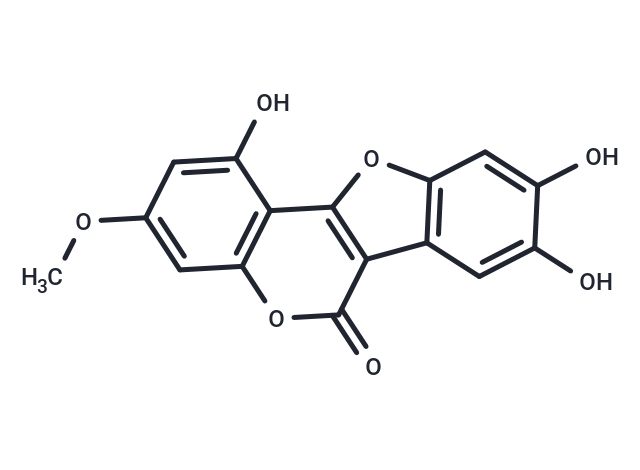
| Description | Wedelolactone (IKK Inhibitor II) is a natural product derived from Eclipta prostrata that inhibits NF-κB-mediated gene transcription in cells by blocking the phosphorylation and degradation of IκBα, and exhibits anticancer, anti-inflammatory, and antioxidant activities. Wedelolactone induces caspase-dependent apoptosis in prostate cancer cells by downregulating PKCε, without inhibiting Akt. Wedelolactone inhibits 5-Lox with an IC50 value of 2.5 μM. Wedelolactone can be used in research on inflammation, tumors, liver disease, and immune-related diseases. |
| Targets & IC50 | 5-LOX:2.5 μM (IC50) |
| In vitro | Methods: RAW264.7 mouse macrophages were pretreated with wedelolactone (5, 10, 20 μM) for 1 hour, followed by stimulation with LPS (500 ng/mL) for 24 hours. TNF-α, IL-6, and NO levels were measured by ELISA. Results: Wedelolactone dose-dependently inhibited LPS-induced cytokine release and gene expression. [1] Methods: Wedelolactone (10 μM) was added to chondrogenically differentiated hiPSC-MSC spheroids and treated for 21 days, followed by RNA-seq analysis of gene changes. Results: Omics data indicated that the FOXO signaling pathway was significantly activated and that wedelolactone upregulated FOXO1 mRNA and protein levels. [2] Methods: Mouse bone marrow mesenchymal stem cells (BMSCs) were treated with wedelolactone at different concentrations (0, 0.625, 1.25, 2.5, 5 μg/mL) were applied to mouse bone marrow mesenchymal stem cells (BMSCs). ALP staining and alizarin red/von Kusserau staining were used to assess osteogenic differentiation and mineralization; qPCR was used to detect osteogenic marker genes; and Western blot and kinase assays were performed to analyze the Wnt/GSK3β/β-catenin pathway. Results: 1.25 μg/mL Wedelolactone significantly promoted ALP activity and bone mineralization, and upregulated the expression of Osterix, Osteocalcin, and Runx2; by inhibiting GSK3β and increasing GSK3β phosphorylation levels, it promoted the nuclear translocation of β-catenin and Runx2, and activated the Wnt pathway to enhance osteogenic differentiation. [3] Methods: RANKL-induced RAW264.7 osteoclast precursor cells were treated with different concentrations (0, 0.625, 1.25, 2.5, 5 μg/mL) of wedelolactone. Actin rings were observed using FITC-phalloidin staining, and resorption pits were detected in dentin sections. qPCR was used to detect osteoclast-related genes, and Western blot and immunofluorescence were employed to analyze the NF-κB/c-Fos/NFATc1 pathway. Results: Wedelolactone significantly inhibited osteoclast actin ring formation and bone resorption function, downregulated the expression of c-Src, c-Fos, and cathepsin K; inhibited NF-κB p65 phosphorylation and blocked NFATc1 nuclear translocation, thereby suppressing the NF-κB/c-Fos/NFATc1 pathway to reduce osteoclastogenesis.[3] |
| In vivo | Methods: Male C57BL/6J mice (WT) received Wedelolactone (5, 10, 20 mg/kg) via oral gavage once daily for 7 consecutive days. One hour after the final dose, LPS (5 mg/kg) was administered via tracheal instillation. Tissue samples were collected 24 hours after LPS stimulation. Results: Wedelolactone dose-dependently reduced pulmonary tissue pathological damage, inhibited NF-κB activation in lung tissue, activated the Nrf2 pathway, and improved mitochondrial morphology and related protein expression. [1] Methods: SD rats underwent full-thickness cartilage defect creation (diameter 1.5 mm, depth 1.5 mm) at the mid-trochanteric region of the femur. Rat BMSCs pretreated with Wedelolactone (10 μM) for 3 days were implanted with hydrogel. Specimens were collected 6 weeks post-implantation. Results: The defect area in the Wedelolactone pretreatment group demonstrated superior cartilage repair outcomes.[2] |
| Synonyms | IKK Inhibitor II |
| Molecular Weight | 314.25 |
| Formula | C16H10O7 |
| Cas No. | 524-12-9 |
| Smiles | COc1cc(O)c2c3oc4cc(O)c(O)cc4c3c(=O)oc2c1 |
| Relative Density. | 1.655 g/cm3 |
| Storage | Keep away from direct sunlight,Keep away from moisture Powder: -20°C for 3 years | In solvent: -80°C for 1 year Shipping with blue ice/Shipping at ambient temperature. | |||||||||||||||||||||||||||||||||||
| Solubility Information | DMSO: 252.5 mg/mL (803.5 mM), Sonication is recommended.  Chloroform, Dichloromethane, Ethyl Acetate, Acetone, etc.: Soluble | |||||||||||||||||||||||||||||||||||
| In Vivo Formulation | 10% DMSO+40% PEG300+5% Tween 80+45% Saline: 5.7 mg/mL (18.14 mM), Solution. Please add the solvents sequentially, clarifying the solution as much as possible before adding the next one. Dissolve by heating and/or sonication if necessary. Working solution is recommended to be prepared and used immediately. The formulation provided above is for reference purposes only. In vivo formulations may vary and should be modified based on specific experimental conditions. | |||||||||||||||||||||||||||||||||||
Solution Preparation Table | ||||||||||||||||||||||||||||||||||||
DMSO
Note : The dilution table applies only to solid products. For liquid products, please calculate the stock solution based on the stated concentration and/or density. | ||||||||||||||||||||||||||||||||||||
 For example, if the intended dosage is 10 mg/kg for animals weighing 20 g , with a dosing volume of 100 μL per animal, and a total of 10 animals are to be administered, using a formulation of
  10% DMSO+ 40% PEG300+ 5% Tween 80+ 45% Saline/PBS/ddH2O , the resulting working solution concentration would be 2 mg/mL.
Dissolve 2 mg of the compound in 100 μL DMSO to obtain a stock solution at a concentration of 20 mg/mL . If the required concentration exceeds the compound's known solubility, please contact us for technical support before proceeding.
1) Add 100 μL of the DMSO stock solution to 400 µL PEG300 and mix thoroughly until the solution becomes clear.
2) Add 50 µL Tween 80 and mix well until fully clarified.
3) Add 450 µL Saline,PBS or ddH2O and mix thoroughly until a homogeneous solution is obtained.
| Size | Quantity | Unit Price | Amount | Operation |
|---|
 Feedback
 Hello! How can I help you today?
Copyright © 2015-2026 TargetMol Chemicals Inc. All Rights Reserved.
