


Shopping Cart
Remove All Your shopping cart is currently empty


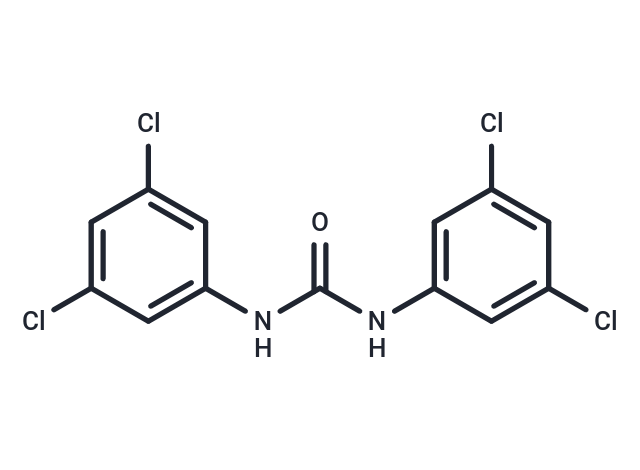
Synonyms: COH-SR4 (Mitochondria uncoupler SR4)
| Pack Size | Price | USA Stock | Global Stock | Quantity |
|---|---|---|---|---|
| 50 mg | $37 | In Stock | In Stock | |
| 1 mL x 10 mM (in DMSO) | $29 | In Stock | In Stock |
| Description | COH-SR4 (COH-SR4 (Mitochondria uncoupler SR4)) is a uncoupler of mitochondrial oxidative phosphorylation. COH-SR4 modulates amp-dependent kinase (ampk)-mammalian target of rapamycin (mtor) signaling, and inhibiting proliferation of hepg2 hepatocarcinoma cells |
| In vivo | SR4 is a novel mitochondrial uncoupler with anti-obesity and anti-diabetic properties.?SR4 increased oxygen consumption, dissipated mitochondrial membrane potential, induced mitochondrial swelling, and decreased intracellular ATP in cultured cells and isolated liver mitochondria.?Oral feeding of SR4 significantly reduced body weight gain, improved glycemic control and insulin resistance, and prevented dyslipidemia in both high-fat-diet (HFD) induced obese and diabetic db/db mice.?SR4 treatment also decreased liver triglycerides and prevented hepatic steatosis in both animal models.?Mitochondrial uncoupling of SR4 results to activation of AMP-activated protein kinase (AMPK), leading to the phosphorylation and inhibition of acetyl-CoA carboxylase (ACC).?Gene analyses by RT-PCR showed SR4 significantly suppressed the mRNA expression of several lipogenic genes and gluconeogenic genes in the liver of HFD obese mice.?RNA sequencing analysis showed that 642 genes were differentially expressed in liver of db/db mice after SR4 treatment (217 upregulated, 425 down-regulated).?Gene ontology analysis by DAVID indicated SR4 upregulated amino acid metabolism and down-regulated lipid and fatty acid synthesis and glucose metabolism.?These studies demonstrate that SR4 may be a promising compound for treatment of T2DM and obesity |
| Synonyms | COH-SR4 (Mitochondria uncoupler SR4) |
| Molecular Weight | 350.03 |
| Formula | C13H8Cl4N2O |
| Cas No. | 73439-19-7 |
| Smiles | Clc1cc(Cl)cc(NC(=O)Nc2cc(Cl)cc(Cl)c2)c1 |
| Relative Density. | 1.608 g/cm3 (Predicted) |
| Storage | Powder: -20°C for 3 years | In solvent: -80°C for 1 year Shipping with blue ice/Shipping at ambient temperature. | ||||||||||||||||||||
| Solubility Information | DMSO: 4 mg/mL (11.43 mM), Sonication is recommended.  | ||||||||||||||||||||
Solution Preparation Table | |||||||||||||||||||||
DMSO
Note : The dilution table applies only to solid products. For liquid products, please calculate the stock solution based on the stated concentration and/or density. | |||||||||||||||||||||
 For example, if the intended dosage is 10 mg/kg for animals weighing 20 g , with a dosing volume of 100 μL per animal, and a total of 10 animals are to be administered, using a formulation of
  10% DMSO+ 40% PEG300+ 5% Tween 80+ 45% Saline/PBS/ddH2O , the resulting working solution concentration would be 2 mg/mL.
Dissolve 2 mg of the compound in 100 μL DMSO to obtain a stock solution at a concentration of 20 mg/mL . If the required concentration exceeds the compound's known solubility, please contact us for technical support before proceeding.
1) Add 100 μL of the DMSO stock solution to 400 µL PEG300 and mix thoroughly until the solution becomes clear.
2) Add 50 µL Tween 80 and mix well until fully clarified.
3) Add 450 µL Saline,PBS or ddH2O and mix thoroughly until a homogeneous solution is obtained.
| Size | Quantity | Unit Price | Amount | Operation |
|---|
 Feedback
 Hello! How can I help you today?
Copyright © 2015-2026 TargetMol Chemicals Inc. All Rights Reserved.
