


Shopping Cart
Remove All Your shopping cart is currently empty


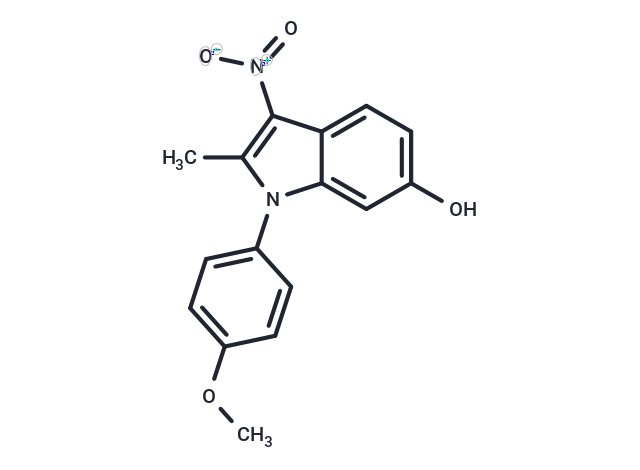
Synonyms: ID8

| Pack Size | Price | USA Stock | Global Stock | Quantity |
|---|---|---|---|---|
| 5 mg | $40 | In Stock | In Stock | |
| 10 mg | $56 | In Stock | In Stock | |
| 25 mg | $98 | In Stock | In Stock | |
| 50 mg | $163 | In Stock | In Stock | |
| 100 mg | $243 | In Stock | In Stock | |
| 200 mg | $359 | In Stock | In Stock | |
| 1 mL x 10 mM (in DMSO) | $44 | In Stock | In Stock |
| Description | ID-8, a DYRK inhibitor, sustains embryonic stem cell self-renewal in long-term culture. |
| In vivo | ID-8 maintains the expression of the Nanog gene through the activation of Sox2-Oct3/4, enabling the reversible maintenance of ESC (Embryonic Stem Cells) cultures for prolonged periods. In the presence of Wnt, ID-8 modulates the Wnt/β-catenin signaling pathway, enhancing CBP/β-catenin levels to preserve the undifferentiated state of hESCs (human Embryonic Stem Cells), thereby supporting cell proliferation and survival. |
| Synonyms | ID8 |
| Kinase Assay | In Vitro Enzymatic Assay for Histone Deacetylases: In vitro activities of the 11 recombinant human zinc-dependent HDAC enzymes are detected by ?uorigenic release of 7-amino-4-methylcoumarin from substrate upon deacetylase enzymatic activity. A series of dilutions of the unique HDAC6 compound, tubacin, and SAHA are prepared with 10% DMSO in HDAC assay buffer, and 5 μL of the dilution was added to a 50-μL reaction so that the ?nal concentration of DMSO is 1% in all of the reactions. The enzymatic reactions are conducted in duplicate at 37 °C for 30 min in a 50-μL mixture containing HDAC assay buffer, 5 μg BSA, an HDAC substrate, an HDAC enzyme, and a test compound. After enzymatic reactions, 50 μL of 2× HDAC developer is added to each well, and the plate is incubated at room temperature for an additional 15 min. Fluorescence intensity is measured at an excitation of 360 nm and an emission of 460 nm using a Synergy microplate reader. Negative (no enzyme, no inhibitor, a drug with no HDAC inhibition activity) and positive controls (known HDAC inhibitor SAHA) are included in the assays. IC50 is determined at the drug concentration that results in 50% reduction of HDAC activity compared with the control. |
| Cell Research | Briefly, the hESCs in feeder-free culture are dissociated completely with 0.05% trypsin-EDTA and seeded at 104 cells per well in Matrigel-coated 6-well culture plates and cultured in MEF-CM. Various concentrations of Wnt3, IQ-1, ID-8, and/or ICG-001 are supplemented into the culture media at the onset of seeding and then continuously until the end of culturing. For all assays, the cell and colony morphology are examined under a microscope, and the replating efficiency is examined by counting the number of colonies after 7 days of culture. (Only for Reference) |
| Molecular Weight | 298.29 |
| Formula | C16H14N2O4 |
| Cas No. | 147591-46-6 |
| Smiles | COc1ccc(cc1)-n1c(C)c([N+]([O-])=O)c2ccc(O)cc12 |
| Relative Density. | no data available |
| Storage | Powder: -20°C for 3 years | In solvent: -80°C for 1 year Shipping with blue ice/Shipping at ambient temperature. | ||||||||||||||||||||||||||||||
| Solubility Information | DMSO: 29.8 mg/mL (99.9 mM), Sonication is recommended. | ||||||||||||||||||||||||||||||
Solution Preparation Table | |||||||||||||||||||||||||||||||
DMSO
Note : The dilution table applies only to solid products. For liquid products, please calculate the stock solution based on the stated concentration and/or density. | |||||||||||||||||||||||||||||||
 For example, if the intended dosage is 10 mg/kg for animals weighing 20 g , with a dosing volume of 100 μL per animal, and a total of 10 animals are to be administered, using a formulation of
  10% DMSO+ 40% PEG300+ 5% Tween 80+ 45% Saline/PBS/ddH2O , the resulting working solution concentration would be 2 mg/mL.
Dissolve 2 mg of the compound in 100 μL DMSO to obtain a stock solution at a concentration of 20 mg/mL . If the required concentration exceeds the compound's known solubility, please contact us for technical support before proceeding.
1) Add 100 μL of the DMSO stock solution to 400 µL PEG300 and mix thoroughly until the solution becomes clear.
2) Add 50 µL Tween 80 and mix well until fully clarified.
3) Add 450 µL Saline,PBS or ddH2O and mix thoroughly until a homogeneous solution is obtained.
| Size | Quantity | Unit Price | Amount | Operation |
|---|
 Feedback
 Hello! How can I help you today?
Copyright © 2015-2026 TargetMol Chemicals Inc. All Rights Reserved.
