


Shopping Cart
Remove All Your shopping cart is currently empty


Synonyms: Neurontin, Gabapentine, Aclonium
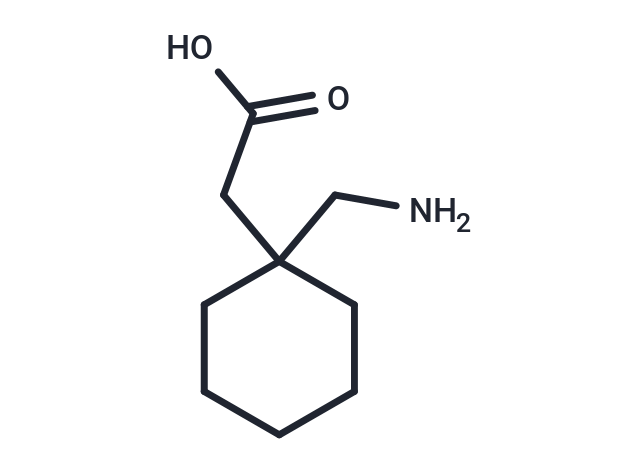
| Pack Size | Price | USA Stock | Global Stock | Quantity |
|---|---|---|---|---|
| 25 mg | $36 | In Stock | In Stock | |
| 50 mg | $52 | In Stock | In Stock | |
| 100 mg | $73 | In Stock | In Stock | |
| 500 mg | $176 | In Stock | In Stock | |
| 1 mL x 10 mM (in H2O) | $30 | In Stock | In Stock |
| Description | Gabapentin (Neurontin) is an Anti-epileptic Agent. The physiologic effect of gabapentin is by means of Decreased Central Nervous System Disorganized Electrical Activity. |
| Targets & IC50 | Ca2+ channel:140 nM |
| In vitro | Administering 10-100 mg/kg of Gabapentin orally to rats results in a dose-dependent blockade of both static and dynamic allodynia. |
| In vivo | Gabapentin induces alterations in the cytoplasmic and extracellular concentrations of several amino acids (including L-leucine, L-valine, and L-phenylalanine) in rat cortical astrocytes and synaptosomes, suggesting pharmacological significance. In GABA B receptors composed of gb1a-GB2 subunit heterodimers, gabapentin decreases potassium-stimulated calcium influx via voltage-gated calcium channels. It potentiates N-methyl-D-aspartate-evoked currents in GABAergic rat spinal dorsal horn neurons in the presence of protein kinase C, possibly by enhancing the glycine sensitivity of the NMDA receptor complex. Gabapentin causes a delayed enhancement of indeterminate voltage-activated potassium currents in rat dorsal root ganglion neurons. In fura-2-loaded human neocortical synaptosomes, it concentration-dependently inhibits potassium(+)-induced [Ca(2+)] elevations with an IC50 of 17 mM and maximal inhibition of 37%. Gabapentin binds to the α2 delta subunit of calcium channels, selectively attenuating depolarization-induced presynaptic Ca(2+) influx through P/Q-type Ca(2+) channels, resulting in reduced glutamate/aspartate release from excitatory amino acid nerve terminals to AMPA heteroreceptors on noradrenergic nerve endings. |
| Synonyms | Neurontin, Gabapentine, Aclonium |
| Molecular Weight | 171.24 |
| Formula | C9H17NO2 |
| Cas No. | 60142-96-3 |
| Smiles | NCC1(CC(O)=O)CCCCC1 |
| Relative Density. | 1.058 g/cm3 |
| Storage | Powder: -20°C for 3 years | In solvent: -80°C for 1 year Shipping with blue ice/Shipping at ambient temperature. | |||||||||||||||||||||||||||||||||||
| Solubility Information | DMSO: Insoluble H2O: 80 mg/mL (467.18 mM), Sonication is recommended.  | |||||||||||||||||||||||||||||||||||
Solution Preparation Table | ||||||||||||||||||||||||||||||||||||
H2O
Note : The dilution table applies only to solid products. For liquid products, please calculate the stock solution based on the stated concentration and/or density. | ||||||||||||||||||||||||||||||||||||
 For example, if the intended dosage is 10 mg/kg for animals weighing 20 g , with a dosing volume of 100 μL per animal, and a total of 10 animals are to be administered, using a formulation of
  10% DMSO+ 40% PEG300+ 5% Tween 80+ 45% Saline/PBS/ddH2O , the resulting working solution concentration would be 2 mg/mL.
Dissolve 2 mg of the compound in 100 μL DMSO to obtain a stock solution at a concentration of 20 mg/mL . If the required concentration exceeds the compound's known solubility, please contact us for technical support before proceeding.
1) Add 100 μL of the DMSO stock solution to 400 µL PEG300 and mix thoroughly until the solution becomes clear.
2) Add 50 µL Tween 80 and mix well until fully clarified.
3) Add 450 µL Saline,PBS or ddH2O and mix thoroughly until a homogeneous solution is obtained.
| Size | Quantity | Unit Price | Amount | Operation |
|---|
 Feedback
 Hello! How can I help you today?
Copyright © 2015-2026 TargetMol Chemicals Inc. All Rights Reserved.
