


Shopping Cart
Remove All Your shopping cart is currently empty


Synonyms:

| Pack Size | Price | USA Stock | Global Stock | Quantity |
|---|---|---|---|---|
| 5 mg | $34 | In Stock | In Stock | |
| 10 mg | $52 | In Stock | In Stock | |
| 25 mg | $106 | In Stock | In Stock | |
| 50 mg | $166 | In Stock | In Stock | |
| 100 mg | $245 | In Stock | In Stock | |
| 1 mL x 10 mM (in DMSO) | $38 | In Stock | In Stock |
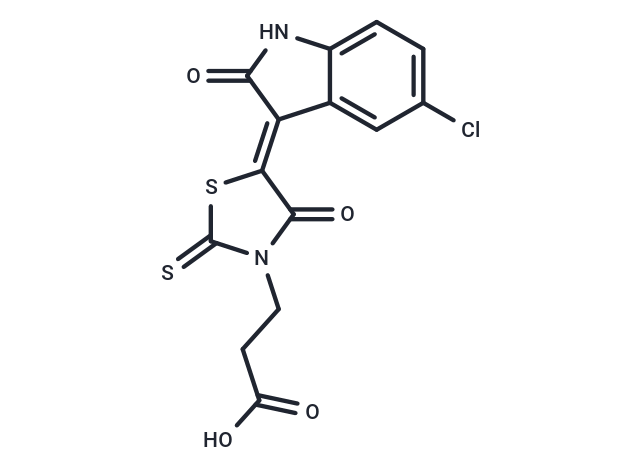
| Description | FX1 is an effective and selective BCL6 inhibitor (IC50: 35 μM). |
| Targets & IC50 | Bcl-6 BTB:35 μM |
| In vitro | FX1 markedly reduces recruitment of SMRT and BCOR to all 3 BCL6 target genes. There is little presence of SMRT at these loci in the BCL6-negative DLBCL cell line, which is not affected by FX1. After treatment with 50 μM FX1 for 6 hours, the superior potency of FX1 versus 79-6 in disrupting BCL6 binding to SMRT is evident when these small molecules are compared head to head in quantitative ChIP assays in DLBCL cells. |
| In vivo | Total B cell abundance is unaffected by FX1. FX1 significantly deplete GC B cells (GL7+FAS+B220+). Staining with B220 antibody reveals normal B cell follicular structures, whereas staining for the GC B cell-specific marker peanut agglutinin shows profound loss of GCs. The half-life is estimated to be approximately 12 hours. No signs of toxicity, inflammation, or infection are evident from H&E-stained sections of spleen, lung, gastrointestinal tract, kidney, heart, liver, and bone marrow of the fixed organs from mice treated with FX1 compare with the vehicle. |
| Cell Research | Cell viability is determined with the fluorescent redox dye. Fluorescence is determined for 3 replicates per treatment condition or vehicle with the microplate reader. The drug effect as 100-percentage viability is calculated. Through dose-effect curves the drug concentration that inhibits the growth of cell lines by 50% compared with vehicle (GI50) is determined. Experiments are performed in triplicate. For combination treatments, cells are exposed to a dose curve of each drug alone or their combination in a constant ratio, and cell viability is determined. To compare different schedules of treatments, the cells are treated in triplicate as follows: FX1 and doxorubicin simultaneously and cells treated for 48 hours; FX1 first and 24 hours after doxorubicin is added and treats for an extra 48 hours; doxorubicin first and 24 hours after FX1 is added and treats for an extra 48 hours. Then, the software is used to plot dose-effect curves and calculate the dose-reduction index [1]. |
| Animal Research | Cell viability is determined with the fluorescent redox dye. Fluorescence is determined for 3 replicates per treatment condition or vehicle with the microplate reader. Cell viability of the drug-treated cells is normalized to their vehicle-treated controls, and the results are expressed as percentage viability. The drug effect as 100-percentage viability is calculated. Through dose-effect curves the drug concentration that inhibits the growth of cell lines by 50% compare with vehicle (GI50) is determined. Experiments are performed in triplicate. For combination treatments, cells are exposed to a dose curve of each drug alone or their combination in constant ratio, and cell viability is determined. To compare different schedules of treatments, the cells are treated in triplicate as follows: FX1 and doxorubicin simultaneously and cells treated for 48 hours; FX1 first and 24 hours after doxorubicin is added and treats for an extra 48 hours; doxorubicin first and 24 hours after FX1 is added and treats for an extra 48 hours. Then, the software is used to plot dose-effect curves and calculate the dose-reduction index[1]. |
| Molecular Weight | 368.82 |
| Formula | C14H9ClN2O4S2 |
| Cas No. | 1426138-42-2 |
| Smiles | OC(=O)CCN1C(=S)S\C(C1=O)=C1/C(=O)Nc2ccc(Cl)cc12 |
| Relative Density. | no data available |
| Storage | Powder: -20°C for 3 years | In solvent: -80°C for 1 year Shipping with blue ice/Shipping at ambient temperature. | ||||||||||||||||||||||||||||||
| Solubility Information | DMSO: 25 mg/mL (67.78 mM), Sonication is recommended.  | ||||||||||||||||||||||||||||||
| In Vivo Formulation | 10% DMSO+40% PEG300+5% Tween 80+45% Saline: 1 mg/mL (2.71 mM), Sonication is recommended. Please add the solvents sequentially, clarifying the solution as much as possible before adding the next one. Dissolve by heating and/or sonication if necessary. Working solution is recommended to be prepared and used immediately. The formulation provided above is for reference purposes only. In vivo formulations may vary and should be modified based on specific experimental conditions. | ||||||||||||||||||||||||||||||
Solution Preparation Table | |||||||||||||||||||||||||||||||
DMSO
Note : The dilution table applies only to solid products. For liquid products, please calculate the stock solution based on the stated concentration and/or density. | |||||||||||||||||||||||||||||||
 For example, if the intended dosage is 10 mg/kg for animals weighing 20 g , with a dosing volume of 100 μL per animal, and a total of 10 animals are to be administered, using a formulation of
  10% DMSO+ 40% PEG300+ 5% Tween 80+ 45% Saline/PBS/ddH2O , the resulting working solution concentration would be 2 mg/mL.
Dissolve 2 mg of the compound in 100 μL DMSO to obtain a stock solution at a concentration of 20 mg/mL . If the required concentration exceeds the compound's known solubility, please contact us for technical support before proceeding.
1) Add 100 μL of the DMSO stock solution to 400 µL PEG300 and mix thoroughly until the solution becomes clear.
2) Add 50 µL Tween 80 and mix well until fully clarified.
3) Add 450 µL Saline,PBS or ddH2O and mix thoroughly until a homogeneous solution is obtained.
| Size | Quantity | Unit Price | Amount | Operation |
|---|
 Feedback
 Hello! How can I help you today?
Copyright © 2015-2026 TargetMol Chemicals Inc. All Rights Reserved.
