


Shopping Cart
Remove All Your shopping cart is currently empty


Synonyms: TAK137
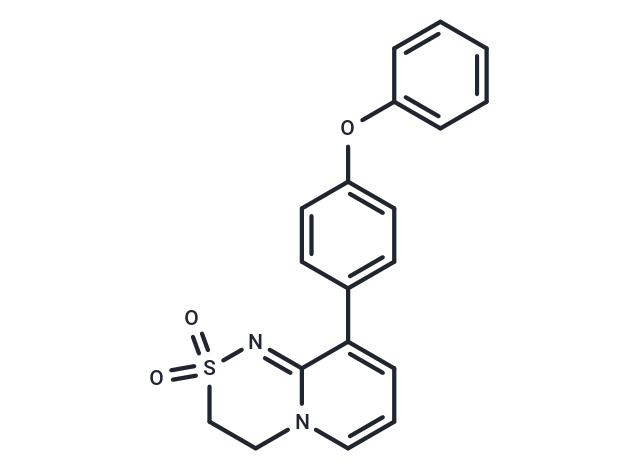

| Pack Size | Price | USA Stock | Global Stock | Quantity |
|---|---|---|---|---|
| 1 mg | $293 | In Stock | In Stock | |
| 5 mg | $722 | In Stock | In Stock | |
| 10 mg | $987 | In Stock | In Stock | |
| 25 mg | $1,520 | In Stock | In Stock | |
| 50 mg | $1,980 | In Stock | In Stock |
| Description | TAK-137 belongs to small molecule compounds, acting as a positive allosteric modulator of AMPA receptors, with favorable brain penetration and oral activity. Suitable for research on depression and cognitive impairment associated with schizophrenia. |
| In vitro | Methods: In GluA1i CHO cells and primary rat neurons, TAK-137 (1 nM–30 μM) was used for Ca2+ influx assays and whole-cell patch-clamp recordings. Results: TAK-137 induced Ca2+ influx and AMPA receptor currents only in the presence of agonists, with no intrinsic agonist activity, whereas LY451646 activated receptors even in the absence of agonists. [1] |
| In vivo | Methods: In Sprague-Dawley rats, ICR mice, and cynomolgus monkeys, TAK-137 (dissolved in 0.5% methylcellulose) was administered orally for novel object recognition, DMTS tasks, neural progenitor cell proliferation, and seizure observation. Results: TAK-137 (0.03–1 mg/kg) improved cognition in monkeys; 0.1–3 mg/kg promoted neurogenesis in rodents; seizure safety window was 116-fold for AUCbrain in rats and >49-fold for AUCplasma in monkeys. [1] Methods: In rat primary hippocampal neurons, whole-cell patch-clamp recordings were performed to assess the effect of TAK-137 (0.1–30 μM) on AMPA-evoked currents. Results: TAK-137 concentration-dependently enhanced AMPA currents (EC50 = 1.4 μM) with an enhancement magnitude of 7127-fold; at 30 μM, baseline current was only slightly affected, far less potent than the strong agonist effect of LY451646. [2] |
| Synonyms | TAK137 |
| Molecular Weight | 352.41 |
| Formula | C19H16N2O3S |
| Cas No. | 1358749-55-9 |
| Smiles | O=S1(=O)N=C2C(=CC=CN2CC1)C=3C=CC(OC=4C=CC=CC4)=CC3 |
| Storage | Powder: -20°C for 3 years | In solvent: -80°C for 1 year Shipping with blue ice/Shipping at ambient temperature. |
 For example, if the intended dosage is 10 mg/kg for animals weighing 20 g , with a dosing volume of 100 μL per animal, and a total of 10 animals are to be administered, using a formulation of
  10% DMSO+ 40% PEG300+ 5% Tween 80+ 45% Saline/PBS/ddH2O , the resulting working solution concentration would be 2 mg/mL.
Dissolve 2 mg of the compound in 100 μL DMSO to obtain a stock solution at a concentration of 20 mg/mL . If the required concentration exceeds the compound's known solubility, please contact us for technical support before proceeding.
1) Add 100 μL of the DMSO stock solution to 400 µL PEG300 and mix thoroughly until the solution becomes clear.
2) Add 50 µL Tween 80 and mix well until fully clarified.
3) Add 450 µL Saline,PBS or ddH2O and mix thoroughly until a homogeneous solution is obtained.
| Size | Quantity | Unit Price | Amount | Operation |
|---|
 Feedback
 Hello! How can I help you today?
Copyright © 2015-2026 TargetMol Chemicals Inc. All Rights Reserved.
