


Shopping Cart
Remove All Your shopping cart is currently empty

Synonyms: SR 18292
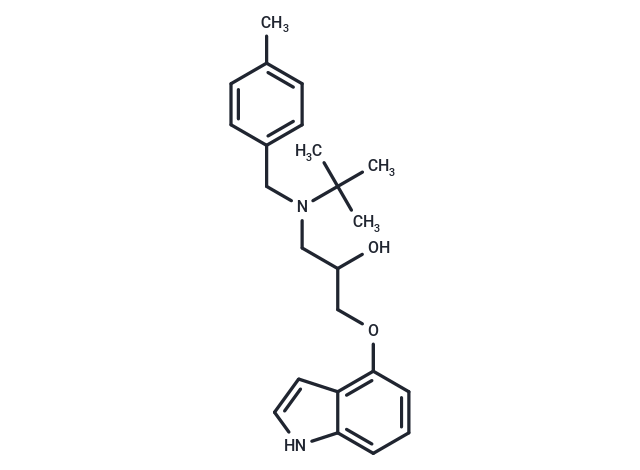

| Pack Size | Price | USA Stock | Global Stock | Quantity |
|---|---|---|---|---|
| 2 mg | $34 | In Stock | In Stock | |
| 5 mg | $55 | In Stock | In Stock | |
| 10 mg | $89 | In Stock | In Stock | |
| 25 mg | $189 | In Stock | In Stock | |
| 50 mg | $297 | In Stock | In Stock | |
| 100 mg | $472 | In Stock | In Stock | |
| 500 mg | $987 | - | In Stock | |
| 1 mL x 10 mM (in DMSO) | $65 | In Stock | In Stock |
| Description | SR-18292 is an inhibitor of PPAR gamma coactivator-1α (PGC-1α), which increases PGC-1α acetylation, suppresses gluconeogenic gene expression and reduces glucose production in hepatocytes. |
| Targets & IC50 | PGC1α:NA |
| In vitro | SR-18292 enhances the association between the transcriptional coactivator PGC-1α and the acetyltransferase GCN5, thereby increasing the acetylation of specific lysine residues on PGC-1α. This modification potentially reduces PGC-1α's gluconeogenic activity by diminishing its ability to co-activate the nuclear hormone receptor HNF4α, subsequently suppressing the gluconeogenic transcriptional function of the HNF4α/PGC-1α complex. This mechanism signifies SR-18292's role in modulating energy homeostasis through the regulation of fat and glucose metabolism by influencing PGC-1α's interaction with key metabolic regulatory proteins. |
| In vivo | SR-18292 notably lowers fasting blood glucose levels, enhances hepatic insulin sensitivity, and ameliorates glucose homeostasis in diabetic mice. When administered to mice fed a high-fat diet (HFD)—a model for studying obesity and Type 2 Diabetes (T2D)—through intraperitoneal (I.P.) injection at a dose of 45 mg/kg for three consecutive days, with an additional dose on the fourth day, SR-18292 demonstrates significant reductions in fasting blood glucose levels compared to those in vehicle-treated control mice. Furthermore, SR-18292 treatment notably inhibits the expression of gluconeogenic genes, particularly Pck1, in the livers of these mice, indicating a suppression of a key regulatory pathway responding to fasting. |
| Synonyms | SR 18292 |
| Kinase Assay | For determination of GCN5 HAT activity U-2 OS cells overexpressing Ad-GCN5 are treated with SR-18292 (10 μM) for 18 h. Cells are lysed with buffer B (20 mM HEPES-KOH (pH 7.9), 125 mM NaCl, 1 mM EDTA, 1 mM DTT, 1% IGEPAL (v/v), 10% glycerol (v/v), 5 mM NaF, 5 mM β-glycerophosphate, 5 mM sodium butyrate and 10 mM nicotinamide), supplemented with Protease Inhibitor Cocktail. FLAG-GCN5 is immunoprecipitated with FLAG beads overnight at 4°C following multiple washes with lysis buffer. GCN5 is then eluted using 3× FLAG peptide and the purified protein is used to determine HAT activity using the HAT Inhibitor Screening Assay Kit |
| Cell Research | For cell viability determination using MTT, primary hepatocytes are seeded on a 96-well plate at 20,000 cells/well. The following day cells are treated at different doses, as indicated, for 18 h treatment of primary hepatocytes. 5 μL of MTT reagent (5 mg/mL) is then added to each well (n=4/dose) and cells are incubated for 1h at 37°C. Medium is discarded and dye is extracted by adding 100 μL DMSO to each well. For cytotoxicity determination using ToxiLight Non-destructive Cytotoxicity Bioassay, hepatocytes are seeded on a 6-well plate and treated with either SR-18292 (20 μM) or Cisplatin (50 μM) for 18 h. 50 μL of medium is collected and used to measure cellular toxicity by adding 100 of adenylate kinase detection reagent and incubating 5 min at RT before measuring luminescence[ |
| Animal Research | SR-18292 is re-suspended in a 10% DMSO/10% Tween80/80% PBS solution at a final concentration of 6-12 mg/mL.MiceFor in vivo studies with DIO mice, males 6-8 weeks old are fed high fat diet (HFD) for the indicated time. For drug administration, SR-18292 (45 mg/kg) is injected via I.P. for 3 days between 4-5 pm and food is removed on day 3 at 5pm. The following morning (day 4) SR-18292 is injected again (for a total of 4 injections) and blood glucose is measured after 3 hours. Injection volume does not exceed 275 μL per mouse |
| Molecular Weight | 366.5 |
| Formula | C23H30N2O2 |
| Cas No. | 2095432-55-4 |
| Smiles | Cc1ccc(CN(CC(O)COc2cccc3[nH]ccc23)C(C)(C)C)cc1 |
| Relative Density. | 1.132 g/cm3 (Predicted) |
| Storage | Store at low temperature Powder: -20°C for 3 years | In solvent: -80°C for 1 year Shipping with blue ice/Shipping at ambient temperature. | ||||||||||||||||||||||||||||||||||||||||
| Solubility Information | Ethanol: 10 mg/mL (27.29 mM), Sonication is recommended. DMSO: 245 mg/mL (668.49 mM), Sonication is recommended.  H2O: Insoluble | ||||||||||||||||||||||||||||||||||||||||
| In Vivo Formulation | 10% DMSO+40% PEG300+5% Tween 80+45% Saline: 2 mg/mL (5.46 mM), Sonication is recommended. Please add the solvents sequentially, clarifying the solution as much as possible before adding the next one. Dissolve by heating and/or sonication if necessary. Working solution is recommended to be prepared and used immediately. The formulation provided above is for reference purposes only. In vivo formulations may vary and should be modified based on specific experimental conditions. | ||||||||||||||||||||||||||||||||||||||||
Solution Preparation Table | |||||||||||||||||||||||||||||||||||||||||
Ethanol/DMSO
DMSO
Note : The dilution table applies only to solid products. For liquid products, please calculate the stock solution based on the stated concentration and/or density. | |||||||||||||||||||||||||||||||||||||||||
 For example, if the intended dosage is 10 mg/kg for animals weighing 20 g , with a dosing volume of 100 μL per animal, and a total of 10 animals are to be administered, using a formulation of
  10% DMSO+ 40% PEG300+ 5% Tween 80+ 45% Saline/PBS/ddH2O , the resulting working solution concentration would be 2 mg/mL.
Dissolve 2 mg of the compound in 100 μL DMSO to obtain a stock solution at a concentration of 20 mg/mL . If the required concentration exceeds the compound's known solubility, please contact us for technical support before proceeding.
1) Add 100 μL of the DMSO stock solution to 400 µL PEG300 and mix thoroughly until the solution becomes clear.
2) Add 50 µL Tween 80 and mix well until fully clarified.
3) Add 450 µL Saline,PBS or ddH2O and mix thoroughly until a homogeneous solution is obtained.
| Size | Quantity | Unit Price | Amount | Operation |
|---|
 Feedback
 Hello! How can I help you today?
Copyright © 2015-2026 TargetMol Chemicals Inc. All Rights Reserved.
