


Shopping Cart
Remove All Your shopping cart is currently empty

Synonyms:
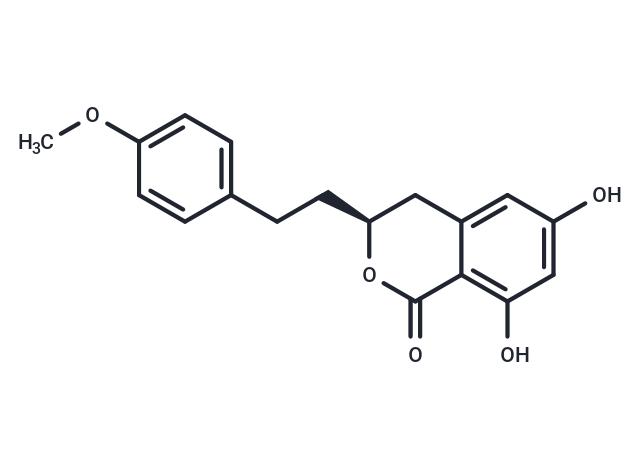
| Pack Size | Price | USA Stock | Global Stock | Quantity |
|---|---|---|---|---|
| 5 mg | $1,980 | Inquiry | Inquiry | |
| 1 mL x 10 mM (in DMSO) | $2,398 | Inquiry | Inquiry |
| Description | Agrimonolide, a compound derived from isocoumarins and found mainly in the herb Agrimonia pilosa Ledeb, has significant biological activity. agrimonolide exerts anti-inflammatory effects by inhibiting lipopolysaccharide (LPS)-induced activation of JAK-STATs and p38 MAPKs signaling pathways. Agrimonolide and its derivative, desmethyl agonolide, have been shown to be effective in increasing insulin-mediated glycogen levels in hepatocytes and may play a key role in regulating insulin-resistant HepG2 cells. agrimonolide exhibits inhibitory effects on cancer progression and induction of cell death and apoptosis by targeting SCD1 in ovarian cancer cells. In particular, Agrimonolide exhibited a dose-dependent inhibition of proliferation, migration and invasion of A2780 and SKOV-3 cells, while promoting apoptosis. The compound was also found to induce iron-mediated cell death while increasing reactive oxygen species (ROS) and total iron levels.Agrimonolide readily crosses the blood-brain barrier, suggesting its potential for therapeutic applications in neurological disorders. |
| In vitro | Five compounds were isolated from AP using column chromatography, including Agrimonolide (K1), desmethylAgrimonolide (K2), tormentic acid (K3), ursolic acid (K4), and quercetin (K5). Glucose metabolism was evaluated in insulin-resistant HepG2 cells. K1 consisting of K2 effectively increased the insulin-mediated glycogen level in hepatocytes. At a concentration level of 20 μM, K1 significantly elevated the hepatic glucokinase (GK) activity (3.0 U min-1 mg-1 protein) compared to the control. And K1 caused a significant reduction of the glucose-6-phosphatase (G6Pase) activity and a significant change in the phosphoenolpyruvate carboxykinase (PEPCK) activity. [1]
Agrimonolide dose-dependently inhibited proliferation, migration, and invasion and promoted apoptosis in A2780 and SKOV-3 cells. Agrimonolide induced ferroptosis in tumour cells, evidenced by the increased levels of ROS, total iron, and Fe2+ and downregulation of ferroptosis indicators (SLC7A11 and GPX4). Additionally, agrimonolide attenuated the tumour growth of ovarian cancer in the SKOV-3 xenograft model and significantly downregulated SCD1 in tumour tissues.[2] |
| Molecular Weight | 314.33 |
| Formula | C18H18O5 |
| Cas No. | 21499-24-1 |
| Smiles | COc1ccc(CC[C@H]2Cc3cc(O)cc(O)c3C(=O)O2)cc1 |
| Relative Density. | 1.293g/cm3 |
| Storage | Store at low temperature,Keep away from direct sunlight Powder: -20°C for 3 years | In solvent: -80°C for 1 year Shipping with blue ice/Shipping at ambient temperature. |
 For example, if the intended dosage is 10 mg/kg for animals weighing 20 g , with a dosing volume of 100 μL per animal, and a total of 10 animals are to be administered, using a formulation of
  10% DMSO+ 40% PEG300+ 5% Tween 80+ 45% Saline/PBS/ddH2O , the resulting working solution concentration would be 2 mg/mL.
Dissolve 2 mg of the compound in 100 μL DMSO to obtain a stock solution at a concentration of 20 mg/mL . If the required concentration exceeds the compound's known solubility, please contact us for technical support before proceeding.
1) Add 100 μL of the DMSO stock solution to 400 µL PEG300 and mix thoroughly until the solution becomes clear.
2) Add 50 µL Tween 80 and mix well until fully clarified.
3) Add 450 µL Saline,PBS or ddH2O and mix thoroughly until a homogeneous solution is obtained.
| Size | Quantity | Unit Price | Amount | Operation |
|---|
 Feedback
 Hello! How can I help you today?
Copyright © 2015-2026 TargetMol Chemicals Inc. All Rights Reserved.
