


Shopping Cart
Remove All Your shopping cart is currently empty

Synonyms: STAT3 Inhibitor V

| Pack Size | Price | USA Stock | Global Stock | Quantity |
|---|---|---|---|---|
| 5 mg | $30 | In Stock | In Stock | |
| 10 mg | $47 | In Stock | In Stock | |
| 25 mg | $77 | In Stock | In Stock | |
| 50 mg | $126 | In Stock | In Stock | |
| 100 mg | $197 | In Stock | In Stock | |
| 200 mg | $293 | In Stock | In Stock | |
| 500 mg | $490 | - | In Stock | |
| 1 mL x 10 mM (in DMSO) | $32 | In Stock | In Stock |
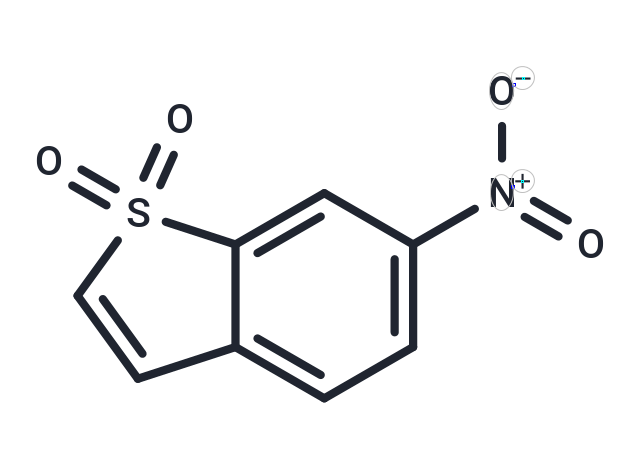
| Description | Stattic (STAT3 Inhibitor V) is a STAT3 inhibitor (IC50=5.1 μM) that selectively inhibits STAT3 activation, dimerization, and nuclear translocation. Stattic has antitumor activity and induces apoptosis. |
| Targets & IC50 | DU-145 cells proliferation:2.5 μM (48h), STAT3:5.1 μM (cell free), HCT116 cells proliferation:1.08 μM (72h), A549 cells proliferation:4.4 μM (72h), ASPC1 cells proliferation:1.32 μM (72h), A549 cells proliferation:2.5 μM (48h) |
| In vitro | METHODS: Human pancreatic cancer cells PANC-1 and BxPc-3 were treated with Stattic (1-10 μM) for 12-48 h. Cell viability was measured using the CCK-8. RESULTS: Stattic decreased the proliferation of PANC-1 and BxPc-3 cells in a concentration- and time-dependent manner, and the IC50s of Stattic on BxPc-3 and PANC-1 cells were 3.135-5.296 μM and 3.835-4.165 μM, respectively, after treatment with Stattic for 24 h. [1] METHODS: Human hepatocellular carcinoma cells HepG2 were treated with Stattic (5-20 μM) for 1 h, followed by stimulation with IL-6 or IFN-γ, and the expression levels of target proteins were detected by Western Blot. RESULTS: Pre-incubation with Stattic resulted in a selective decrease in the phosphorylation of STAT3 Tyr705, while the activation of STAT1 Tyr701 remained unchanged. [2] |
| In vivo | METHODS: To test the antitumor activity in vivo, Stattic (10 mg/kg) was administered intraperitoneally once daily for four weeks to BALB/c nude mice harboring human pancreatic adenocarcinoma tumor PANC-1. RESULTS: Stattic inhibited PC growth in a nude mouse tumor model by inactivating STAT3. [1] METHODS: To investigate the role in acute liver injury, Stattic (5 mg/kg in DMSO:olive oil = 1:19) was administered as a single intraperitoneal injection to BALB/c mice with LPS/d-GalN induced acute liver injury. RESULTS: Stattic was protective against LPS/d-GalN-induced liver injury, and its protective effect may be related to its anti-inflammatory and anti-apoptotic effects. [3] |
| Synonyms | STAT3 Inhibitor V |
| Kinase Assay | The screening was performed at approximately 30C. The specificity of screening hits was validated in analogous assays for binding of the test compounds to the SH2 domains of STAT1, STAT5, and Lck. The final concentration of buffer components used for all FP assays was 10 mM HEPES (pH 7.5), 1 mM EDTA, 0.1% Nonidet P-40, 50 mM NaCl, and 10% DMSO. The absence of dithiothreitol is essential for inhibitory activity. The sequences of the peptides were: STAT3, 5-carboxyfluorescein-GY(PO3H2)LPQTV-NH2; STAT1, 5-carboxyfluorescein-GY(PO3H2)DKPHVL; STAT5, 5-carboxyfluorescein-GY (PO3H2)LVLDKW; and Lck, 5-carboxyfluorescein-GY(PO3H2)EEIP. Peptides were >95% pure. For specificity analysis at 30°C, proteins were used at 150 nM (STAT1, STAT3, and STAT5). For specificity analysis at 37°C, proteins were used at 370 nM (STAT3) or 100 nM (Lck). Proteins were incubated with test compounds in tubes at the indicated temperatures for 60 min prior addition of the respective 5-carboxyfluorescein labeled peptides (final concentration: 10 nM). Analysis of c-Myc/Max and Jun/Jun dimerization and DNA binding at 37°C was performed as described but in the absence of DTT. Before measurement at room temperature, the mixtures were allowed to equilibrate for at least 30 min. Test compounds were used at the indicated concentrations diluted from 20× stock in DMSO. Binding curves and inhibition curves were fitted with SigmaPlot. All competition curves were repeated three times in independent experiments. For the analysis of time dependence of the inhibition, the components were mixed from stock solutions kept at 0C and then incubated at 37C. Aliquots were taken at the indicated time points [1]. |
| Cell Research | MDA-MB-231, MDA-MB-435S, and MDA-MB-453 cells were seeded. at 5 × 10^4 cells in 6-well plates, grown for 24 hr before adding DMSO or Stattic (final DMSO concentration 0.1%) and then incubated with the inhibitor for 24 hr. All cells were collected and resuspended in buffer (0.1% sodium citrate, 0.1% Triton X-100, 20 μM propidium iodide) and incubated for 3 hr before 10^4 cells per sample were analyzed by flow cytometry with a FACSCalibur equipped with a 488 nm laser [1]. |
| Molecular Weight | 211.19 |
| Formula | C8H5NO4S |
| Cas No. | 19983-44-9 |
| Smiles | [O-][N+](=O)C1=CC=C2C=CS(=O)(=O)C2=C1 |
| Relative Density. | 1.621g/cm3 |
| Storage | Powder: -20°C for 3 years | In solvent: -80°C for 1 year Shipping with blue ice/Shipping at ambient temperature. | ||||||||||||||||||||||||||||||||||||||||
| Solubility Information | Ethanol: 1.1 mg/mL (5.21 mM), Sonication is recommended. DMSO: 260 mg/mL (1231.12 mM), Sonication is recommended.  | ||||||||||||||||||||||||||||||||||||||||
| In Vivo Formulation | 10% DMSO+40% PEG300+5% Tween 80+45% Saline: 1.06 mg/mL (5.02 mM), Solution. Please add the solvents sequentially, clarifying the solution as much as possible before adding the next one. Dissolve by heating and/or sonication if necessary. Working solution is recommended to be prepared and used immediately. The formulation provided above is for reference purposes only. In vivo formulations may vary and should be modified based on specific experimental conditions. | ||||||||||||||||||||||||||||||||||||||||
Solution Preparation Table | |||||||||||||||||||||||||||||||||||||||||
Ethanol/DMSO
DMSO
Note : The dilution table applies only to solid products. For liquid products, please calculate the stock solution based on the stated concentration and/or density. | |||||||||||||||||||||||||||||||||||||||||
 For example, if the intended dosage is 10 mg/kg for animals weighing 20 g , with a dosing volume of 100 μL per animal, and a total of 10 animals are to be administered, using a formulation of
  10% DMSO+ 40% PEG300+ 5% Tween 80+ 45% Saline/PBS/ddH2O , the resulting working solution concentration would be 2 mg/mL.
Dissolve 2 mg of the compound in 100 μL DMSO to obtain a stock solution at a concentration of 20 mg/mL . If the required concentration exceeds the compound's known solubility, please contact us for technical support before proceeding.
1) Add 100 μL of the DMSO stock solution to 400 µL PEG300 and mix thoroughly until the solution becomes clear.
2) Add 50 µL Tween 80 and mix well until fully clarified.
3) Add 450 µL Saline,PBS or ddH2O and mix thoroughly until a homogeneous solution is obtained.
| Size | Quantity | Unit Price | Amount | Operation |
|---|
 Feedback
 Hello! How can I help you today?
Copyright © 2015-2026 TargetMol Chemicals Inc. All Rights Reserved.
