Shopping Cart
Remove All
  • TargetMol
    Your shopping cart is currently empty

HBV-C subtype ayw (isolate China/Tibet127/2002) Capsid protein (Yeast, His)

Copy Product Info
TargetMol | SPR Buffer-Exchangeable
Catalog No. TMPH-00804

HBV-C subtype ayw (isolate China/Tibet127/2002) Capsid protein (Yeast, His) is expressed in yeast with N-6xHis tag. The predicted molecular weight is 23.0 kDa and the accession number is P0C6H7.

HBV-C subtype ayw (isolate China/Tibet127/2002) Capsid protein (Yeast, His)

HBV-C subtype ayw (isolate China/Tibet127/2002) Capsid protein (Yeast, His)

Copy Product Info
TargetMol | SPR Buffer-Exchangeable
Catalog No. TMPH-00804
HBV-C subtype ayw (isolate China/Tibet127/2002) Capsid protein (Yeast, His) is expressed in yeast with N-6xHis tag. The predicted molecular weight is 23.0 kDa and the accession number is P0C6H7.
Pack SizePriceUSA WarehouseGlobal WarehouseQuantity
5 μg$14320 days20 days
10 μg$23820 days20 days
20 μg$39720 days20 days
50 μg$59720 days20 days
100 μg$84520 days20 days
200 μg$1,19020 days20 days
500 μg$1,95020 days20 days
Add to Cart
Add to Quotation
In Stock Estimated shipping dateUSA Warehouse [1-2 days] Global Warehouse [5-7 days]
All TargetMol products are for research purposes only and cannot be used for human consumption. We do not provide products or services to individuals. Please comply with the intended use and do not use TargetMol products for any other purpose.
Questions
View More

Product Information

Biological Activity
Activity has not been tested. It is theoretically active, but we cannot guarantee it. If you require protein activity, we recommend choosing the eukaryotic expression version first.
Description
HBV-C subtype ayw (isolate China/Tibet127/2002) Capsid protein (Yeast, His) is expressed in yeast with N-6xHis tag. The predicted molecular weight is 23.0 kDa and the accession number is P0C6H7.
Species
HBV-C
Expression System
P. pastoris (Yeast)
TagN-6xHis
Accession NumberP0C6H7
Synonyms
p21.5,HBcAg,Core protein,Core antigen,Capsid protein
Amino Acid
MDIDPYKEFGASVEVLSFLPSDFFPSNRDLLDTASALDREALESPEHCSPHHTALRQAILCWGELMNLATWVGSNLEDPASRELVVSYVNVNMGLKIRQLLWFHISCLTFGRETVLEYLVSFGVWIRTPPAYRPPNAPILSTLPETTVVRRRGRSPRRRTPSPRRRRSQSPRRRRSQSRESQC
Construction
1-183 aa
Protein Purity
> 90% as determined by SDS-PAGE.
Molecular Weight23.0 kDa (predicted)
Endotoxin< 1.0 EU/μg of the protein as determined by the LAL method.
FormulationTris-based buffer, 50% glycerol
Reconstitution
A Certificate of Analysis (CoA) containing reconstitution instructions is included with the products. Please refer to the CoA for detailed information.
Stability & Storage
Lyophilized powders can be stably stored for over 12 months, while liquid products can be stored for 6-12 months at -80°C. For reconstituted protein solutions, the solution can be stored at -20°C to -80°C for at least 3 months. Please avoid multiple freeze-thaw cycles and store products in aliquots.
ShippingIn general, lyophilized powders are shipped with blue ice, while solutions are shipped with dry ice.
Research Background
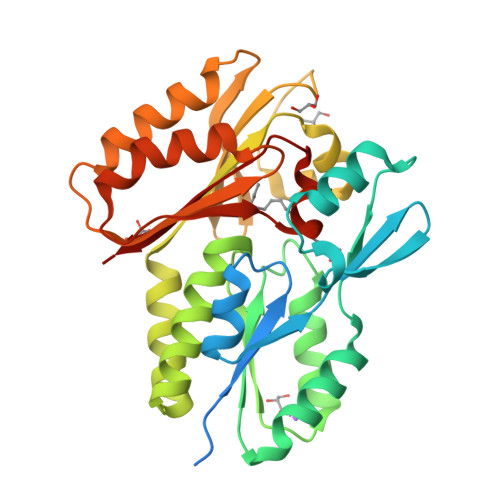
Self assembles to form an icosahedral capsid. Most capsids appear to be large particles with an icosahedral symmetry of T=4 and consist of 240 copies of capsid protein, though a fraction forms smaller T=3 particles consisting of 180 capsid proteins. Entering capsids are transported along microtubules to the nucleus. Phosphorylation of the capsid is thought to induce exposure of nuclear localization signal in the C-terminal portion of the capsid protein that allows binding to the nuclear pore complex via the importin (karyopherin-) alpha and beta. Capsids are imported in intact form through the nuclear pore into the nuclear basket, where it probably binds NUP153. Only capsids that contain the mature viral genome can release the viral DNA and capsid protein into the nucleoplasm. Immature capsids get stuck in the basket. Capsids encapsulate the pre-genomic RNA and the P protein. Pre-genomic RNA is reverse-transcribed into DNA while the capsid is still in the cytoplasm. The capsid can then either be directed to the nucleus, providing more genomes for transcription, or bud through the endoplasmic reticulum to provide new virions.

Dose Conversion

You can also refer to dose conversion for different animals. More

Calculator

  • Reconstitution Calculator
  • Recombinant Protein Dilution Calculator
  • Specific Activity Calculator

Tech Support

Please read the User Guide of Recombinant Proteins for more specific information.

Keywords