


Shopping Cart
Remove All Your shopping cart is currently empty

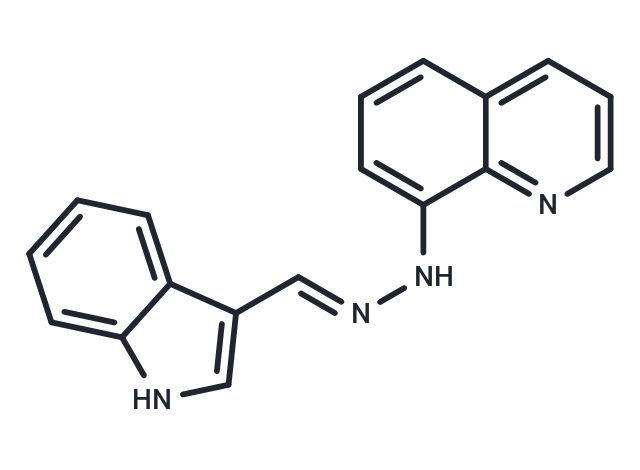
Synonyms: LDK

| Pack Size | Price | USA Stock | Global Stock | Quantity |
|---|---|---|---|---|
| 1 mg | $62 | In Stock | In Stock | |
| 5 mg | $138 | In Stock | In Stock | |
| 10 mg | $209 | In Stock | In Stock | |
| 25 mg | $333 | In Stock | In Stock | |
| 50 mg | $475 | In Stock | In Stock | |
| 100 mg | $638 | In Stock | In Stock | |
| 200 mg | $853 | - | In Stock | |
| 1 mL x 10 mM (in DMSO) | $132 | In Stock | In Stock |
| Description | Lenaldekar (LDK) inhibits T-cell expansion and autoimmune encephalomyelitis. Lenaldekar causes dephosphorylation of members of the PI3 kinase/AKT/mTOR pathway and delays sensitive cells in late mitosis. |
| In vitro | Lenaldekar could inhibit myelin specific T cell responses through the insulin-like growth factor-1 receptor (IGF-1R) pathway. Alteration of this pathway led to marked reduction in T cell proliferation and expansion. Blocking this pathway could account for the observed decreases in clinical signs and inflammatory demyelinating disease, which was accompanied by axonal preservation[3]. |
| In vivo | Relapsing-remitting experimental autoimmune encephalomyelitis was induced through active immunization of SJL/J mice with a myelin proteolipid protein peptide. The therapeutic efficacy of Lenaldekar treatment was evaluated via daily clinical score, cross-sectional ex vivo diffusion basis spectrum imaging examination and histological analysis. Lenaldekar greatly reduced relapse severity and protected white matter integrity in these experimental autoimmune encephalomyelitis mice. Diffusion basis spectrum imaging-derived axial diffusivity, radial diffusivity and restricted diffusion tensor fraction accurately reflected axonal injury, myelin integrity and inflammation-associated cellularity change, respectively[1]. |
| Synonyms | LDK |
| Molecular Weight | 286.33 |
| Formula | C18H14N4 |
| Cas No. | 418800-15-4 |
| Smiles | N(\N=C\C1=CNC2=CC=CC=C12)C1=CC=CC2=CC=CN=C12 |
| Relative Density. | 1.26 g/cm3 (Predicted) |
| Storage | Powder: -20°C for 3 years | In solvent: -80°C for 1 year Shipping with blue ice/Shipping at ambient temperature. | |||||||||||||||||||||||||||||||||||
| Solubility Information | DMSO: 55 mg/mL (192.09 mM), Sonication is recommended.  | |||||||||||||||||||||||||||||||||||
Solution Preparation Table | ||||||||||||||||||||||||||||||||||||
DMSO
Note : The dilution table applies only to solid products. For liquid products, please calculate the stock solution based on the stated concentration and/or density. | ||||||||||||||||||||||||||||||||||||
 For example, if the intended dosage is 10 mg/kg for animals weighing 20 g , with a dosing volume of 100 μL per animal, and a total of 10 animals are to be administered, using a formulation of
  10% DMSO+ 40% PEG300+ 5% Tween 80+ 45% Saline/PBS/ddH2O , the resulting working solution concentration would be 2 mg/mL.
Dissolve 2 mg of the compound in 100 μL DMSO to obtain a stock solution at a concentration of 20 mg/mL . If the required concentration exceeds the compound's known solubility, please contact us for technical support before proceeding.
1) Add 100 μL of the DMSO stock solution to 400 µL PEG300 and mix thoroughly until the solution becomes clear.
2) Add 50 µL Tween 80 and mix well until fully clarified.
3) Add 450 µL Saline,PBS or ddH2O and mix thoroughly until a homogeneous solution is obtained.
| Size | Quantity | Unit Price | Amount | Operation |
|---|
 Feedback
 Hello! How can I help you today?
Copyright © 2015-2026 TargetMol Chemicals Inc. All Rights Reserved.
