


Shopping Cart
Remove All Your shopping cart is currently empty


Synonyms: ABC294640
| Pack Size | Price | USA Stock | Global Stock | Quantity |
|---|---|---|---|---|
| 1 mg | $34 | In Stock | In Stock | |
| 2 mg | $48 | In Stock | In Stock | |
| 5 mg | $77 | In Stock | In Stock | |
| 10 mg | $126 | In Stock | In Stock | |
| 25 mg | $253 | In Stock | In Stock | |
| 50 mg | $437 | In Stock | In Stock | |
| 100 mg | $648 | In Stock | In Stock | |
| 1 mL x 10 mM (in DMSO) | $79 | In Stock | In Stock |
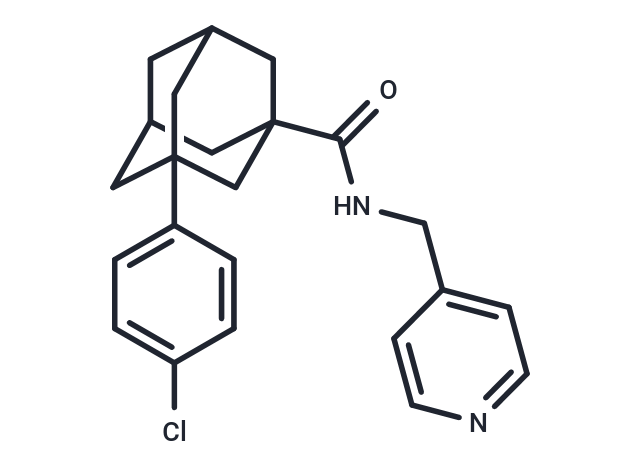
| Description | Opaganib (ABC294640) is an orally active and specific sphingosine kinase-2 (SphK2) inhibitor (IC50: 60 μM). |
| Targets & IC50 | SPHK2:60 μM |
| In vitro | ABC294640 markedly alters the ratio of ceramide/S1P consistent with inhibition of SK activity in MDA-MB-231 cells. ABC294640 inhibits tumor cell proliferation with IC50 values ranging from approximately 6 to 48 μM, and impairs tumor cell migration concomitant with loss of microfilaments. [1] ABC294640 induces nonapoptotic cell death, morphological changes in lysosomes, formation of autophagosomes, and increases in acidic vesicles in A-498, PC-3, and MDA-MB-231 cells. [2] In both MCF-7 and ER-transfected HEK293 cells, ABC294640 decreases E2-stimulated ERE-luciferase activity. [3] |
| In vivo | In mice bearing mammary adenocarcinoma xenografts, ABC294640 (100 mg/kg, p.o.) significantly reduce tumor growth, associated with depletion of S1P levels. [1] In severe combined immunodeficient mice bearing A-498 xenografts, ABC294640 delays tumor growth and elevates autophagy markers. [2] ABC294640 protects against liver transplantation-induced inflammation and cross-talk between innate and adaptive immunities, major events precipitating and exacerbating graft injury, and improves liver function and survival. [4] |
| Synonyms | ABC294640 |
| Kinase Assay | Sphingosine Kinase Assays: The IC50 values for ABC294640 and DMS are determined by a newly developed HPLC-based SK activity assay. In brief, the test compounds are incubated with recombinant SK1 or SK2 and NBD-Sph in the isozyme-selective assay buffers detailed below with 1 mg/ml fatty acid-free bovine serum albumin, 100 μM ATP, and 400 μM MgCl2. The product, i.e., NBD-S1P, is separated from NBD-Sph by HPLC as follows: Waters 2795 HPLC system with a Waters 2495 fluorescence detector, C8 Chromolith RP-8e column (100 × 4.6 mm), 1 ml/min mobile phase (acetonitrile/20 mM sodium phosphate buffer, pH2.5, at 45:55). Fluorescence is monitored with excitation at 465 nm and emission at 531 nm. The ratio of NBD-S1P/(NBD-Sph + NBD-S1P) is used as a measure of SK activity. SK-isozyme selective assay buffers each contained 20 mM Tris, pH7.4, 5 mM EDTA, 5 mM EGTA, 3 mM β-mercaptoethanol, 5% glycerol, 1× protease inhibitors and 1× phosphatase inhibitors. For the SK1 assay buffer, 0.25% (final) Triton X-100 is added; and for the SK2 buffer, 1 M (final) KCl is added. Assays are run for 2 h at room temperature, and then a 1.5 volume of methanol is added to terminate the kinase reaction. After 10 min, the samples are centrifuged at 20,000 g to pellet the precipitated protein, and the supernatants are analyzed by HPLC. In experiments to determine the Ki for inhibition of SK2 by ABC294640, the ADP Quest assay system is used to measure kinase activity in the presence of varying concentrations of sphingosine and ABC294640. To determine the effects of ABC294640 on cellular SK activity, near-confluent MDA-MB-231 cells are serum-starved overnight, and then treated with varying concentrations of ABC294640. The cells are then incubated with [3H]sphingosine at a final concentration of 1 μM. The cells take up the exogenous sphingosine, which is converted to S1P via SK activity, and [3H]S1P is separated from [3H]sphingosine by extraction and quantified by scintillation counting. |
| Cell Research | To determine the effects of the test compounds on proliferation, cells are plated into 96-well microtiter plates and allowed to attach for 24 h. Varying concentrations of ABC294640 are added to individual wells and the cells are incubated for an additional 72 h. At the end of this period, the number of viable cells is determined by use of the sulforhodamine-binding assay. The percentage of cells killed is calculated as the percentage decrease in sulforhodamine-binding compared with control cultures. Regression analyses of inhibition curves are performed by use of GraphPad Prism.(Only for Reference) |
| Molecular Weight | 380.91 |
| Formula | C23H25ClN2O |
| Cas No. | 915385-81-8 |
| Smiles | Clc1ccc(cc1)C12CC3CC(CC(C3)(C1)C(=O)NCc1ccncc1)C2 |
| Relative Density. | 1.273±0.06 g/cm3 (20 °C, 760 mmHg) |
| Storage | Store at low temperature,Store under nitrogen,Keep away from direct sunlight Powder: -20°C for 3 years | In solvent: -80°C for 1 year Shipping with blue ice/Shipping at ambient temperature. | ||||||||||||||||||||||||||||||||||||||||
| Solubility Information | Ethanol: 27 mg/mL (70.88 mM), Sonication is recommended. DMSO: 71 mg/mL (186.4 mM), Sonication is recommended. H2O: < 1 mg/mL (insoluble or slightly soluble) | ||||||||||||||||||||||||||||||||||||||||
| In Vivo Formulation | 10% DMSO+40% PEG300+5% Tween 80+45% Saline: 2 mg/mL (5.25 mM), Sonication is recommended. Please add the solvents sequentially, clarifying the solution as much as possible before adding the next one. Dissolve by heating and/or sonication if necessary. Working solution is recommended to be prepared and used immediately. The formulation provided above is for reference purposes only. In vivo formulations may vary and should be modified based on specific experimental conditions. | ||||||||||||||||||||||||||||||||||||||||
Solution Preparation Table | |||||||||||||||||||||||||||||||||||||||||
Ethanol/DMSO
DMSO
Note : The dilution table applies only to solid products. For liquid products, please calculate the stock solution based on the stated concentration and/or density. | |||||||||||||||||||||||||||||||||||||||||
 For example, if the intended dosage is 10 mg/kg for animals weighing 20 g , with a dosing volume of 100 μL per animal, and a total of 10 animals are to be administered, using a formulation of
  10% DMSO+ 40% PEG300+ 5% Tween 80+ 45% Saline/PBS/ddH2O , the resulting working solution concentration would be 2 mg/mL.
Dissolve 2 mg of the compound in 100 μL DMSO to obtain a stock solution at a concentration of 20 mg/mL . If the required concentration exceeds the compound's known solubility, please contact us for technical support before proceeding.
1) Add 100 μL of the DMSO stock solution to 400 µL PEG300 and mix thoroughly until the solution becomes clear.
2) Add 50 µL Tween 80 and mix well until fully clarified.
3) Add 450 µL Saline,PBS or ddH2O and mix thoroughly until a homogeneous solution is obtained.
| Size | Quantity | Unit Price | Amount | Operation |
|---|
 Feedback
 Hello! How can I help you today?
Copyright © 2015-2026 TargetMol Chemicals Inc. All Rights Reserved.
