


Shopping Cart
Remove All Your shopping cart is currently empty

Synonyms: Compound 4
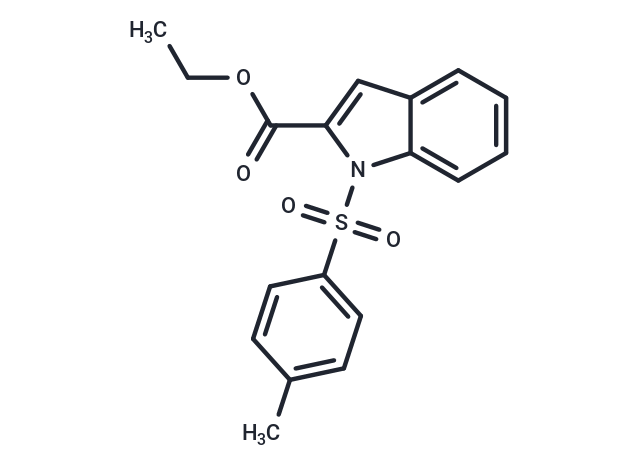
| Pack Size | Price | USA Stock | Global Stock | Quantity |
|---|---|---|---|---|
| 1 mg | $44 | In Stock | In Stock | |
| 5 mg | $98 | In Stock | In Stock | |
| 10 mg | $155 | In Stock | In Stock | |
| 25 mg | $297 | In Stock | In Stock | |
| 50 mg | $429 | In Stock | In Stock | |
| 100 mg | $626 | - | In Stock | |
| 1 mL x 10 mM (in DMSO) | $98 | In Stock | In Stock |
| Description | NOD-IN-1 (Compound 4) is a potent mixed inhibitor of nucleotide-binding oligomerization domain (NOD)-like receptors. |
| Targets & IC50 | NOD2:6.45 μM, NOD1:5.74 μM |
| In vitro | NOD-IN-1, also known as compound 4, is a potent mixed inhibitor of NOD1 and NOD2, demonstrating balanced inhibitory effects on both targets within the low micromolar range. With IC50 values of 5.74 μM for NOD1 and 6.45 μM for NOD2, NOD-IN-1 is highlighted as the most effective compound in its series, showcasing significative inhibition capabilities in the lower micromolar spectrum. Comparative analysis reveals that NOD-IN-1 is seven times less effective than Noditinib-1 at inhibiting NOD1 and lacks selective inhibitory activity towards either NOD1 or NOD2, contrasting with Noditinib-1. Nonetheless, NOD-IN-1 maintains balanced dual inhibitory activities on both targets at concentrations below 10 μM[1]. |
| Synonyms | Compound 4 |
| Cell Research | NOD-IN-1 is dissolved in DMSO and stored, and then diluted with appropriate medium before use[1]. An MTS assay in which the proliferation rates of HEK-Blue NOD1 cells are measured in the presence of Noditinib-1 and of the synthesized potential NOD1 inhibitor NOD-IN-1 is employed to screen these compounds for potential cytotoxicity. Cells are treated for 24 h with the compound of interest at concentrations of up to 25 μM. Comparison of the resulting metabolic activities with that of the untreated control showed that all compounds are well tolerated by HEK-Blue NOD1 cells, since their residual metabolic activities do not fall below 80% at the maximum concentration tested[1]. |
| Molecular Weight | 343.4 |
| Formula | C18H17NO4S |
| Cas No. | 132819-92-2 |
| Smiles | CCOC(=O)c1cc2ccccc2n1S(=O)(=O)c1ccc(C)cc1 |
| Relative Density. | 1.27 g/cm3 (Predicted) |
| Storage | Powder: -20°C for 3 years | In solvent: -80°C for 1 year Shipping with blue ice/Shipping at ambient temperature. | |||||||||||||||||||||||||||||||||||
| Solubility Information | DMSO: 125 mg/mL (364.01 mM), Sonication is recommended.  | |||||||||||||||||||||||||||||||||||
| In Vivo Formulation | 10% DMSO+40% PEG300+5% Tween 80+45% Saline: 2 mg/mL (5.82 mM), Sonication is recommended. 10% DMSO+90% Saline: 10 mg/mL (29.12 mM), Suspension. Please add the solvents sequentially, clarifying the solution as much as possible before adding the next one. Dissolve by heating and/or sonication if necessary. Working solution is recommended to be prepared and used immediately. The formulation provided above is for reference purposes only. In vivo formulations may vary and should be modified based on specific experimental conditions. | |||||||||||||||||||||||||||||||||||
Solution Preparation Table | ||||||||||||||||||||||||||||||||||||
DMSO
Note : The dilution table applies only to solid products. For liquid products, please calculate the stock solution based on the stated concentration and/or density. | ||||||||||||||||||||||||||||||||||||
 For example, if the intended dosage is 10 mg/kg for animals weighing 20 g , with a dosing volume of 100 μL per animal, and a total of 10 animals are to be administered, using a formulation of
  10% DMSO+ 40% PEG300+ 5% Tween 80+ 45% Saline/PBS/ddH2O , the resulting working solution concentration would be 2 mg/mL.
Dissolve 2 mg of the compound in 100 μL DMSO to obtain a stock solution at a concentration of 20 mg/mL . If the required concentration exceeds the compound's known solubility, please contact us for technical support before proceeding.
1) Add 100 μL of the DMSO stock solution to 400 µL PEG300 and mix thoroughly until the solution becomes clear.
2) Add 50 µL Tween 80 and mix well until fully clarified.
3) Add 450 µL Saline,PBS or ddH2O and mix thoroughly until a homogeneous solution is obtained.
| Size | Quantity | Unit Price | Amount | Operation |
|---|
 Feedback
 Hello! How can I help you today?
Copyright © 2015-2026 TargetMol Chemicals Inc. All Rights Reserved.
