


Shopping Cart
Remove All Your shopping cart is currently empty


Synonyms:
| Pack Size | Price | USA Stock | Global Stock | Quantity |
|---|---|---|---|---|
| 1 mg | $33 | In Stock | In Stock | |
| 5 mg | $76 | In Stock | In Stock | |
| 10 mg | $122 | In Stock | In Stock | |
| 25 mg | $198 | In Stock | In Stock | |
| 50 mg | $372 | In Stock | In Stock | |
| 100 mg | $622 | In Stock | In Stock | |
| 1 mL x 10 mM (in DMSO) | $84 | In Stock | In Stock |
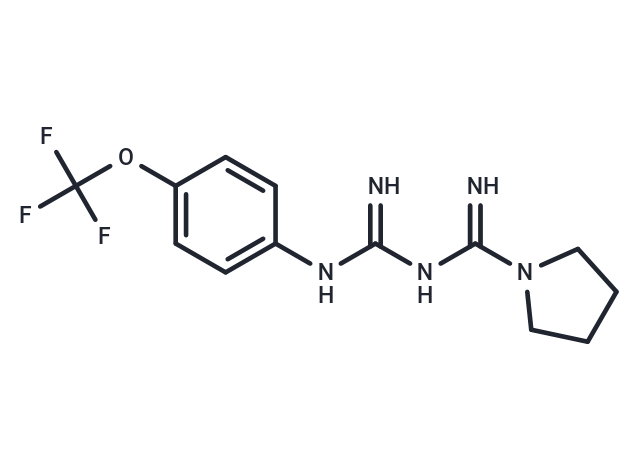
| Description | IM156 (HL156A; HL271 acetate) is a chemical derivative of Metformin. IM156 is a potent and orally active AMPK activator that increases AMPK phosphorylation. IM156 attenuates aging-associated cognitive impairment in animal model [1] [2]. IM156 is a potent oxidative phosphorylation (OXPHOS) inhibitor which is able to be used for the research of solid tumors [3]. |
| In vitro | IM156 (0.31-10 μM) phosphorylates AMPKα1 Thr172 in NIH3T3 mouse fibroblast cells in a dose- and time-dependent manner [1]. IM156 does not affect the expression of key factors involved in glucose homeostasis like glucose-6-phosphatase (G6pase) or phosphoenolpyruvate carboxykinase 1 (Pck1) [1]. Western Blot Analysis [1] Cell Line: NIH3T3 cells Concentration: 0.31 μM, 0.62 μM, 1.25 μM, 2.5 μM, 5 μM, 10 μM Incubation Time: 4 hours Result: Significantly increased the AMPK phosphorylation rate. |
| In vivo | IM156 does not affect metabolic regulation assessed by body weight, blood glucose, insulin levels and lipid metabolite content in mice with diet-induced obesity [1]. IM156 (50 mg/kg; for 2 months) does not affect body weight, general locomotion, or anxiety [2]. IM156 markedly attenuates the aging-induced decline in novel object recognition memory and spatial working memory [2]. IM156 markedly increases AMPK activation in the hippocampus of aged mice [2]. Animal Model: C57BL/6J mice (young group/12-16 weeks, old groups/20-22 months) [2] Dosage: 50 mg/kg Administration: Oral administration (drinking water), for 2 months Result: Attenuated age-related cognitive decline. |
| Molecular Weight | 315.29 |
| Formula | C13H16F3N5O |
| Cas No. | 1422365-93-2 |
| Smiles | N(C(NC(=N)N1CCCC1)=N)C2=CC=C(OC(F)(F)F)C=C2 |
| Relative Density. | 1.43 g/cm3 (Predicted) |
| Storage | The compound is unstable in solution. Please use soon Powder: -20°C for 3 years Shipping with blue ice/Shipping at ambient temperature. | ||||||||||||||||||||||||||||||
| Solubility Information | DMSO: 27.5 mg/mL (87.22 mM), The compound is unstable in solution. Please use soon.  | ||||||||||||||||||||||||||||||
| In Vivo Formulation | 10% DMSO+40% PEG300+5% Tween-80+45% Saline: 2 mg/mL (6.34 mM), Sonication is recommended. Please add the solvents sequentially, clarifying the solution as much as possible before adding the next one. Dissolve by heating and/or sonication if necessary. Working solution is recommended to be prepared and used immediately. The formulation provided above is for reference purposes only. In vivo formulations may vary and should be modified based on specific experimental conditions. | ||||||||||||||||||||||||||||||
Solution Preparation Table | |||||||||||||||||||||||||||||||
DMSO
Note : The dilution table applies only to solid products. For liquid products, please calculate the stock solution based on the stated concentration and/or density. | |||||||||||||||||||||||||||||||
 For example, if the intended dosage is 10 mg/kg for animals weighing 20 g , with a dosing volume of 100 μL per animal, and a total of 10 animals are to be administered, using a formulation of
  10% DMSO+ 40% PEG300+ 5% Tween 80+ 45% Saline/PBS/ddH2O , the resulting working solution concentration would be 2 mg/mL.
Dissolve 2 mg of the compound in 100 μL DMSO to obtain a stock solution at a concentration of 20 mg/mL . If the required concentration exceeds the compound's known solubility, please contact us for technical support before proceeding.
1) Add 100 μL of the DMSO stock solution to 400 µL PEG300 and mix thoroughly until the solution becomes clear.
2) Add 50 µL Tween 80 and mix well until fully clarified.
3) Add 450 µL Saline,PBS or ddH2O and mix thoroughly until a homogeneous solution is obtained.
| Size | Quantity | Unit Price | Amount | Operation |
|---|
 Feedback
 Hello! How can I help you today?
Copyright © 2015-2026 TargetMol Chemicals Inc. All Rights Reserved.
