


Shopping Cart
Remove All Your shopping cart is currently empty

Synonyms:
| Pack Size | Price | USA Stock | Global Stock | Quantity |
|---|---|---|---|---|
| 25 mg | $1,520 | 4-6 weeks | 4-6 weeks | |
| 50 mg | $1,980 | 4-6 weeks | 4-6 weeks | |
| 100 mg | $2,500 | 4-6 weeks | 4-6 weeks |
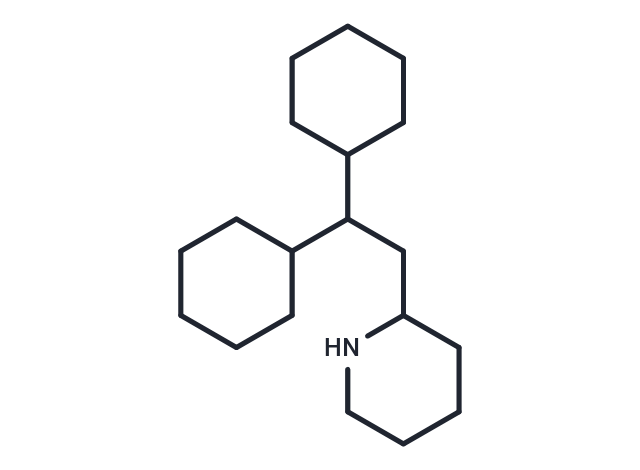
| Description | Perhexiline is an orally active inhibitor of CPT1 and CPT2 that reduces fatty acid metabolism. Perhexiline can cross the blood-brain barrier (BBB) and exhibits anti-tumor activity. Perhexiline induces mitochondrial dysfunction and apoptosis in hepatocytes. Therefore, Perhexiline can be used in cancer and cardiovascular disease research [1] [2] [5]. |
| In vitro | Perhexiline, at concentrations ranging from 5 to 25 μM and exposure periods between 2 to 6 hours, significantly decreases cell viability, ATP content, and lactate dehydrogenase (LDH) release, while also inducing mitochondrial dysfunction in HepG2 cells, as evidenced by studies [2]. Remarkably, a specific concentration of 20 μM for 2 hours activates caspase 3/7 in these cells, highlighting its potential pro-apoptotic effects [2]. Furthermore, at a lower concentration of 5 μM over a prolonged duration of 48 hours, perhexiline selectively triggers extensive apoptosis in CLL cells characterized by high CPT expression [3]. Assays performed, including cell viability and Western Blot analyses on HepG2 cells, demonstrated time- and concentration-dependent cytotoxicity alongside significant modulations in Bcl-2, Mcl-1, and Bad protein levels, underpinning the compound's impact on cellular survival pathways [2]. |
| In vivo | Perhexiline, administered at a dosage of 200 mg/kg orally once daily for 8 weeks, diminishes peripheral neural function in female DA rats [4]. At a lower dosage of 80 mg/kg given via oral gavage over three days, perhexiline exhibits anti-tumor properties in an orthotopic glioblastoma mouse model, leading to a reduction in tumor size (as assessed by MR imaging) and enhanced overall survival [5]. |
| Molecular Weight | 277.49 |
| Formula | C19H35N |
| Cas No. | 6621-47-2 |
| Smiles | C(CC1CCCCN1)(C2CCCCC2)C3CCCCC3 |
| Storage | Powder: -20°C for 3 years | In solvent: -80°C for 1 year Shipping with blue ice/Shipping at ambient temperature. |
 For example, if the intended dosage is 10 mg/kg for animals weighing 20 g , with a dosing volume of 100 μL per animal, and a total of 10 animals are to be administered, using a formulation of
  10% DMSO+ 40% PEG300+ 5% Tween 80+ 45% Saline/PBS/ddH2O , the resulting working solution concentration would be 2 mg/mL.
Dissolve 2 mg of the compound in 100 μL DMSO to obtain a stock solution at a concentration of 20 mg/mL . If the required concentration exceeds the compound's known solubility, please contact us for technical support before proceeding.
1) Add 100 μL of the DMSO stock solution to 400 µL PEG300 and mix thoroughly until the solution becomes clear.
2) Add 50 µL Tween 80 and mix well until fully clarified.
3) Add 450 µL Saline,PBS or ddH2O and mix thoroughly until a homogeneous solution is obtained.
| Size | Quantity | Unit Price | Amount | Operation |
|---|
 Feedback
 Hello! How can I help you today?
Copyright © 2015-2026 TargetMol Chemicals Inc. All Rights Reserved.
