


Shopping Cart
Remove All Your shopping cart is currently empty

Synonyms:
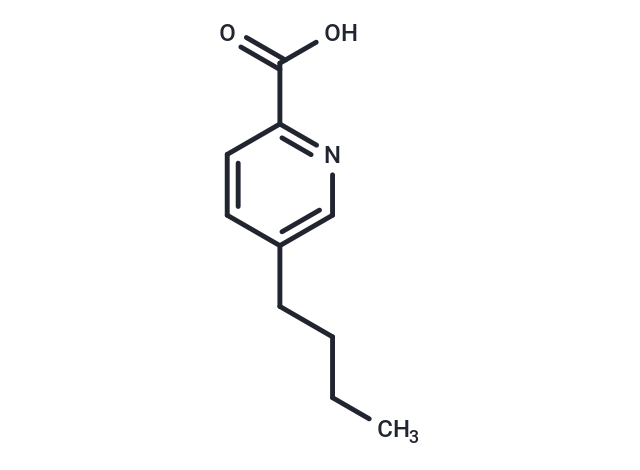
| Pack Size | Price | USA Stock | Global Stock | Quantity |
|---|---|---|---|---|
| 25 mg | $29 | - | In Stock | |
| 1 mL x 10 mM (in DMSO) | $35 | - | In Stock |
| Description | Fusaric acid is an orally active multi-target inhibitor capable of inhibiting fibrosis-related signaling pathways such as NF-κB, TGF-β1/SMADs, and PI3K/AKT/mTOR. It also inhibits dopamine β-hydroxylase and reduces endogenous levels of norepinephrine and epinephrine. Fusaric acid activates apoptosis-related proteases such as Caspase-3/7, Caspase-8, and Caspase-9, thereby inducing oxidative stress and apoptosis. It chelates divalent metal cations, damages mitochondrial membrane structure, and exerts effects in improving myocardial fibrosis and alleviating cardiac hypertrophy. Additionally, it is applicable in research on esophageal cancer, liver cancer, and other conditions. |
| In vitro | Methods: HepG2 human hepatocellular carcinoma cells were treated with fusaric acid at concentrations of 25, 50, 104, and 150 µg/mL for 24 hours. The levels of 5-methylcytosine (5-mC) were measured using a colorimetric assay, and the mRNA expression levels of DNMT1, DNMT3A, and DNMT3B were assessed by qPCR. Results: Fusaric acid dose-dependently reduced global DNA methylation levels, induced hypomethylation, and significantly decreased the mRNA expression of DNMT1, DNMT3A, and DNMT3B. [1] Methods: H9C2 cells were treated with 160 μM fusaric acid and 10 μM isoprenaline (ISP) for a total of 24 hours. Cell size was assessed by immunofluorescence staining; ANP, BNP, β-MHC, and TRPC6 expression levels were measured by qPCR and Western blot. Results: Fusaric acid significantly inhibited ISP-induced increases in cell area while downregulating the expression of ANP, BNP, β-MHC, and TRPC6.[2] Methods: Primary mouse cardiac fibroblasts were treated with 0–160 μM fusaric acid and preincubated for 1 hour, then co-treated with 10 μM ISP for 24 hours. Western blot analysis was performed to detect the expression levels of α-SMA, collagen I, and collagen III. Results: Fusaric acid dose-dependently inhibited ISP-induced collagen expression and reduced the expression levels of fibrosis-related genes. [2] |
| In vivo | Methods: To investigate the effects of fusaric acid on ISP-induced myocardial hypertrophy, C57BL/6 mice were administered fusaric acid (50, 100 mg/kg) via oral gavage for 7 days, followed by concurrent treatment with ISP (150 mg/kg/day, subcutaneous injection) for 7 days. Results: Fusaric acid attenuated ISP-induced myocardial tissue damage, collagen deposition, and cardiomyocyte hypertrophy. Fusaric acid also inhibited ISP-induced TGF-β1 expression and the phosphorylation of SMAD2/3, p38, ERK1/2, and JNK. [2] |
| Molecular Weight | 179.22 |
| Formula | C10H13NO2 |
| Cas No. | 536-69-6 |
| Smiles | O=C(O)C1=NC=C(C=C1)CCCC |
| Relative Density. | 1.113g/cm3 |
| Storage | Powder: -20°C for 3 years | In solvent: -80°C for 1 year Shipping with blue ice/Shipping at ambient temperature. | |||||||||||||||||||||||||||||||||||
| Solubility Information | DMSO: 46.66 mg/mL (260.35 mM), Sonication is recommended. H2O: 40 mg/mL (223.19 mM), Sonication is recommended. | |||||||||||||||||||||||||||||||||||
Solution Preparation Table | ||||||||||||||||||||||||||||||||||||
H2O/DMSO
Note : The dilution table applies only to solid products. For liquid products, please calculate the stock solution based on the stated concentration and/or density. | ||||||||||||||||||||||||||||||||||||
 For example, if the intended dosage is 10 mg/kg for animals weighing 20 g , with a dosing volume of 100 μL per animal, and a total of 10 animals are to be administered, using a formulation of
  10% DMSO+ 40% PEG300+ 5% Tween 80+ 45% Saline/PBS/ddH2O , the resulting working solution concentration would be 2 mg/mL.
Dissolve 2 mg of the compound in 100 μL DMSO to obtain a stock solution at a concentration of 20 mg/mL . If the required concentration exceeds the compound's known solubility, please contact us for technical support before proceeding.
1) Add 100 μL of the DMSO stock solution to 400 µL PEG300 and mix thoroughly until the solution becomes clear.
2) Add 50 µL Tween 80 and mix well until fully clarified.
3) Add 450 µL Saline,PBS or ddH2O and mix thoroughly until a homogeneous solution is obtained.
| Size | Quantity | Unit Price | Amount | Operation |
|---|
 Feedback
 Hello! How can I help you today?
Copyright © 2015-2026 TargetMol Chemicals Inc. All Rights Reserved.
