


Shopping Cart
Remove All Your shopping cart is currently empty

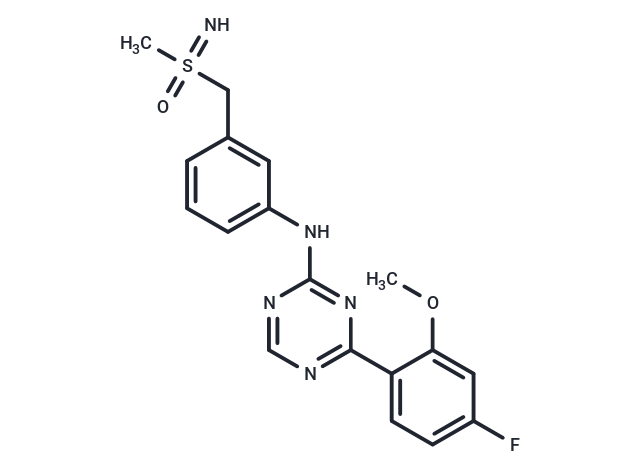
Synonyms: BAY-1143572 Racemate
| Pack Size | Price | USA Stock | Global Stock | Quantity |
|---|---|---|---|---|
| 1 mg | $45 | In Stock | In Stock | |
| 5 mg | $106 | In Stock | In Stock | |
| 10 mg | $162 | In Stock | In Stock | |
| 25 mg | $325 | In Stock | In Stock | |
| 50 mg | $489 | In Stock | In Stock | |
| 100 mg | $735 | - | In Stock | |
| 1 mL x 10 mM (in DMSO) | $117 | In Stock | In Stock |
| Description | Atuveciclib (BAY 1143572) is a potent and highly selective PTEFb/CDK9 inhibitor with an IC50 value of 13 nm for CDK9/CycT1 and a selectivity ratio of 100 for CDK2, with highly bioavailable and orally available advantages. |
| Targets & IC50 | Antiproliferative:310 nM(MOLM-13 cells), Antiproliferative:920 nM(HeLa cells), P-TEFb/CDK9:13 nM, Apoptosis:385 nM(AML cell lines) |
| In vitro | Atuveciclib (BAY-1143572) exhibits a potent and highly selective inhibitory effect on PTEFb-kinase, specifically against PTEFb/CDK9, in the low nanomolar range, demonstrating at least 50-fold higher selectivity over other CDKs. The compound effectively inhibits the proliferation of seven AML cell lines, both with and without MLL rearrangements, evidenced by a median IC50 of 385 nM (ranging between 230-1100 nM), and it also triggers apoptosis[1]. Furthermore, Atuveciclib (BAY-1143572) differentiates itself by showing significant selectivity against a broad array of non-CDK kinases, coupled with wide-ranging antiproliferative effects across various tumor cell lines indicated by sub-micromolar IC50 values. Notably, it leads to the concentration-dependent inhibition of RNA polymerase II phosphorylation, subsequently diminishing MYC mRNA and protein levels[2]. |
| In vivo | Atuveciclib (BAY-1143572) significantly enhances its effectiveness when used with various chemotherapeutics across different solid tumor models. Additionally, it reduces MYC mRNA levels in the blood cells of treated rats, suggesting the potential of using MYC as a pharmacodynamic marker during clinical trials. When administered orally once daily, Atuveciclib demonstrates efficacy as a single agent, achieving partial or complete remission in most AML (acute myeloid leukemia) xenograft models in both mice and rats, proving its potency and tolerability at certain doses. |
| Synonyms | BAY-1143572 Racemate |
| Molecular Weight | 387.43 |
| Formula | C18H18FN5O2S |
| Cas No. | 1414943-88-6 |
| Smiles | COc1cc(F)ccc1-c1ncnc(Nc2cccc(CS(C)(=N)=O)c2)n1 |
| Relative Density. | 1.36 g/cm3 (Predicted) |
| Storage | Powder: -20°C for 3 years | In solvent: -80°C for 1 year Shipping with blue ice/Shipping at ambient temperature. | |||||||||||||||||||||||||||||||||||
| Solubility Information | DMSO: 100 mg/mL (258.11 mM), Sonication is recommended. | |||||||||||||||||||||||||||||||||||
| In Vivo Formulation | 10% DMSO+40% PEG300+5% Tween 80+45% Saline: 4 mg/mL (10.32 mM), Sonication is recommended. Please add the solvents sequentially, clarifying the solution as much as possible before adding the next one. Dissolve by heating and/or sonication if necessary. Working solution is recommended to be prepared and used immediately. The formulation provided above is for reference purposes only. In vivo formulations may vary and should be modified based on specific experimental conditions. | |||||||||||||||||||||||||||||||||||
Solution Preparation Table | ||||||||||||||||||||||||||||||||||||
DMSO
Note : The dilution table applies only to solid products. For liquid products, please calculate the stock solution based on the stated concentration and/or density. | ||||||||||||||||||||||||||||||||||||
 For example, if the intended dosage is 10 mg/kg for animals weighing 20 g , with a dosing volume of 100 μL per animal, and a total of 10 animals are to be administered, using a formulation of
  10% DMSO+ 40% PEG300+ 5% Tween 80+ 45% Saline/PBS/ddH2O , the resulting working solution concentration would be 2 mg/mL.
Dissolve 2 mg of the compound in 100 μL DMSO to obtain a stock solution at a concentration of 20 mg/mL . If the required concentration exceeds the compound's known solubility, please contact us for technical support before proceeding.
1) Add 100 μL of the DMSO stock solution to 400 µL PEG300 and mix thoroughly until the solution becomes clear.
2) Add 50 µL Tween 80 and mix well until fully clarified.
3) Add 450 µL Saline,PBS or ddH2O and mix thoroughly until a homogeneous solution is obtained.
| Size | Quantity | Unit Price | Amount | Operation |
|---|
 Feedback
 Hello! How can I help you today?
Copyright © 2015-2026 TargetMol Chemicals Inc. All Rights Reserved.
