


Shopping Cart
Remove All Your shopping cart is currently empty

Synonyms: Smoothened Agonist
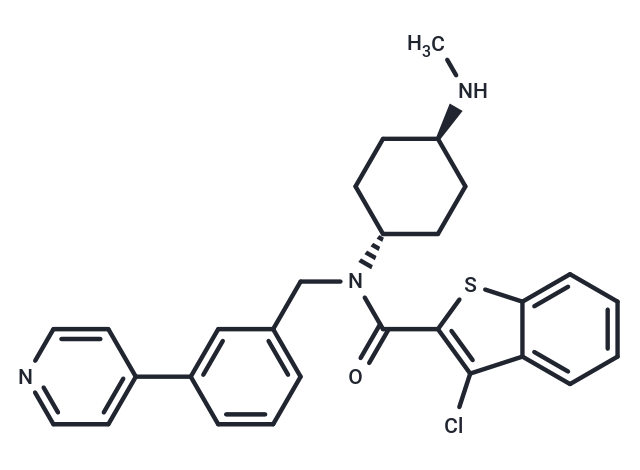
| Pack Size | Price | USA Stock | Global Stock | Quantity |
|---|---|---|---|---|
| 1 mg | $41 | In Stock | In Stock | |
| 2 mg | $56 | In Stock | In Stock | |
| 5 mg | $83 | In Stock | In Stock | |
| 10 mg | $123 | In Stock | In Stock | |
| 25 mg | $246 | In Stock | In Stock | |
| 50 mg | $339 | In Stock | In Stock | |
| 100 mg | $503 | - | In Stock | |
| 200 mg | $718 | - | In Stock | |
| 1 mL x 10 mM (in DMSO) | $84 | In Stock | In Stock |
| Description | SAG (Smoothened Agonist) is a Smo receptor agonist (EC50=3 nM) that is cell-permeable and selective. SAG regulates Smo activity by binding directly to the Smo helix and can activate the Hedgehog signaling pathway. |
| Targets & IC50 | HUVECs:22 μM, C3H 10T1/2 cells:0.13 μM (EC50), Shh Light II cells:8.8 nM (EC50), Smo:3 nM (EC50) |
| In vitro | METHODS: Embryonic stem cell ES were treated with SAG (0.5-1.25 µM) for 4-6 days and gene expression levels were measured using RT-qPCR. RESULTS: Expression of Sim1, a post-mitotic V3 marker, was increased in all SAG-treated groups at all concentrations. The group treated with 0.5 μM SAG exhibited significantly higher levels of Nkx2.2 mRNA. Hb9 expression did not change significantly with SAG concentration at the given time points. [1] METHODS: African green monkey kidney fibroblast-like cells, Cos-1, were treated with SAG (5-500 nM), and target protein expression levels were measured by Western Blot. RESULTS: SAG inhibited cross-linking of ER-localized and post-ER forms of Smo-Myc3 to 125I-labeled PA cyclic amines in Cos-1 cells in a dose-dependent manner. cellular levels of Smo-Myc3 were not affected by agonist treatment. [2] |
| In vivo | METHODS: To explore whether the SHH signaling pathway plays a protective role in anxiety by regulating mitochondrial homeostasis, SAG (10 mg/kg) was intraperitoneally injected into C57BL/6 mice on a high-fat diet every three days for twelve weeks. RESULTS: SHH signaling is neuroprotective in obesity, and SAG alleviates anxiety-like behaviors by reducing mitochondrial breaks. [3] METHODS: To study the effects on developing limbs, SAG (15-20 mg/kg in lactated Ringer's solution) was administered as a single intraperitoneal injection to pregnant C57BL/6J mice at gestational day (GD) 9.25. RESULTS: The most prevalent effect of SAG was the dose-dependent induction of preaxial polydactyly; defects ranged from thumb width to duplication of both digitiform fingers on the preaxial side of the thumb. [4] |
| Synonyms | Smoothened Agonist |
| Kinase Assay | In vitro Kinase Assays: Kinase assays for CDK1, CDK2 and GSK3-β are all carried out in a radiometric filter binding format. Assays for CDK5 are in DELFIA format and for CDKs 4 and 6 in ELISA format. For CDKs 1 and 2, the relevant CDK and 0.12 μg/mL Histone H1 are incubated in 20 mM MOPS, pH 7.2, 25 mM β-glycerophosphate, 5 mM EDTA, 15 mM MgCl2, 1 mM sodium orthovanadate, 1 mM DTT, 0.1 mg/mL BSA, 45 μM ATP (0.78 Ci/mmol) and different concentrations of AT7519 for 2 or 4 hours respectively. For GSK3-β, the relevant enzyme and 5 μM glycogen synthase peptide 2 along with 10 mM MOPS pH 7.0, 0.1 mg/mL BSA, 0.001% Brij-35, 0.5% glycerol, 0.2 mM EDTA, 10 mM MgCl2, 0.01% β-mercaptoethanol, 15 μM ATP (2.31 Ci/mmol) and different concentrations of AT7519 are incubated for 3 hours. Assay reactions are stopped by adding an excess of orthophosphoric acid and filtered using Millipore MAPH filter plates. The plates are then washed, scintillant added and radioactivity measured by scintillation counting on a Packard TopCount. For CDK5, CDK5/p35 and 1 μM of a biotinylated Histone H1 peptide (Biotin-PKTPKKAKKL) are incubated in 25 mM Tris-HCl, pH 7.5, 2.5 mM MgCl2, 0.025% Brij-35, 0.1 mg/mL BSA, 1 mM DTT, 15 μM ATP and different concentrations of AT7519 for 30 minutes. Assay reactions are stopped using EDTA, transferred to Neutravidin-coated plates and phosphorylated peptide quantified by means of a rabbit phospho-cdk1 substrate polyclonal antibody and DELFIA europium-labelled anti-rabbit IgG secondary antibody using time-resolved fluorescence at λex=335 nM, λem=620 nM. For CDK 4 and 6 assays, plates are coated with GST- pRb769-921 and blocked with Superblock. CDK4 or 6 is incubated with 15 mM MgCl2, 50 mM HEPES, pH 7.4, 1 mM DTT, 1 mM EGTA, pH 8.0, 0.02% Triton X-100, 2.5% DMSO and different concentrations of AT7519; the reaction is initiated by addition of ATP. After 30 minutes, reactions are stopped by the addition of 0.5 M EDTA pH 8.0.Plates are then washed and incubated for one hour with the primary antibody (anti- p-Rb Serine 780) diluted in Superblock followed by secondary antibody (alkaline phosphatase linked anti-rabbit) for a further hour. Plates are developed using the Attophos system and fluorescence read on a Spectramax Gemini plate reader at excitation 450 nm and emission 580 nm. In all cases, IC50 values are calculated from replicate curves, using GraphPad Prism software. |
| Molecular Weight | 490.06 |
| Formula | C28H28ClN3OS |
| Cas No. | 912545-86-9 |
| Smiles | CN[C@H]1CC[C@@H](CC1)N(Cc1cccc(c1)-c1ccncc1)C(=O)c1sc2ccccc2c1Cl |
| Relative Density. | 1.30 g/cm3 (Predicted) |
| Storage | Powder: -20°C for 3 years | In solvent: -80°C for 1 year Shipping with blue ice/Shipping at ambient temperature. | ||||||||||||||||||||||||||||||||||||||||
| Solubility Information | DMSO: 252.5 mg/mL (515.24 mM), Heating is recommended.  Ethanol: 40 mg/mL (81.62 mM), Heating is recommended. | ||||||||||||||||||||||||||||||||||||||||
| In Vivo Formulation | 10% DMSO+40% PEG300+5% Tween 80+45% Saline: 5.5 mg/mL (11.22 mM), Solution. Please add the solvents sequentially, clarifying the solution as much as possible before adding the next one. Dissolve by heating and/or sonication if necessary. Working solution is recommended to be prepared and used immediately. The formulation provided above is for reference purposes only. In vivo formulations may vary and should be modified based on specific experimental conditions. | ||||||||||||||||||||||||||||||||||||||||
Solution Preparation Table | |||||||||||||||||||||||||||||||||||||||||
Ethanol/DMSO
DMSO
Note : The dilution table applies only to solid products. For liquid products, please calculate the stock solution based on the stated concentration and/or density. | |||||||||||||||||||||||||||||||||||||||||
 For example, if the intended dosage is 10 mg/kg for animals weighing 20 g , with a dosing volume of 100 μL per animal, and a total of 10 animals are to be administered, using a formulation of
  10% DMSO+ 40% PEG300+ 5% Tween 80+ 45% Saline/PBS/ddH2O , the resulting working solution concentration would be 2 mg/mL.
Dissolve 2 mg of the compound in 100 μL DMSO to obtain a stock solution at a concentration of 20 mg/mL . If the required concentration exceeds the compound's known solubility, please contact us for technical support before proceeding.
1) Add 100 μL of the DMSO stock solution to 400 µL PEG300 and mix thoroughly until the solution becomes clear.
2) Add 50 µL Tween 80 and mix well until fully clarified.
3) Add 450 µL Saline,PBS or ddH2O and mix thoroughly until a homogeneous solution is obtained.
| Size | Quantity | Unit Price | Amount | Operation |
|---|
 Feedback
 Hello! How can I help you today?
Copyright © 2015-2026 TargetMol Chemicals Inc. All Rights Reserved.
