


Shopping Cart
Remove All Your shopping cart is currently empty

Synonyms: MKC 253, Human GLP-1-(7-36)-amide, Glucagon-like Peptide 1 (7-36) amide, GLP-1(7-36)-amide, GLP-1-(7-36)-amide
| Pack Size | Price | USA Stock | Global Stock | Quantity |
|---|---|---|---|---|
| 1 mg | $455 | Inquiry | Inquiry | |
| 2 mg | Inquiry | Inquiry | Inquiry | |
| 5 mg | Inquiry | Inquiry | Inquiry | |
| 10 mg | Inquiry | - | In Stock | |
| 25 mg | Inquiry | Inquiry | Inquiry | |
| 50 mg | Inquiry | Inquiry | Inquiry | |
| 100 mg | Inquiry | Inquiry | Inquiry |
| Description | GLP-1 secretion by human enteroendocrine NCI-H716 cells is augmented in a dose-dependent manner by the addition of CPE. |
| Targets & IC50 | GLP1 receptor:0.003 nM (EC50), GLP1 receptor:0.02 nM, Glucagon secretion (isolated islets):2.5 pM |
| In vitro | METHODS: Human type II lung cells were incubated with GLP-1(7-36)amide (1-1000 nM). 3-isobutyl-1-methylxanthine (0.5 mM) was present during incubation to prevent cAMP hydrolysis. 24 After 1 hour, remove the culture medium and add 1 ml of cold ethanol to lyse the cells. After 1 hour of incubation at 4°C, the wells are scraped and the suspension is centrifuged at 10,000 × g for 10 minutes. The supernatant is removed and evaporated under vacuum. The residues were dissolved in assay buffer and cAMP was measured using a competition binding assay kit (Radiochemistry Center). RESULTS GLP-1(7-36)amide increased cAMP concentration in human type II pneumocytes in a concentration-dependent manner, both in the short and long term. [2] |
| In vivo | METHODS: Tail vein blood samples were collected from male mice each time 5 minutes before glucose infusion. After glucose infusion, GLP-1(7-36)amide [0.3-10 μ mol, intraventricular (i.c.v)] or normal saline (5 μl) was administered. , i.c.v). RESULTS GLP-1(7-36)amide (0.3-10 nmol, i.c.v) dose-dependently reduced the blood glucose AUC0-50 value by 32.6%. [1] METHODS: A 390-minute intravenous infusion of GLP-1-(7-36)amide was studied in 14 healthy volunteers. After 30 minutes, a solid test meal was provided, and gastric emptying was assessed. Blood was drawn for GLP-1 (total and intact), glucose, insulin, C-peptide, and glucagon measurements. RESULTS Administration of GLP-1-(7-36)amide significantly increased total GLP-1 plasma levels. During infusion of GLP-1-(7-36)amide, plasma concentrations of intact GLP-1 increased to 21 +/- 5 pmol/l. GLP-1-(7-36)amide reduced fasting and postprandial glucose concentrations (P < 0.001) and delayed gastric emptying (P < 0.001). GLP-1-(7-36)amide reduces glucagon levels. [3] |
| Synonyms | MKC 253, Human GLP-1-(7-36)-amide, Glucagon-like Peptide 1 (7-36) amide, GLP-1(7-36)-amide, GLP-1-(7-36)-amide |
| Molecular Weight | 3297.63 |
| Formula | C149H226N40O45 |
| Cas No. | 107444-51-9 |
| Smiles | C([C@@H](C(N[C@H](C(N[C@H](C(N[C@H](C(NCC(N[C@@H](CCCNC(=N)N)C(N)=O)=O)=O)CCCCN)=O)C(C)C)=O)CC(C)C)=O)NC([C@@H](NC([C@@H](NC([C@H](CC1=CC=CC=C1)NC([C@@H](NC([C@@H](NC([C@@H](NC([C@@H](NC([C@@H](NC(CNC([C@@H](NC([C@@H](NC([C@H](CC2=CC=C(O)C=C2)NC([C@@H](NC([C@@H](NC([C@@H](NC([C@@H](NC([C@@H](NC([C@@H](NC([C@H](CC3=CC=CC=C3)NC([C@@H](NC(CNC([C@@H](NC([C@@H](NC([C@H](CC4=CN=CN4)N)=O)C)=O)CCC(O)=O)=O)=O)[C@@H](C)O)=O)=O)[C@@H](C)O)=O)CO)=O)CC(O)=O)=O)C(C)C)=O)CO)=O)CO)=O)=O)CC(C)C)=O)CCC(O)=O)=O)=O)CCC(N)=O)=O)C)=O)C)=O)CCCCN)=O)CCC(O)=O)=O)=O)[C@H](CC)C)=O)C)=O)C=5C=6C(NC5)=CC=CC6 |
| Relative Density. | 1.47 g/cm3 |
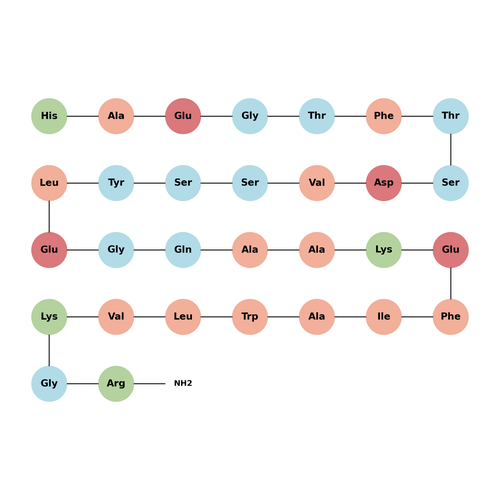
| Sequence | His-Ala-Glu-Gly-Thr-Phe-Thr-Ser-Asp-Val-Ser-Ser-Tyr-Leu-Glu-Gly-Gln-Ala-Ala-Lys-Glu-Phe-Ile-Ala-Trp-Leu-Val-Lys-Gly-Arg-NH₂ |
| Sequence Short | HAEGTFTSDVSSYLEGQAAKEFIAWLVKGR |
| Storage | Keep away from moisture Powder: -20°C for 3 years | In solvent: -80°C for 1 year Shipping with blue ice/Shipping at ambient temperature. | ||||||||||||||||||||
| Solubility Information | DMSO: 10 mM, Sonication is recommended. | ||||||||||||||||||||
Solution Preparation Table | |||||||||||||||||||||
DMSO
Note : The dilution table applies only to solid products. For liquid products, please calculate the stock solution based on the stated concentration and/or density. | |||||||||||||||||||||
 For example, if the intended dosage is 10 mg/kg for animals weighing 20 g , with a dosing volume of 100 μL per animal, and a total of 10 animals are to be administered, using a formulation of
  10% DMSO+ 40% PEG300+ 5% Tween 80+ 45% Saline/PBS/ddH2O , the resulting working solution concentration would be 2 mg/mL.
Dissolve 2 mg of the compound in 100 μL DMSO to obtain a stock solution at a concentration of 20 mg/mL . If the required concentration exceeds the compound's known solubility, please contact us for technical support before proceeding.
1) Add 100 μL of the DMSO stock solution to 400 µL PEG300 and mix thoroughly until the solution becomes clear.
2) Add 50 µL Tween 80 and mix well until fully clarified.
3) Add 450 µL Saline,PBS or ddH2O and mix thoroughly until a homogeneous solution is obtained.
| Size | Quantity | Unit Price | Amount | Operation |
|---|
 Feedback
 Hello! How can I help you today?
Copyright © 2015-2026 TargetMol Chemicals Inc. All Rights Reserved.
