


Shopping Cart
Remove All Your shopping cart is currently empty


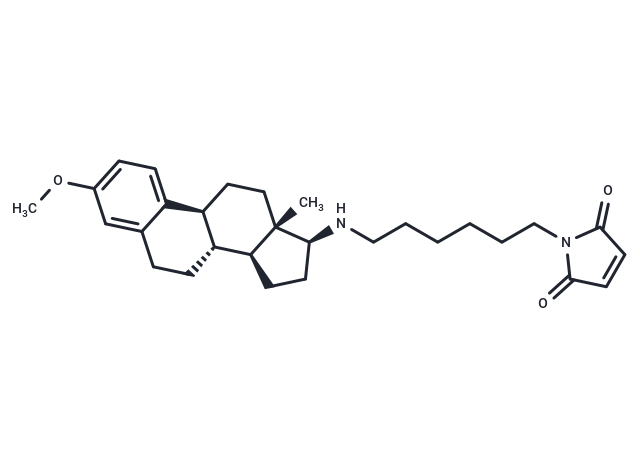
Synonyms: U73122

| Pack Size | Price | USA Stock | Global Stock | Quantity |
|---|---|---|---|---|
| 2 mg | $33 | In Stock | In Stock | |
| 5 mg | $52 | In Stock | In Stock | |
| 10 mg | $77 | In Stock | In Stock | |
| 25 mg | $136 | In Stock | In Stock | |
| 50 mg | $247 | In Stock | In Stock | |
| 100 mg | $450 | In Stock | In Stock | |
| 1 mL x 10 mM (in DMSO) | $53 | In Stock | In Stock |
| Description | U-73122 (U73122) , an effective PLC inhibitor, reduces agonist-induced Ca2+ increases in platelets and PMN. |
| In vitro | At a concentration of 0.1 mg/ml, U73122 inhibits the accumulation of 74% of lymphocytes and 65% of macrophages induced by carrageenan in the subcutaneous cavity of dogs. When administered at 30 mg/kg intraperitoneally (i.p.), U73122 blocks 65% and 80% of carrageenan-induced paw edema in rats 1 hour and 3 hours post-treatment, respectively. Furthermore, it completely inhibits the infiltration of macrophages and lymphocytes, as well as 80% of prostaglandin E2 production, in a mouse model of peritonitis triggered by lipopolysaccharides. U73122 also suppresses the swelling of mouse ears induced by 12-O-tetradecanoylphorbol-13-acetate. |
| In vivo | U-73122 inhibits the production of thromboxane B induced by collagen, where collagen induces this effect by inhibiting receptor-coupled arachidonic acid transfer. U-73122 also suppresses the aggregation of human polymorphonuclear neutrophils and the associated production of IP3 and diacylglycerol induced by FMLP. It notably inhibits the aggregation of human platelets induced by various agonists, including thrombin, collagen, ADP, and arachidonic acid (IC50 of 1-5 µM). Thrombin or U-46619 induces the production of IP3 and a subsequent rapid increase in intracellular Ca2+ by inhibiting the hydrolysis of platelet-soluble components catalyzed phosphatidylinositol [3H]mannose and phosphatidylinositol [3H]bisphosphate 4,5-diphosphate (Ki: 9/40 µM), which is inhibited by 10 µM of U-73122. |
| Synonyms | U73122 |
| Kinase Assay | PMNs (4×10⁷/4 mL) are incubated with U-73122 according to protocols. The reactions are stopped with cold calcium-free PBS. The cells are centrifuged at 750 × g (4°C) and resuspended in 1 mL of Triton X-100-free extraction buffer (50 mM Tris, pH 7.5, 50 mM fimercaptoethanol, 2 mM EGTA, 1 mM phenylmethylsulfonyl fluoride and 4 μg/mL of leupeptin, soybean trypsin inhibitor and aprotinin), and then sonicated for 10- and 5-sec consecutive bursts at 20% output. The lysates are centrifuged at 240 × g (4°C) for 20 mm in a TL-100 ultracentrifuge with the supernatant designated as the cytosol fraction. The pellet is resuspended in 1% Triton-containing extraction buffer, sonicated, shaken for 30 mm at 4°C and centrifuged (240 × g for 20 mm at 4°C). The supernatant constitutes the extractable particulate fraction, and the pellet is sonicated in extraction buffer with Triton and constituted the nonextractable particulate fraction. |
| Cell Research | U-73122 is dissolved in DMSO. Agonist-induced production of IP3 in PMN is measured by use of the competitive radiobinding assy. PMN (2 x 10⁶-107) in 0.2 mL of phosphate-buffered saline, pH 7.4 [NaC1 (138 mM), Na2HPO4 (8.1 mM), KH2PO4 (1.5 mM), KCI (2.7 mM), CaCl2 (1.0 mM), MgC12 (1.0 mM) and glucose (0.1%, w/v)] are incubated in conical polypropylene tubes at 37°C in a shaking water bath. U-73122 or U-73343 is added (in 1 μL of DMSO) 3 min before the addition of agonist, FMLP (0.1 μM) plus cytochalasin B (5 μg/mL). FMLP and cytochalasin B are added in 1 μL each of DMSO and ethanol, respectively. Appropriate vehicle controls are included in each experiment. PMN incubation mixtures are quenched with the addition of 0.07 mL of ice-cold TCA (20%, w/v) and a portion (0.2 mL) of the TCA extract is processed for the measurement of IP3 by competitive radiobinding as described above for platelets. |
| Molecular Weight | 464.64 |
| Formula | C29H40N2O3 |
| Cas No. | 112648-68-7 |
| Smiles | COc1ccc2[C@H]3CC[C@]4(C)[C@H](CC[C@H]4[C@@H]3CCc2c1)NCCCCCCN1C(=O)C=CC1=O |
| Relative Density. | 1.16 g/cm3 |
| Storage | Store under nitrogen Powder: -20°C for 3 years | In solvent: -80°C for 1 year Shipping with blue ice/Shipping at ambient temperature. | ||||||||||||||||||||
| Solubility Information | DMSO: 8 mg/mL (17.22 mM), Sonication and heating are recommended.  H2O: < 0.1 mg/mL (insoluble) | ||||||||||||||||||||
| In Vivo Formulation | 10% DMSO+40% PEG300+5% Tween 80+45% Saline: 1.25 mg/mL (2.69 mM), Solution. Please add the solvents sequentially, clarifying the solution as much as possible before adding the next one. Dissolve by heating and/or sonication if necessary. Working solution is recommended to be prepared and used immediately. The formulation provided above is for reference purposes only. In vivo formulations may vary and should be modified based on specific experimental conditions. | ||||||||||||||||||||
Solution Preparation Table | |||||||||||||||||||||
DMSO
Note : The dilution table applies only to solid products. For liquid products, please calculate the stock solution based on the stated concentration and/or density. | |||||||||||||||||||||
 For example, if the intended dosage is 10 mg/kg for animals weighing 20 g , with a dosing volume of 100 μL per animal, and a total of 10 animals are to be administered, using a formulation of
  10% DMSO+ 40% PEG300+ 5% Tween 80+ 45% Saline/PBS/ddH2O , the resulting working solution concentration would be 2 mg/mL.
Dissolve 2 mg of the compound in 100 μL DMSO to obtain a stock solution at a concentration of 20 mg/mL . If the required concentration exceeds the compound's known solubility, please contact us for technical support before proceeding.
1) Add 100 μL of the DMSO stock solution to 400 µL PEG300 and mix thoroughly until the solution becomes clear.
2) Add 50 µL Tween 80 and mix well until fully clarified.
3) Add 450 µL Saline,PBS or ddH2O and mix thoroughly until a homogeneous solution is obtained.
| Size | Quantity | Unit Price | Amount | Operation |
|---|
 Feedback
 Hello! How can I help you today?
Copyright © 2015-2026 TargetMol Chemicals Inc. All Rights Reserved.
