


Shopping Cart
Remove All Your shopping cart is currently empty

Synonyms:
| Pack Size | Price | USA Stock | Global Stock | Quantity |
|---|---|---|---|---|
| 2 mg | $99 | - | In Stock | |
| 1 mL x 10 mM (in DMSO) | $29 | 6-8 weeks | 6-8 weeks |
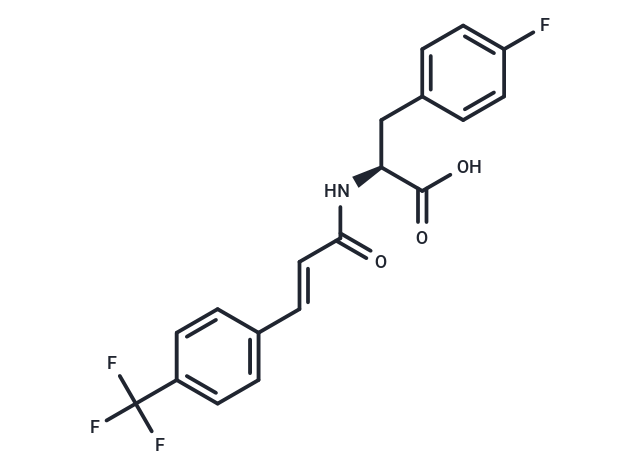
| Description | PI3K/Akt/CREB activator 1 (AE-18) is a selective inducible nitric oxide synthase (iNOS) inhibitor that crosses the blood-brain barrier, reduces infarct size and restores blood supply deficits after ischemia-reperfusion in rats, and is used in studies of vascular dementia and Parkinson's disease. |
| In vitro | PI3K/Akt/CREB activator 1 (Compound AE-18) (10 and 20 μM; 48 hr treatment) enhances BDNF expression in Neuro-2a cells through activation of the PI3K/Akt/CREB pathway, which promotes the formation of neurites and cell proliferation. Treatment of neurons with 10 and 20 μM PI3K/Akt/CREB activator 1 enhances the differentiation of cultured hippocampal neurons and promotes axonal and dendritic polarity formation through the PI3K/Akt signaling pathway. [1] |
| In vivo | In male Sprague-Dawley rats in a chronic cerebral hypoperfusion (CCH) model, gavage of 5 and 10 mg/kg PI3K/Akt/CREB activator 1 promoted the recovery of cerebral blood flow (CBF) after bilateral common carotid artery ligation (BCCAO). PI3K/Akt/CREB activator 1 (5 and 10 mg/kg; by gavage; for 5 consecutive days) attenuated learning and memory impairments in a rat model of CCH, while alleviating hippocampal pathology damage caused by BCCAO. [1] |
| Molecular Weight | 381.32 |
| Formula | C19H15F4NO3 |
| Cas No. | 2708177-73-3 |
| Smiles | C([C@H](NC(/C=C/C1=CC=C(C(F)(F)F)C=C1)=O)C(O)=O)C2=CC=C(F)C=C2 |
| Storage | Store at low temperature Pure form: -20°C for 3 years | In solvent: -80°C for 1 year Shipping with blue ice/Shipping at ambient temperature. | |||||||||||||||||||||||||||||||||||
| Solubility Information | DMSO: 200 mg/mL (524.49 mM), Sonication is recommended. | |||||||||||||||||||||||||||||||||||
| In Vivo Formulation | 10% DMSO+40% PEG300+5% Tween 80+45% Saline: 5 mg/mL (13.11 mM), Sonication is recommended. Please add the solvents sequentially, clarifying the solution as much as possible before adding the next one. Dissolve by heating and/or sonication if necessary. Working solution is recommended to be prepared and used immediately. The formulation provided above is for reference purposes only. In vivo formulations may vary and should be modified based on specific experimental conditions. | |||||||||||||||||||||||||||||||||||
Solution Preparation Table | ||||||||||||||||||||||||||||||||||||
DMSO
Note : The dilution table applies only to solid products. For liquid products, please calculate the stock solution based on the stated concentration and/or density. | ||||||||||||||||||||||||||||||||||||
 For example, if the intended dosage is 10 mg/kg for animals weighing 20 g , with a dosing volume of 100 μL per animal, and a total of 10 animals are to be administered, using a formulation of
  10% DMSO+ 40% PEG300+ 5% Tween 80+ 45% Saline/PBS/ddH2O , the resulting working solution concentration would be 2 mg/mL.
Dissolve 2 mg of the compound in 100 μL DMSO to obtain a stock solution at a concentration of 20 mg/mL . If the required concentration exceeds the compound's known solubility, please contact us for technical support before proceeding.
1) Add 100 μL of the DMSO stock solution to 400 µL PEG300 and mix thoroughly until the solution becomes clear.
2) Add 50 µL Tween 80 and mix well until fully clarified.
3) Add 450 µL Saline,PBS or ddH2O and mix thoroughly until a homogeneous solution is obtained.
| Size | Quantity | Unit Price | Amount | Operation |
|---|
 Feedback
 Hello! How can I help you today?
Copyright © 2015-2026 TargetMol Chemicals Inc. All Rights Reserved.
