


Shopping Cart
Remove All Your shopping cart is currently empty

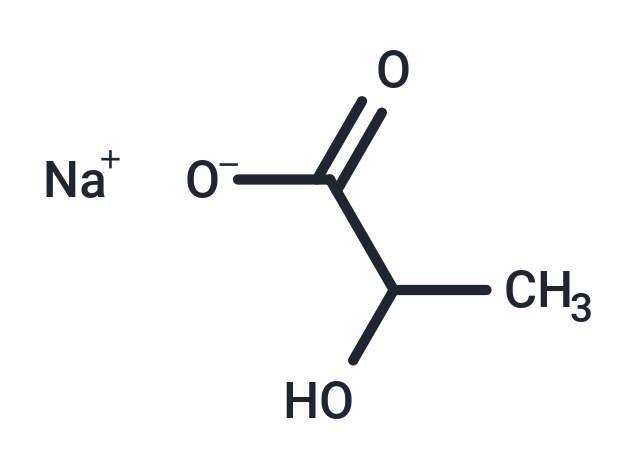
Synonyms: E-270 sodium (60% w/w in water), DL-Lactic acid sodium (60% w/w in water)
| Pack Size | Price | USA Stock | Global Stock | Quantity |
|---|---|---|---|---|
| 10 mg | Inquiry | 7-10 days | 7-10 days | |
| 50 mg | Inquiry | 7-10 days | 7-10 days |
| Description | Lactic acid (DL-Lactic acid) sodium (60% w/w in water) is an activator of hydroxycarboxylic acid receptor 1 (HCAR1) and an epigenetic regulator that induces lysine residue lactylation. As the end product of glycolysis, it bridges the gap between glycolysis and oxidative phosphorylation. This compound is a tumor metabolite, offering immunoprotective effects of lactate in antitumor immunity. Additionally, it possesses antimicrobial properties and can be used as a food preservative. |
| In vitro | Lactic acid (20 mM; 24, 48 hours) combined with sodium (60% w/w in water) significantly reduces cell proliferation and migration, altering cellular metabolism towards oxidative phosphorylation. Additionally, lactic acid (20 mM; 24 hours) with sodium (60% w/w in water) increases the protein and mRNA expression levels of MCT1 and HCAR1. |
| In vivo | Lactic acid (1.6 g/kg; pH 7.4; subcutaneous injection; once daily; from day 8 to 30) with sodium (60% w/w in water) exhibits CD8+ T cell-dependent tumor growth inhibition in the MC38 colon cancer model. Note: Adjust the working solution's pH to approximately 7.4 before administration in animals. |
| Synonyms | E-270 sodium (60% w/w in water), DL-Lactic acid sodium (60% w/w in water) |
| Molecular Weight | 112.06 |
| Formula | C3H5NaO3 |
| Cas No. | 72-17-3 |
| Smiles | O=C(C(C)O)[O-].[Na+] |
| Storage | Powder: -20°C for 3 years | In solvent: -80°C for 1 year Shipping with blue ice/Shipping at ambient temperature. |
 For example, if the intended dosage is 10 mg/kg for animals weighing 20 g , with a dosing volume of 100 μL per animal, and a total of 10 animals are to be administered, using a formulation of
  10% DMSO+ 40% PEG300+ 5% Tween 80+ 45% Saline/PBS/ddH2O , the resulting working solution concentration would be 2 mg/mL.
Dissolve 2 mg of the compound in 100 μL DMSO to obtain a stock solution at a concentration of 20 mg/mL . If the required concentration exceeds the compound's known solubility, please contact us for technical support before proceeding.
1) Add 100 μL of the DMSO stock solution to 400 µL PEG300 and mix thoroughly until the solution becomes clear.
2) Add 50 µL Tween 80 and mix well until fully clarified.
3) Add 450 µL Saline,PBS or ddH2O and mix thoroughly until a homogeneous solution is obtained.
| Size | Quantity | Unit Price | Amount | Operation |
|---|
 Feedback
 Hello! How can I help you today?
Copyright © 2015-2026 TargetMol Chemicals Inc. All Rights Reserved.
