


Shopping Cart
Remove All Your shopping cart is currently empty


Synonyms: UNII-N9IX402L35, JNJ10229570, JNJ 10229570

| Pack Size | Price | USA Stock | Global Stock | Quantity |
|---|---|---|---|---|
| 1 mg | $112 | In Stock | In Stock | |
| 5 mg | $198 | In Stock | In Stock | |
| 10 mg | $313 | In Stock | In Stock | |
| 25 mg | $496 | In Stock | In Stock | |
| 50 mg | $689 | In Stock | In Stock | |
| 100 mg | $892 | In Stock | In Stock | |
| 1 mL x 10 mM (in DMSO) | $226 | In Stock | In Stock |
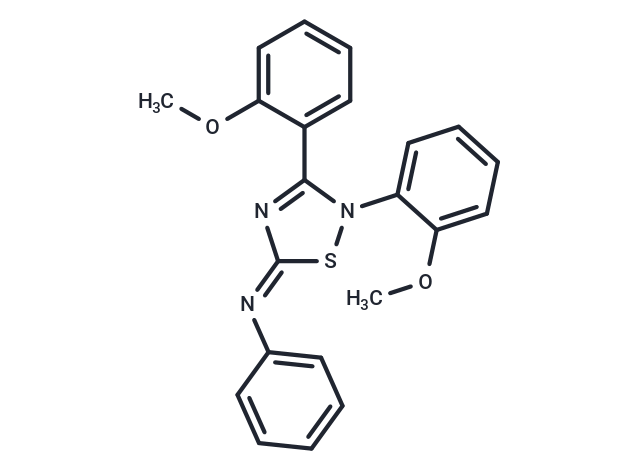
| Description | JNJ-10229570 (UNII-N9IX402L35) is an antagonist of melanocortin receptor 1 (MC1R) and melanocortin receptor 5 (MC5R), which inhibits sebaceous gland differentiation and the production of sebum-specific lipids. |
| Targets & IC50 | MC5R (human):200 nM, MC1R (human):270 nM |
| In vitro | JNJ-10229570 demonstrates dose-dependent inhibition of sebaceous lipid production in cultured primary human sebocytes. Concurrently, JNJ-7818369 effectively prevents the attachment of 125I-NDP-α-MSH to cells featuring human MC1R and MC5R receptors, presenting IC50 values of 270±120 nM and 200±50 nM, respectively. Similar efficacy is observed with the compound's free base form. For both variations of the compound, the inhibitory action on MC4R is identical, with IC50 values reported at 240±170 nM. Notably, treatment with JNJ-10229570 at a concentration of 0.01 μM markedly suppresses lipid granule formation, achieving total inhibition at a concentration of 0.05 μM. |
| In vivo | Topical treatment with JNJ-10229570 on human skins transplanted onto SCID mice significantly reduced sebum-specific lipid production, sebaceous gland size, and the expression of the sebaceous differentiation marker epithelial-membrane antigen (EMA). Treatment with flutamide, a known inhibitor of sebum production, validates the human skin/SCID mouse experimental system for sebaceous secretion studies. |
| Synonyms | UNII-N9IX402L35, JNJ10229570, JNJ 10229570 |
| Cell Research | Radioligand binding assays were performed, with CHO-K1 cells over-expressing MC1R, and HEK-293 cells over-expressing MC4R or MC5R, using a single concentration of 125I-NDP-a-MSH and increasing concentrations of JNJ-7818369 or JNJ-10229570. IC50 values for inhibition of radioligand binding were calculated by a non-linear, least squares regression method. |
| Animal Research | JNJ-10229570 (0.05%) and flutamide (5%) were dissolved in a vehicle of ethanol: propylene glycol (7:3).?20 ml/1.5 cm^2 were applied onto each skin xenograft, starting at three months posttransplantation.?Xenografts were treated once daily, 5 days/week, for 30 34 treatments.?Xenografts were then collected for histological examination and lipid analysis.?Each study was repeated with skin xenografts from at least 3 donors.?The vehicle had no effect on sebaceous glands differentiation or activity. |
| Molecular Weight | 389.47 |
| Formula | C22H19N3O2S |
| Cas No. | 524923-88-4 |
| Smiles | COc1ccccc1-c1n\c(=N\c2ccccc2)sn1-c1ccccc1OC |
| Relative Density. | 1.22 g/cm3 (Predicted) |
| Storage | Powder: -20°C for 3 years | In solvent: -80°C for 1 year Shipping with blue ice/Shipping at ambient temperature. | ||||||||||||||||||||||||||||||
| Solubility Information | DMSO: 25 mg/mL (64.19 mM), Sonication is recommended.  | ||||||||||||||||||||||||||||||
| In Vivo Formulation | 10% DMSO+90% Saline: < 2.5 mg/mL (6.42 mM), Lower concentrations may be soluble, but exact solubility limit is unknown. 10% DMSO+40% PEG300+5% Tween 80+45% Saline: 2.5 mg/mL (6.42 mM), Solution. Please add the solvents sequentially, clarifying the solution as much as possible before adding the next one. Dissolve by heating and/or sonication if necessary. Working solution is recommended to be prepared and used immediately. The formulation provided above is for reference purposes only. In vivo formulations may vary and should be modified based on specific experimental conditions. | ||||||||||||||||||||||||||||||
Solution Preparation Table | |||||||||||||||||||||||||||||||
DMSO
Note : The dilution table applies only to solid products. For liquid products, please calculate the stock solution based on the stated concentration and/or density. | |||||||||||||||||||||||||||||||
 For example, if the intended dosage is 10 mg/kg for animals weighing 20 g , with a dosing volume of 100 μL per animal, and a total of 10 animals are to be administered, using a formulation of
  10% DMSO+ 40% PEG300+ 5% Tween 80+ 45% Saline/PBS/ddH2O , the resulting working solution concentration would be 2 mg/mL.
Dissolve 2 mg of the compound in 100 μL DMSO to obtain a stock solution at a concentration of 20 mg/mL . If the required concentration exceeds the compound's known solubility, please contact us for technical support before proceeding.
1) Add 100 μL of the DMSO stock solution to 400 µL PEG300 and mix thoroughly until the solution becomes clear.
2) Add 50 µL Tween 80 and mix well until fully clarified.
3) Add 450 µL Saline,PBS or ddH2O and mix thoroughly until a homogeneous solution is obtained.
| Size | Quantity | Unit Price | Amount | Operation |
|---|
 Feedback
 Hello! How can I help you today?
Copyright © 2015-2026 TargetMol Chemicals Inc. All Rights Reserved.
