Shopping Cart
Remove All
  • TargetMol
    Your shopping cart is currently empty

PLX5622

Copy Product Info
🥰Excellent
Hot
Catalog No. T7100Cas No. 1303420-67-8
Alias PLX-5622

PLX5622 is an orally active small-molecule CSF1R inhibitor that selectively depletes microglia in the brains of mice and rats. It is commonly used to establish models related to microglia-associated neuroinflammation, neurodegenerative diseases (such as Alzheimer's disease and Parkinson's disease), brain injury, and neuroimmune regulation. This product is also available as a premixed diet version (C2005 PLX5622 in AIN-76A Diet (1200 ppm)), eliminating the need for self-preparation and offering superior stability and reproducibility.

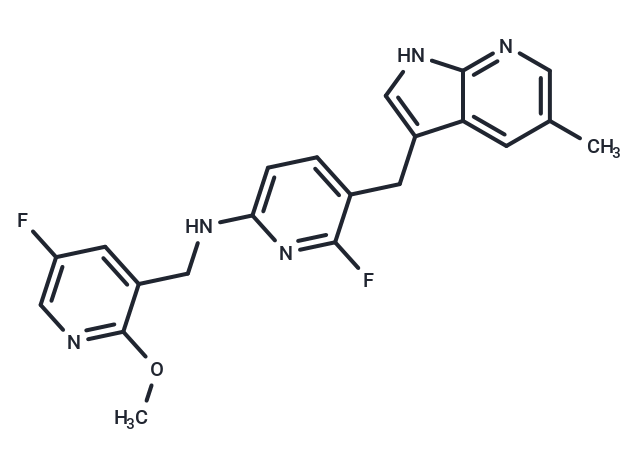
PLX5622

PLX5622

Copy Product Info
🥰Excellent
Hot
Purity: 99.97%
Catalog No. T7100Alias PLX-5622Cas No. 1303420-67-8
PLX5622 is an orally active small-molecule CSF1R inhibitor that selectively depletes microglia in the brains of mice and rats. It is commonly used to establish models related to microglia-associated neuroinflammation, neurodegenerative diseases (such as Alzheimer's disease and Parkinson's disease), brain injury, and neuroimmune regulation. This product is also available as a premixed diet version (C2005 PLX5622 in AIN-76A Diet (1200 ppm)), eliminating the need for self-preparation and offering superior stability and reproducibility.
Pack SizePriceUSA WarehouseGlobal WarehouseQuantity
1 mg$38In StockIn Stock
5 mg$78In StockIn Stock
10 mg$127In StockIn Stock
25 mg$255In StockIn Stock
50 mg$428In StockIn Stock
100 mg$557In StockIn Stock
200 mg$789In StockIn Stock
1 mL x 10 mM (in DMSO)$74In StockIn Stock
Add to Cart
Add to Quotation
In Stock Estimated shipping dateUSA Warehouse[1-2 days] Global Warehouse[5-7 days]
All TargetMol products are for research purposes only and cannot be used for human consumption. We do not provide products or services to individuals. Please comply with the intended use and do not use TargetMol products for any other purpose.
Questions
TargetMol
View More

Batch Information

Select Batch
Purity:99.97%
Color:White to Yellow
Contact us for more batch information

Resource Download

Product Introduction

Bioactivity
Description
PLX5622 is an orally active small-molecule CSF1R inhibitor that selectively depletes microglia in the brains of mice and rats. It is commonly used to establish models related to microglia-associated neuroinflammation, neurodegenerative diseases (such as Alzheimer's disease and Parkinson's disease), brain injury, and neuroimmune regulation. This product is also available as a premixed diet version (C2005 PLX5622 in AIN-76A Diet (1200 ppm)), eliminating the need for self-preparation and offering superior stability and reproducibility.
Targets&IC50
CSF1R:0.016 µM, CSF1R:5.9 nM (Ki)
In vitro
METHODS: CX CR1+/GFP mouse-derived mixed glial cell cultures were treated with PLX5622 (0.1-10 µM) for 7 days and cell counts were assayed by Flow cytometry.
RESULTS: Although there was a dose-dependent decrease in microglia numbers under PLX5622, no decrease in GFAP+ astrocytes was seen, but rather a gradual increase, along with a decrease in PDGFR-a OPC. [1]
METHODS: Cerebellar sections prepared from PLP-eGFP mouse pups were treated with PLX5622 (1-20 µM) for 3 days followed by Immunostaining.
RESULTS: After three days of treatment, PLX5622 at concentrations greater than 2 µM eliminated more than 95% of microglia. [2]
In vivo
METHODS: To study in vivo activity, PLX5622 (1200 mg/kg) was administered to PLP eGFP mice by feed for 7-21 days.
RESULTS: PLX5622 was effective in depleting microglia in the central nervous system of adult mice. treatment with PLX5622 for 7 days had no effect on oligodendrocyte progenitor cell populations; however, a mild reduction was observed after 21 days in some central nervous system regions. [2]
Disease Modeling Protocol
Alzheimer's Disease (AD) Model
  • Modeling Mechanism:

    PLX5622 selectively inhibits the colony-stimulating factor 1 receptor (CSF1R) signaling pathway, leading to the survival-dependent loss of microglia (intrinsic myeloid cells in the brain), achieving long-term, specific depletion (brain clearance rate > 95%). After microglia depletion, Aβ cannot form dense plaques in the brain parenchyma and instead deposits in cerebral blood vessels (mimicking cerebral amyloid angiopathy, CAA), while reversing the disordered expression of AD-related neuronal genes, revealing the key role of microglia in AD plaque formation.

  • Related Products:

    PLX5622 (T7100)

  • Modeling Method:

    Experimental Subject:

    Mice, 5xFAD (AD transgenic model), Wild-type (WT), 1.5 months old

    Dosage and Administration Route:

    ① Core intervention: PLX5622 hemifumarate, 1200 ppm, mixed into AIN-76A standard chow, ad libitum feeding;
    ② Control treatment: Standard AIN-76A diet, Ad libitum feeding;
    ③ Administration period: Initiation at 1.5 months of age, continuing through weeks 10–24 (covering the critical AD plaque formation phase), with endpoint assessment at 4–7 months of age;
    ④ Recovery validation (optional): Discontinue PLX5622 feed after 10 weeks of administration, revert to standard feed for 1 month, observe microglial recovery and plaque reformation

    Dosing Frequency and Duration Model:

    Core period: 10 weeks or 24 weeks, ad libitum feeding
    Reversal validation: "10 weeks of dosing+1 month of withdrawal"

  • Validation:

    Pathological markers: Microglia depletion: Immunohistochemistry (IBA1 staining) showed a 97%-100% reduction in the number of microglia in the cortex and hippocampus, with only a small number of cells remaining in the thalamus and submental region; Plaque formation: The number of dense plaques in the brain parenchyma (Thio-S staining) decreased by 60%-90%, and significant cerebral vascular Aβ deposition (CAA) was observed in the cortex; a small number of plaques could still form around surviving microglia; Molecular markers: The total amount of Aβ₁₋₃₈, Aβ₁₋₄₀, and Aβ₁₋₄₂ in the brain remained unchanged, but the deposition location shifted from the brain parenchyma to blood vessels; the downregulation of hippocampal neuronal synapse-related genes (such as Dync1l1 and Gls) was reversed; Behavioral markers: Morris water maze and elevated cross maze showed that microglia depletion did not affect the cognitive function of mice and improved anxiety-like behavior in 5xFAD mice; Rejuvenation verification: Microglia were rejuvenated after PLX5622 was discontinued, brain parenchymal plaques reformed, and their number returned to the level of untreated 5xFAD mice.

*Precautions: At the end of the treatment, the mice were euthanized by inhaling CO2 and carefully perfused with 1X phosphate-buffered saline (PBS).

*References:Spangenberg E,et,al. Sustained microglial depletion with CSF1R inhibitor impairs parenchymal plaque development in an Alzheimer's disease model. Nat Commun. 2019 Aug 21;10(1):3758.

SynonymsPLX-5622
Chemical Properties
Molecular Weight395.41
FormulaC21H19F2N5O
Cas No.1303420-67-8
SmilesCOc1ncc(F)cc1CNc1ccc(Cc2c[nH]c3ncc(C)cc23)c(F)n1
Relative Density.1.364 g/cm3 (Predicted)
Storage & Solubility Information
Storagestore at low temperature | Powder: -20°C for 3 years | In solvent: -80°C for 1 year | Shipping with blue ice/Shipping at ambient temperature.
Solubility Information
DMSO: 65 mg/mL (164.39 mM), Sonication is recommended.

In Vivo Formulation
10% DMSO+40% PEG300+5% Tween 80+45% Saline: 7.9 mg/mL (19.98 mM), Suspension.
Please add the solvents sequentially, clarifying the solution as much as possible before adding the next one. Dissolve by heating and/or sonication if necessary. Working solution is recommended to be prepared and used immediately. The formulation provided above is for reference purposes only. In vivo formulations may vary and should be modified based on specific experimental conditions.
Solution Preparation Table
DMSO
1mg5mg10mg50mg
1 mM2.5290 mL12.6451 mL25.2902 mL126.4510 mL
5 mM0.5058 mL2.5290 mL5.0580 mL25.2902 mL
10 mM0.2529 mL1.2645 mL2.5290 mL12.6451 mL
20 mM0.1265 mL0.6323 mL1.2645 mL6.3226 mL
50 mM0.0506 mL0.2529 mL0.5058 mL2.5290 mL
100 mM0.0253 mL0.1265 mL0.2529 mL1.2645 mL

Calculator

  • Molarity Calculator
  • Dilution Calculator
  • Reconstitution Calculator
  • Molecular Weight Calculator

In Vivo Formulation Calculator (Clear solution)

Please enter your animal experiment information in the following box and click Calculate to obtain the stock solution preparation method and in vivo formula preparation method:
TargetMol | Animal experiments For example, if the intended dosage is 10 mg/kg for animals weighing 20 g , with a dosing volume of 100 μL per animal, TargetMol | Animal experiments and a total of 10 animals are to be administered, using a formulation of TargetMol | reagent 10% DMSO+ 40% PEG300+ 5% Tween 80+ 45% Saline/PBS/ddH2O , the resulting working solution concentration would be 2 mg/mL.

Stock Solution Preparation:

Dissolve 2 mg of the compound in 100 μL DMSOTargetMol | reagent to obtain a stock solution at a concentration of 20 mg/mL . If the required concentration exceeds the compound's known solubility, please contact us for technical support before proceeding.

Preparation of the In Vivo Formulation:

1) Add 100 μL of the DMSOTargetMol | reagent stock solution to 400 μL PEG300TargetMol | reagent and mix thoroughly until the solution becomes clear.

2) Add 50 μL Tween 80 and mix well until fully clarified.

3) Add 450 μL Saline,PBS or ddH2OTargetMol | reagent and mix thoroughly until a homogeneous solution is obtained.

This example is provided solely to demonstrate the use of the In Vivo Formulation Calculator and does not constitute a recommended formulation for any specific compound. Please select an appropriate dissolution and formulation strategy based on your experimental model and route of administration.
All co-solvents required for this protocol, includingDMSO, PEG300/PEG400, Tween 80, SBE-β-CD, and Corn oil, are available for purchase on the TargetMol website.
1 Enter information below:
mg/kg
g
μL
2 Enter the in vivo formulation:
% DMSO
%
% Tween 80
% Saline/PBS/ddH2O

Dose Conversion

You can also refer to dose conversion for different animals. More Dose Conversion

Tech Support

Please see Inhibitor Handling Instructions for more frequently ask questions. Topics include: how to prepare stock solutions, how to store products, and cautions on cell-based assays & animal experiments, etc

Keywords

Related Tags: buy PLX5622 | purchase PLX5622 | PLX5622 cost | order PLX5622 | PLX5622 chemical structure | PLX5622 in vivo | PLX5622 in vitro | PLX5622 formula | PLX5622 molecular weight