


Shopping Cart
Remove All Your shopping cart is currently empty

Synonyms:
| Pack Size | Price | USA Stock | Global Stock | Quantity |
|---|---|---|---|---|
| 10 mg | $1,280 | 6-8 weeks | 6-8 weeks | |
| 25 mg | $2,550 | 6-8 weeks | 6-8 weeks |
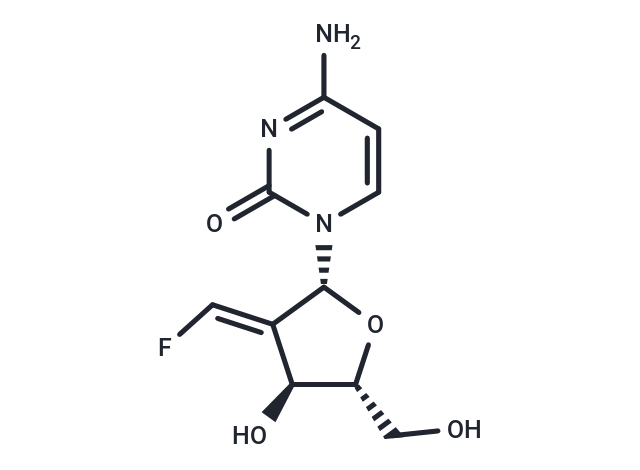
| Description | Tezacitabine is a cytostatic and cytotoxic antimetabolite and a nucleoside analogue with a dual mechanism of action that irreversibly inhibits ribonucleotide reductase and can be incorporated into DNA during replication or repair, causing DNA chain termination. It blocks tumor cells in the G1 and S phases of the cell cycle, inducing apoptotic cell death, with potential applications in treating leukemia and solid tumors[1][2]. |
| In vitro | Tezacitabine (0.01-10 μM; 24 hours; CCRF-SB, KG-1, Jurkat, COLO-205, MCF-7 and PC-3 cells) treatment leads to the G1 and S-phase leaky block of the cell cycle [1]. Tezacitabine (0.01-10 μM; 24 hours; CCRF-SB, KG-1, Jurkat, COLO-205, MCF-7 and PC-3 cells) treatment concentration-dependently apoptosis the cells by the caspase 3/7 pathway[1]. Tezacitabine has highly cytostatic and cytotoxic properties. The cytotoxic effect of tezacitabine is manifested not only in apoptosis but also in changes in protein metabolism[1]. Cell Cycle Analysis [1] Cell Line: CCRF-SB, KG-1, Jurkat, COLO-205, MCF-7 and PC-3 cells Concentration: 0.01 μM, 0.1 μM, 1.0 μM, and 10 μM Incubation Time: 24 hours Result: Induced leaky block of the G1 (at concentrations higher than 10 nM) and S-phase (at low concentration) of the cell cycle. Apoptosis Analysis [1] Cell Line: CCRF-SB, KG-1, Jurkat, COLO-205, MCF-7 and PC-3 cells Concentration: 0.01 μM, 0.1 μM, 1.0 μM, and 10 μM Incubation Time: 24 hours Result: Concentration-dependently induced apoptotic death of cells by the caspase 3/7 pathway. |
| In vivo | Tezacitabine (100 mg/kg; intraperitoneal injection; daily; female nude mice) treatment inhibits tumor growth in HCT 116 tumor xenografts over 14 days in 7-9-week-old female nude mice injected with HCT 116 cells [2]. |
| Molecular Weight | 257.22 |
| Formula | C10H12FN3O4 |
| Cas No. | 130306-02-4 |
| Smiles | Nc1ccn([C@@H]2O[C@H](CO)[C@@H](O)\C2=C/F)c(=O)n1 |
| Storage | Powder: -20°C for 3 years | In solvent: -80°C for 1 year Shipping with blue ice/Shipping at ambient temperature. |
 For example, if the intended dosage is 10 mg/kg for animals weighing 20 g , with a dosing volume of 100 μL per animal, and a total of 10 animals are to be administered, using a formulation of
  10% DMSO+ 40% PEG300+ 5% Tween 80+ 45% Saline/PBS/ddH2O , the resulting working solution concentration would be 2 mg/mL.
Dissolve 2 mg of the compound in 100 μL DMSO to obtain a stock solution at a concentration of 20 mg/mL . If the required concentration exceeds the compound's known solubility, please contact us for technical support before proceeding.
1) Add 100 μL of the DMSO stock solution to 400 µL PEG300 and mix thoroughly until the solution becomes clear.
2) Add 50 µL Tween 80 and mix well until fully clarified.
3) Add 450 µL Saline,PBS or ddH2O and mix thoroughly until a homogeneous solution is obtained.
| Size | Quantity | Unit Price | Amount | Operation |
|---|
 Feedback
 Hello! How can I help you today?
Copyright © 2015-2026 TargetMol Chemicals Inc. All Rights Reserved.
