Shopping Cart
Remove All
  • TargetMol
    Your shopping cart is currently empty

Tyloxapol (Alias: Triton WR1339)

Catalog No. T0307 Copy Product Info
🥰Excellent
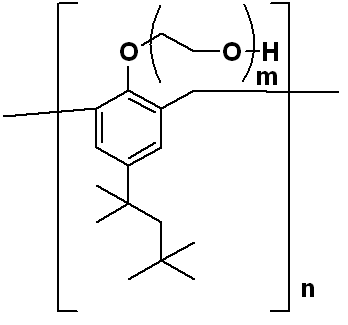
Tyloxapol is an alkyl aryl polyether alcohol-type nonionic liquid polymer used as a surfactant stabilizer. It is commonly used to induce hyperlipidemia models in animals.

Tyloxapol

Copy Product Info
🥰Excellent
Catalog No. T0307
Alias Triton WR1339

Tyloxapol is an alkyl aryl polyether alcohol-type nonionic liquid polymer used as a surfactant stabilizer. It is commonly used to induce hyperlipidemia models in animals.

Tyloxapol
Cas No. 25301-02-4
Pack SizePriceUSA StockGlobal StockQuantity
200 mg$30In StockIn Stock
500 mg$44-In Stock
1 g$53-In Stock
In stock · Estimated delivery: USA Stock (1-2 days) Global Stock (5-7 days)
Add to Cart
Add to Quotation
For research use only—not for human use. No sales to individuals. Use as intended only.
Questions
TargetMol
View More

Batch Information

Select Batch
Purity:polymer
Contact us for more batch information

Resource Download

Product Introduction

Bioactivity
Description
Tyloxapol is an alkyl aryl polyether alcohol-type nonionic liquid polymer used as a surfactant stabilizer. It is commonly used to induce hyperlipidemia models in animals.
In vitro
Tyloxapol is generally regarded as a safe stabilizer. In some studies, it is reported to causes cytotoxicity in epithelial and red blood cells, induces lysis of human Jurkat T-lymphoblasts and the apoptosis in RAW 264.7 murine macrophage-like cells and NIH/3T3 mouse fibroblast cells. These indications of cytotoxicity, however, do not reflect the in vivo use of Tyloxapol, since it is rarely used alone in clinical applications[3].
In vivo
A single intravenous injection of tyloxapol at dose of 400 mg/kg body weight shows three distinctive phases, sharp linear increment, slow linear increment and slow decrement of plasma lipids toward the basal levels[1]. The treatment of tyloxapol enhannces the pulmonary absorption of rh-insulin and increases the absorption of inhaled insulin in diabetic rats. It might significantly increase the hypoglycemic effect of intratracheally administered insulin in diabetic rats but does not change the LDH activity[2].
Disease Modeling Protocol
Hyperlipidemia model
  • Modeling Mechanism:

    Tyloxapol, as a nonionic surfactant, has the following core modeling mechanism: ① It specifically inhibits lipoprotein lipase (LPL) activity, blocking the hydrolytic metabolism of triglycerides (TG) in plasma, especially inhibiting the breakdown of very low-density lipoprotein (VLDL)-TG, leading to rapid accumulation of TG in the blood; ② It interferes with the hepatic VLDL secretion regulation pathway, reducing the transport and clearance of TG to peripheral tissues, further exacerbating the increase in plasma lipids; ③ Short-term administration can induce acute hyperlipidemia, simulating the pathological state related to clinical lipid metabolism disorders, and is suitable for evaluating the intervention effect of drugs on lipid clearance and lipoprotein metabolism.

  • Related Products:

    Tyloxapol (T0307)

  • Modeling Method:

    Experimental Subject:

    Mice, C57BL/6 mice (or Apoe⁻/⁻ mice to enhance model stability), Male, weighing 20–25 g

    Dosage and Administration Route:

    ① Core modelling:
    - Tyloxapol, 500 mg/kg, dissolved in physiological saline, intravenous tail injection, single dose;
    ② Control treatment:
    - Blank control: tail vein injection of equal volume saline;
    - Model validation group: Optionally pre-treat with high-fat diet (HFD, 60% kcal from fat) for 2 weeks followed by Tyloxapol injection to establish a "diet+drug" dual-induced model;
    Chronic model (optional): Weekly injections for 4 consecutive weeks to induce persistent hyperlipidaemia.

    Dosing Frequency and Duration Model:

    Single Dose

  • Validation:

    1. Lipid Indicators (Core Validation): - Plasma TG: 8 hours after injection, TG levels increased 3-5 times compared to the control group (P<0.01), and remained high for 24 hours; - Lipoprotein Profile: FPLC analysis showed a significant increase in VLDL-TG peak (more than 400% higher than the control group), a slight increase in low-density lipoprotein (LDL) cholesterol, and no significant change in high-density lipoprotein (HDL) cholesterol; - Liver Lipids: Hepatic TG content did not increase significantly in the acute model, while mild hepatic steatosis (positive Oil Red O staining) appeared in the chronic model; 2. Molecular Indicators: - Lipoprotein Lipase (LPL) Activity: LPL activity in plasma and adipose tissue decreased by more than 60% compared to the control group (P<0.01); - Lipid Metabolism Genes: No significant changes in the expression of PPARγ and SREBP1c mRNA in the liver (distinguished from the diet-induced model); 3. Stability Validation: - Coefficient of variation of plasma TG after modeling in the same batch of mice < 20%, indicating good model repeatability.

*Precautions:

*References:Jadhav K,et,al. Reversal of metabolic disorders by pharmacological activation of bile acid receptors TGR5 and FXR. Mol Metab. 2018 Mar;9:131-140.

Cell Research
HEK293 cells growing at 40% confluency are exposed to different test dispersions of SLP or their individual components for 48 h and observed the alterations in cellular morphology.(Only for Reference)
SynonymsTriton WR1339
Chemical Properties
Cas No.25301-02-4
Relative Density.1.1 g/cm3
Storage & Solubility Information
Storagekeep away from direct sunlight,store under nitrogen | Pure form: -20°C for 3 years | In solvent: -80°C for 1 year | Shipping with blue ice/Shipping at ambient temperature.
Solubility Information
H2O: 25 mg/mL, Sonication is recommended.
DMSO: 38 mg/mL, Sonication is recommended.

Calculator

  • Molarity Calculator
  • Dilution Calculator
  • Reconstitution Calculator
  • Molecular Weight Calculator

In Vivo Formulation Calculator (Clear solution)

Please enter your animal experiment information in the following box and click Calculate to obtain the stock solution preparation method and in vivo formula preparation method:
TargetMol | Animal experiments For example, if the intended dosage is 10 mg/kg for animals weighing 20 g , with a dosing volume of 100 μL per animal, TargetMol | Animal experiments and a total of 10 animals are to be administered, using a formulation of TargetMol | reagent 10% DMSO+ 40% PEG300+ 5% Tween 80+ 45% Saline/PBS/ddH2O , the resulting working solution concentration would be 2 mg/mL.

Stock Solution Preparation:

Dissolve 2 mg of the compound in 100 μL DMSOTargetMol | reagent to obtain a stock solution at a concentration of 20 mg/mL . If the required concentration exceeds the compound's known solubility, please contact us for technical support before proceeding.

Preparation of the In Vivo Formulation:

1) Add 100 μL of the DMSOTargetMol | reagent stock solution to 400 μL PEG300TargetMol | reagent and mix thoroughly until the solution becomes clear.

2) Add 50 μL Tween 80 and mix well until fully clarified.

3) Add 450 μL Saline,PBS or ddH2OTargetMol | reagent and mix thoroughly until a homogeneous solution is obtained.

This example is provided solely to demonstrate the use of the In Vivo Formulation Calculator and does not constitute a recommended formulation for any specific compound. Please select an appropriate dissolution and formulation strategy based on your experimental model and route of administration.
All co-solvents required for this protocol, includingDMSO, PEG300/PEG400, Tween 80, SBE-β-CD, and Corn oil, are available for purchase on the TargetMol website.
1 Enter information below:
mg/kg
g
μL
2 Enter the in vivo formulation:
% DMSO
%
% Tween 80
% Saline/PBS/ddH2O

Dose Conversion

You can also refer to dose conversion for different animals. More Dose Conversion

Tech Support

Please see Inhibitor Handling Instructions for more frequently ask questions. Topics include: how to prepare stock solutions, how to store products, and cautions on cell-based assays & animal experiments, etc

Keywords

Related Tags: buy Tyloxapol | purchase Tyloxapol | Tyloxapol cost | order Tyloxapol | Tyloxapol chemical structure | Tyloxapol in vivo | Tyloxapol in vitro