


Shopping Cart
Remove All Your shopping cart is currently empty

Synonyms: LAU-0901, BN-50727
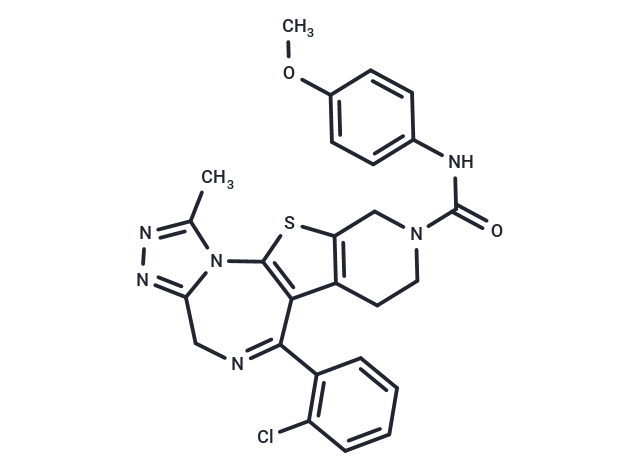
| Pack Size | Price | USA Stock | Global Stock | Quantity |
|---|---|---|---|---|
| 25 mg | $1,970 | 8-10 weeks | 8-10 weeks | |
| 50 mg | $2,580 | 8-10 weeks | 8-10 weeks | |
| 100 mg | $3,400 | 8-10 weeks | 8-10 weeks |
| Description | Setipafant is an antagonist of the platelet-activating factor. |
| In vivo | Pretreatment of the animals with one or other of the structurally unrelated PAF receptor antagonists, BN 52021 (10 mg/kg, i.p.) or Setipafant (1 mg/kg, i.p.) significantly decreases Dexamethasone-induced gastric damage. Animals are separated into six groups: U4, controls; S, sham-operated animals undergoing laparotomy; I4 and I9, ligation of the mesenteric vessels in the last ileal loop; IT4 and IT9, same procedure together with treatment with Setipafant (50 mg/kg) orally before and after surgery and intraperitoneally during surgery. Animals are killed at day 4 in groups U4, S, I4, and IT4 and on day 9 in groups I9 and IT9, with histological studies and mediator measurements taken. Macroscopic and histological lesions of the intestinal wall in groups I4, I9, IT4, and IT9 are similar to those of human neonatal necrotizing enterocolitis and do not vary according to the absence or the presence of Setipafant treatment. Peritoneal bands are significantly reduced in treated groups IT4 and IT9 as compared with untreated ones I4 and I9. Mucosal PAF levels in the terminal ileum are higher in group I4 than in groups U4 or I9. In the upper loop, mucosal PAF levels are comparable in all groups. An increase in stool PAF levels is observed only in group I9, whereas values comparable to those observed in controls are detected in other groups [1][2]. |
| Synonyms | LAU-0901, BN-50727 |
| Molecular Weight | 519.02 |
| Formula | C26H23ClN6O2S |
| Cas No. | 132418-35-0 |
| Smiles | CC=1N2C3=C(C4=C(S3)CN(C(NC5=CC=C(OC)C=C5)=O)CC4)C(=NCC2=NN1)C6=C(Cl)C=CC=C6 |
| Relative Density. | 1.5g/cm3 |
| Storage | Powder: -20°C for 3 years | In solvent: -80°C for 1 year Shipping with blue ice/Shipping at ambient temperature. |
 For example, if the intended dosage is 10 mg/kg for animals weighing 20 g , with a dosing volume of 100 μL per animal, and a total of 10 animals are to be administered, using a formulation of
  10% DMSO+ 40% PEG300+ 5% Tween 80+ 45% Saline/PBS/ddH2O , the resulting working solution concentration would be 2 mg/mL.
Dissolve 2 mg of the compound in 100 μL DMSO to obtain a stock solution at a concentration of 20 mg/mL . If the required concentration exceeds the compound's known solubility, please contact us for technical support before proceeding.
1) Add 100 μL of the DMSO stock solution to 400 µL PEG300 and mix thoroughly until the solution becomes clear.
2) Add 50 µL Tween 80 and mix well until fully clarified.
3) Add 450 µL Saline,PBS or ddH2O and mix thoroughly until a homogeneous solution is obtained.
| Size | Quantity | Unit Price | Amount | Operation |
|---|
 Feedback
 Hello! How can I help you today?
Copyright © 2015-2026 TargetMol Chemicals Inc. All Rights Reserved.
