


Shopping Cart
Remove All Your shopping cart is currently empty


Synonyms: LAU-8080, LAU8080, LAU 8080, BN-50730, BN50730, BN 50730

| Pack Size | Price | USA Stock | Global Stock | Quantity |
|---|---|---|---|---|
| 1 mg | $46 | In Stock | In Stock | |
| 5 mg | $106 | In Stock | In Stock | |
| 10 mg | $156 | In Stock | In Stock | |
| 25 mg | $303 | In Stock | In Stock | |
| 50 mg | $413 | In Stock | In Stock |
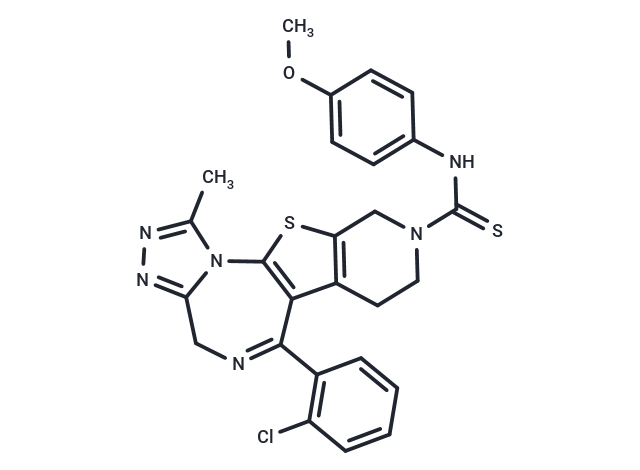
| Description | Rocepafant (LAU8080) is a platelet-activating factor (PAF) antagonist that attenuates hypoxic-ischemic brain damage in neonatal rats.Rocepafant inhibits tumor necrosis factor-Afa-mediated cytotoxicity in mouse L929 tumor cells. |
| Targets & IC50 | PAF receptor:0.74 nM |
| In vivo | Ten patients with active disease were treated for 4 weeks with a PAF receptor antagonist, Rocepafant, given orally (40 mg twice daily). The treatment period was followed by a 4-week follow-up period. Clinical indicators of disease activity significantly improved during the treatment period, with a progressive return to baseline values during the follow-up period. No significant change in laboratory variables was observed. The tolerance of the treatment was excellent, and no clinical or laboratory evidence of side effects was recorded. These results must be confirmed in a controlled study, but suggest an anti-inflammatory effect.[4] |
| Synonyms | LAU-8080, LAU8080, LAU 8080, BN-50730, BN50730, BN 50730 |
| Molecular Weight | 535.08 |
| Formula | C26H23ClN6OS2 |
| Cas No. | 132579-32-9 |
| Smiles | CC=1N2C3=C(C4=C(S3)CN(C(NC5=CC=C(OC)C=C5)=S)CC4)C(=NCC2=NN1)C6=C(Cl)C=CC=C6 |
| Relative Density. | no data available |
| Storage | Powder: -20°C for 3 years | In solvent: -80°C for 1 year Shipping with blue ice/Shipping at ambient temperature. | |||||||||||||||||||||||||||||||||||
| Solubility Information | DMSO: 55 mg/mL (102.79 mM), Sonication is recommended.  | |||||||||||||||||||||||||||||||||||
Solution Preparation Table | ||||||||||||||||||||||||||||||||||||
DMSO
Note : The dilution table applies only to solid products. For liquid products, please calculate the stock solution based on the stated concentration and/or density. | ||||||||||||||||||||||||||||||||||||
 For example, if the intended dosage is 10 mg/kg for animals weighing 20 g , with a dosing volume of 100 μL per animal, and a total of 10 animals are to be administered, using a formulation of
  10% DMSO+ 40% PEG300+ 5% Tween 80+ 45% Saline/PBS/ddH2O , the resulting working solution concentration would be 2 mg/mL.
Dissolve 2 mg of the compound in 100 μL DMSO to obtain a stock solution at a concentration of 20 mg/mL . If the required concentration exceeds the compound's known solubility, please contact us for technical support before proceeding.
1) Add 100 μL of the DMSO stock solution to 400 µL PEG300 and mix thoroughly until the solution becomes clear.
2) Add 50 µL Tween 80 and mix well until fully clarified.
3) Add 450 µL Saline,PBS or ddH2O and mix thoroughly until a homogeneous solution is obtained.
| Size | Quantity | Unit Price | Amount | Operation |
|---|
 Feedback
 Hello! How can I help you today?
Copyright © 2015-2026 TargetMol Chemicals Inc. All Rights Reserved.
