


Shopping Cart
Remove All Your shopping cart is currently empty

Synonyms:
| Pack Size | Price | USA Stock | Global Stock | Quantity |
|---|---|---|---|---|
| 10 mg | Inquiry | 10-14 weeks | 10-14 weeks | |
| 50 mg | Inquiry | 10-14 weeks | 10-14 weeks |
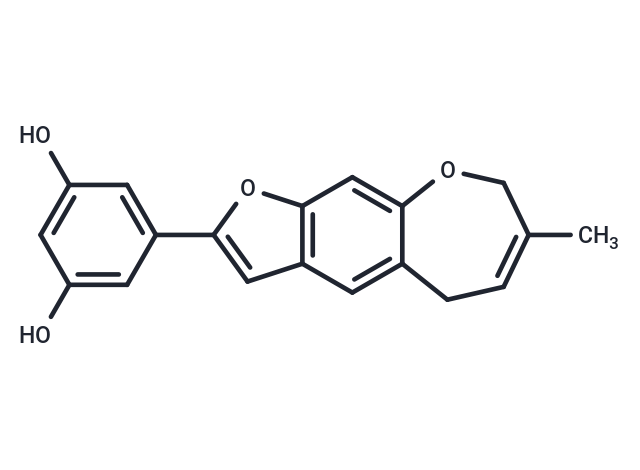
| Description | MO-2097 is an inhibitor of RAF-1 and HIF-1α. It destabilizes RAF-1, reducing EMT-related transcription factors and mesenchymal markers. MO-2097 suppresses HIF-1α protein expression under hypoxic or hypoxia-mimicking conditions via hnRNPA2B1. It induces mitochondrial ROS production, leading to cell apoptosis. By inhibiting the RAF/MEK/ERK signaling pathway, MO-2097 effectively prevents colorectal cancer metastasis. It also inhibits tumor growth in human colorectal cancer HCT116 cell xenograft mouse models. MO-2097 is applicable for colorectal cancer research. |
| In vitro | MO-2097 exhibits several biological activities: at concentrations of 10-30 μM for 24-48 hours, it inhibits DLD-1 and HCT116 cell migration; at 10-50 μM for 1-6 hours, it suppresses the RAF-1 driven RAF/MEK/ERK signaling cascade in the same cell lines. At 10-30 μM over 5-9 days, MO-2097 inhibits the invasiveness of colorectal cancer cells (DLD-1 and HCT116) in 3D tumor spheroid models. Additionally, at concentrations of 30-100 μM for 4 hours, it prevents angiogenesis by inhibiting tubular formation in HUVEC cells. MO-2097 demonstrates low toxicity in HeLa CCL2 and HCT116 cells at 25-500 μM over 24 hours, binding directly to hnRNPA2B1 and reducing HIF-1α expression. At 25-50 μM for 24 hours under hypoxic conditions, it reduces the expression of HIF-1α target genes mRNA (HK1, MRP1, SLC1A5, IL-6, and VEGF) in HeLa CCL2 and HCT116 cells. In HeLa CCL2 cells, MO-2097 induces mitochondrial ROS production at 12.5-50 μM over 24 hours, leading to apoptosis, indicated by the cleavage of caspase 3 and caspase 9. Finally, at 12.5-50 μM for 7-10 days, MO-2097 induces specific anticancer effects in the hypoxic regions of 3D cultured spheroid models and human colon cancer organoids. |
| In vivo | MO-2097, administered at 25-50 mg/kg via intraperitoneal injection every other day for 15 days, suppresses tumor growth in an HCT116 cell xenograft mouse model by inducing apoptosis through inhibition of HIF-1α expression. |
| Molecular Weight | 308.33 |
| Formula | C19H16O4 |
| Cas No. | 2744300-63-6 |
| Smiles | OC=1C=C(O)C=C(C1)C=2OC=3C=C4OCC(=CCC4=CC3C2)C |
| Storage | Powder: -20°C for 3 years | In solvent: -80°C for 1 year Shipping with blue ice/Shipping at ambient temperature. |
 For example, if the intended dosage is 10 mg/kg for animals weighing 20 g , with a dosing volume of 100 μL per animal, and a total of 10 animals are to be administered, using a formulation of
  10% DMSO+ 40% PEG300+ 5% Tween 80+ 45% Saline/PBS/ddH2O , the resulting working solution concentration would be 2 mg/mL.
Dissolve 2 mg of the compound in 100 μL DMSO to obtain a stock solution at a concentration of 20 mg/mL . If the required concentration exceeds the compound's known solubility, please contact us for technical support before proceeding.
1) Add 100 μL of the DMSO stock solution to 400 µL PEG300 and mix thoroughly until the solution becomes clear.
2) Add 50 µL Tween 80 and mix well until fully clarified.
3) Add 450 µL Saline,PBS or ddH2O and mix thoroughly until a homogeneous solution is obtained.
| Size | Quantity | Unit Price | Amount | Operation |
|---|
 Feedback
 Hello! How can I help you today?
Copyright © 2015-2026 TargetMol Chemicals Inc. All Rights Reserved.
