


Shopping Cart
Remove All Your shopping cart is currently empty

Synonyms:
| Pack Size | Price | USA Stock | Global Stock | Quantity |
|---|---|---|---|---|
| 25 mg | $1,430 | 6-8 weeks | 6-8 weeks | |
| 50 mg | $1,860 | 6-8 weeks | 6-8 weeks | |
| 100 mg | $2,675 | 6-8 weeks | 6-8 weeks |
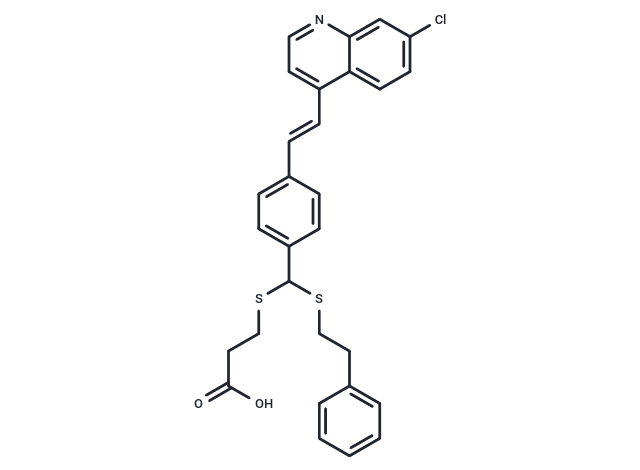
| Description | LV-320 is a potent, uncompetitive ATG4B inhibitor with an IC50 of 24.5 μM and a Kd of 16 μM. LV-320 inhibits ATG4B enzymatic activity, blocks autophagic flux in cells, and is stable, non-toxic, and active in vivo. These findings suggest that LV-320 will serve as a relevant chemical tool to study the various roles of ATG4B in cancer and other contexts [1]. |
| Targets & IC50 | ATG4B:(kd)16 μM , ATG4B:24.5 µM |
| In vitro | LV-320 (0-120 μM; SKBR3, MCF7, JIMT1, and MDA-MB-231 cells) treatment leads to a dose-dependent increase in endogenous LC3B-II and protein p62 levels in all four cell lines [1]. LV-320 (120 μM; 48 hours; MDA-MB-231 cells) treatment results in an increase in LC3B-II, indicating that LV-320 blocks autophagic flux [1]. Western Blot Analysis [1] Cell Line: SKBR3, MCF7, JIMT1, and MDA-MB-231 cells Concentration: 0 μM, 25 μM, 50 μM, 75 μM, 100 μM, or 120 μM Incubation Time: Result: Resulted in a dose-dependent increase in endogenous LC3B-II and protein p62 levels in all four cell lines. Cell Autophagy Assay [1] Cell Line: MDA-MB-231 cells Concentration: 120 μM Incubation Time: 48 hours Result: Blocked autophagic flux. |
| In vivo | Administering LV-320 (100-200 mg/kg; oral gavage; three times over two days; GFP-LC3 mice) resulted in terminal blood and liver concentrations of 169 μM and 104 μM, respectively. This treatment significantly increased the accumulation of GFP-LC3 puncta and elevated LC3B-II protein levels in treated animals compared to controls, without causing notable toxicity at either dose [1]. The study utilized female GFP-LC3 mice aged 9-14 weeks [1], exploring the pharmacokinetics and the biological impact of LV-320 on autophagy-related markers. |
| Molecular Weight | 520.11 |
| Formula | C29H26ClNO2S2 |
| Cas No. | 2449093-46-1 |
| Smiles | OC(=O)CCSC(SCCc1ccccc1)c1ccc(\C=C\c2ccnc3cc(Cl)ccc23)cc1 |
| Relative Density. | 1.317 g/cm3 (Predicted) |
| Storage | Powder: -20°C for 3 years | In solvent: -80°C for 1 year Shipping with blue ice/Shipping at ambient temperature. | |||||||||||||||||||||||||||||||||||
| Solubility Information | DMSO: 135 mg/mL (259.56 mM), Sonication is recommended. | |||||||||||||||||||||||||||||||||||
| In Vivo Formulation | 10% DMSO+40% PEG300+5% Tween-80+45% Saline: 3.3 mg/mL (6.34 mM), Sonication is recommended. Please add the solvents sequentially, clarifying the solution as much as possible before adding the next one. Dissolve by heating and/or sonication if necessary. Working solution is recommended to be prepared and used immediately. The formulation provided above is for reference purposes only. In vivo formulations may vary and should be modified based on specific experimental conditions. | |||||||||||||||||||||||||||||||||||
Solution Preparation Table | ||||||||||||||||||||||||||||||||||||
DMSO
Note : The dilution table applies only to solid products. For liquid products, please calculate the stock solution based on the stated concentration and/or density. | ||||||||||||||||||||||||||||||||||||
 For example, if the intended dosage is 10 mg/kg for animals weighing 20 g , with a dosing volume of 100 μL per animal, and a total of 10 animals are to be administered, using a formulation of
  10% DMSO+ 40% PEG300+ 5% Tween 80+ 45% Saline/PBS/ddH2O , the resulting working solution concentration would be 2 mg/mL.
Dissolve 2 mg of the compound in 100 μL DMSO to obtain a stock solution at a concentration of 20 mg/mL . If the required concentration exceeds the compound's known solubility, please contact us for technical support before proceeding.
1) Add 100 μL of the DMSO stock solution to 400 µL PEG300 and mix thoroughly until the solution becomes clear.
2) Add 50 µL Tween 80 and mix well until fully clarified.
3) Add 450 µL Saline,PBS or ddH2O and mix thoroughly until a homogeneous solution is obtained.
| Size | Quantity | Unit Price | Amount | Operation |
|---|
 Feedback
 Hello! How can I help you today?
Copyright © 2015-2026 TargetMol Chemicals Inc. All Rights Reserved.
