


Shopping Cart
Remove All Your shopping cart is currently empty


Synonyms: BRD-6125

| Pack Size | Price | USA Stock | Global Stock | Quantity |
|---|---|---|---|---|
| 2 mg | $34 | In Stock | In Stock | |
| 5 mg | $55 | In Stock | In Stock | |
| 10 mg | $97 | In Stock | In Stock | |
| 25 mg | $197 | In Stock | In Stock | |
| 50 mg | $293 | In Stock | In Stock | |
| 100 mg | $437 | In Stock | In Stock | |
| 200 mg | $646 | In Stock | In Stock | |
| 1 mL x 10 mM (in DMSO) | $65 | In Stock | In Stock |
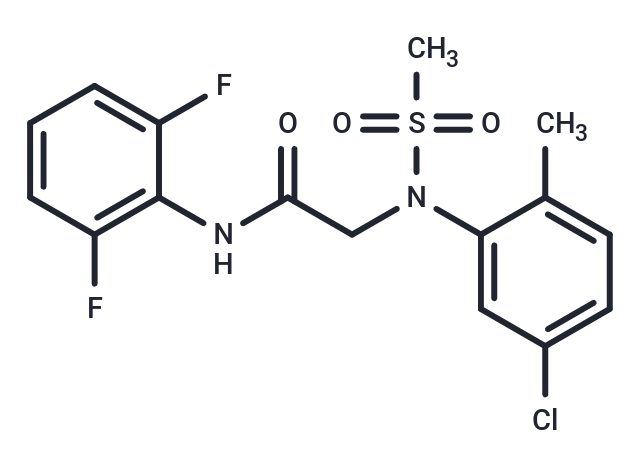
| Description | FPH1 (BRD-6125) (BRD-6125) can promote the expansion of iPS-derived hepatocytes. |
| In vitro | FPH1 induces functional proliferation of hepatocytes in vitro, and causes more pronounced hepatocyte morphologies, including polygonal cell shapes, visible nuclei, and more noticeable bile cannaliculi between hepatocytes. [1] |
| Synonyms | BRD-6125 |
| Kinase Assay | Cytochrome P450 Inhibition: Inhibition of human cytochrome P450 activities is determined in duplicate in pooled human hepatic microsomal fractions following current scientific and regulatory guidelines. Reaction conditions are linear with respect to incubation time and hepatic microsomal protein concentration. Substrates are present at concentrations equal to or less than their respective Km values determined under the same reaction conditions. Metabolite and/or substrate concentrations are determined using specific, internal standard controlled HPLC MS/MS assays. For reactions monitoring metabolite formation there is less than 20% consumption of substrate during the reaction. Unless otherwise noted microsomal fraction, diluted in potassium phosphate buffer, is preincubated with substrate and inhibitor for 5 min at 37 ℃ and the reaction initiated by the addition of an NADPH generating system followed by further incubation at 37 ℃ with shaking. Enzyme-selective positive control inhibitors are tested in parallel. At appropriate times aliquots of the mixture are removed and the reaction terminated by addition to a mixture of methanol and acetonitrile containing the respective internal standard. After centrifugation aliquots of the supernatant are subjected to HPLC-MS/MS analysis. |
| Molecular Weight | 388.82 |
| Formula | C16H15ClF2N2O3S |
| Cas No. | 708219-39-0 |
| Smiles | Cc1ccc(Cl)cc1N(CC(=O)Nc1c(F)cccc1F)S(C)(=O)=O |
| Relative Density. | 1.480 g/cm3 (Predicted) |
| Storage | Powder: -20°C for 3 years | In solvent: -80°C for 1 year Shipping with blue ice/Shipping at ambient temperature. | |||||||||||||||||||||||||||||||||||
| Solubility Information | H2O: < 1 mg/mL (insoluble or slightly soluble) DMSO: 250 mg/mL (642.97 mM), Sonication is recommended.  Ethanol: < 1 mg/mL (insoluble or slightly soluble) | |||||||||||||||||||||||||||||||||||
| In Vivo Formulation | 10% DMSO+90% Saline: < 10 mg/mL (25.72 mM), Lower concentrations may be soluble, but exact solubility limit is unknown. 10% DMSO+40% PEG300+5% Tween-80+45% Saline: 3.3 mg/mL (8.49 mM), Sonication is recommended. 10% DMSO+40% PEG300+5% Tween 80+45% Saline: 10 mg/mL (25.72 mM), Solution. Please add the solvents sequentially, clarifying the solution as much as possible before adding the next one. Dissolve by heating and/or sonication if necessary. Working solution is recommended to be prepared and used immediately. The formulation provided above is for reference purposes only. In vivo formulations may vary and should be modified based on specific experimental conditions. | |||||||||||||||||||||||||||||||||||
Solution Preparation Table | ||||||||||||||||||||||||||||||||||||
DMSO
Note : The dilution table applies only to solid products. For liquid products, please calculate the stock solution based on the stated concentration and/or density. | ||||||||||||||||||||||||||||||||||||
 For example, if the intended dosage is 10 mg/kg for animals weighing 20 g , with a dosing volume of 100 μL per animal, and a total of 10 animals are to be administered, using a formulation of
  10% DMSO+ 40% PEG300+ 5% Tween 80+ 45% Saline/PBS/ddH2O , the resulting working solution concentration would be 2 mg/mL.
Dissolve 2 mg of the compound in 100 μL DMSO to obtain a stock solution at a concentration of 20 mg/mL . If the required concentration exceeds the compound's known solubility, please contact us for technical support before proceeding.
1) Add 100 μL of the DMSO stock solution to 400 µL PEG300 and mix thoroughly until the solution becomes clear.
2) Add 50 µL Tween 80 and mix well until fully clarified.
3) Add 450 µL Saline,PBS or ddH2O and mix thoroughly until a homogeneous solution is obtained.
| Size | Quantity | Unit Price | Amount | Operation |
|---|
 Feedback
 Hello! How can I help you today?
Copyright © 2015-2026 TargetMol Chemicals Inc. All Rights Reserved.
