


Shopping Cart
Remove All Your shopping cart is currently empty

Synonyms:
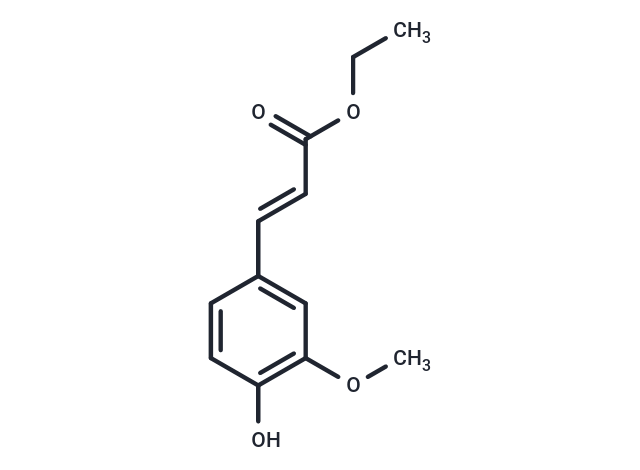
| Pack Size | Price | USA Stock | Global Stock | Quantity |
|---|---|---|---|---|
| 20 mg | $245 | Inquiry | Inquiry |
| Description | Ethyl ferulate could be used for therapeutic purposes as a potent inducer of HO-1 for the protection of brain cells against oxidative and neurodegenerative conditions. |
| In vitro | In the CNS, the heme oxygenase (HO) system has been reported to be active and to operate as a fundamental defensive mechanism for neurons exposed to an oxidant challenge. We have recently shown that both curcumin and caffeic acid phenethyl ester, two phenolic natural compounds, potently induce HO-1 expression and activity in rat astrocytes. We have extended our previous findings examining the effects of two other plant-derived phenolic compounds, with analogous chemical structures, in rat astrocytes and neurons. METHODS AND RESULTS: Ethyl ferulate (Ethyl (E)-ferulate, ethyl 4-hydroxy-3-methoxycinnamate) (EFE), the naturally occurring ester of ferulic acid, was able to induce HO-1 protein expression. Maximal expression of HO-1 mRNA and protein and a significant increase in HO activity were detected after 6 h of incubation with 15 microM EFE in astrocytes and 5 microM EFE in neurons. Higher concentrations of EFE (50 microM) caused a substantial cytotoxic effect with no change in HO-1 protein expression and activity. Exposure of astrocytes to resveratrol, a phytoalexin derived from grapes, resulted in an increase of HO-1 mRNA, but it was not able to induce HO-1 protein expression and activity. Interestingly, preincubation (12 h) of neurons with EFE resulted in an enhanced cellular resistance to glucose oxidase-mediated oxidative damage; this cytoprotective effect was considerably attenuated by zinc protoporphyrin IX, an inhibitor of HO activity. CONCLUSIONS: This study identifies a novel natural compound that could be used for therapeutic purposes as a potent inducer of HO-1 for the protection of brain cells against oxidative and neurodegenerative conditions. |
| Molecular Weight | 222.24 |
| Formula | C12H14O4 |
| Cas No. | 28028-62-8 |
| Smiles | C(=C/C(OCC)=O)\C1=CC(OC)=C(O)C=C1 |
| Relative Density. | 1.31g/cm3 |
| Storage | Powder: -20°C for 3 years | In solvent: -80°C for 1 year Shipping with blue ice/Shipping at ambient temperature. |
 For example, if the intended dosage is 10 mg/kg for animals weighing 20 g , with a dosing volume of 100 μL per animal, and a total of 10 animals are to be administered, using a formulation of
  10% DMSO+ 40% PEG300+ 5% Tween 80+ 45% Saline/PBS/ddH2O , the resulting working solution concentration would be 2 mg/mL.
Dissolve 2 mg of the compound in 100 μL DMSO to obtain a stock solution at a concentration of 20 mg/mL . If the required concentration exceeds the compound's known solubility, please contact us for technical support before proceeding.
1) Add 100 μL of the DMSO stock solution to 400 µL PEG300 and mix thoroughly until the solution becomes clear.
2) Add 50 µL Tween 80 and mix well until fully clarified.
3) Add 450 µL Saline,PBS or ddH2O and mix thoroughly until a homogeneous solution is obtained.
| Size | Quantity | Unit Price | Amount | Operation |
|---|
 Feedback
 Hello! How can I help you today?
Copyright © 2015-2026 TargetMol Chemicals Inc. All Rights Reserved.
