


Shopping Cart
Remove All Your shopping cart is currently empty


Synonyms: ASL 8052-001, (+-)-Esmolol
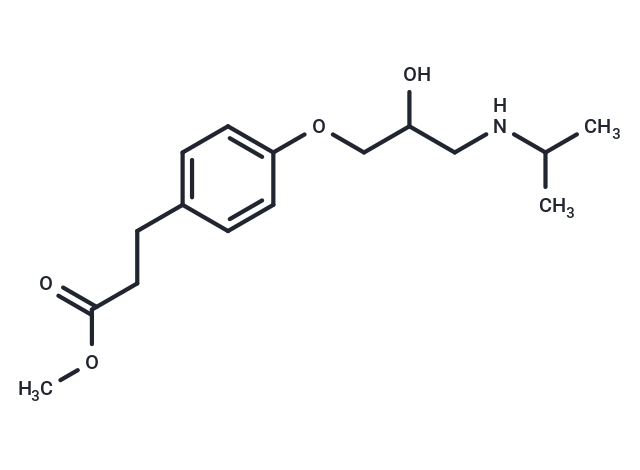

| Description | Esmolol is an ultra-short-acting, cardioselective β1-adrenergic receptor blocker. Esmolol exerts antiarrhythmic effects by regulating the NK1 receptor (neurokinin 1 receptor) signaling pathway and effectively improves myocardial dysfunction after cardiopulmonary resuscitation.Esmolol can positively promote diabetic wound healing by inhibiting aldose reductase activity, reducing advanced glycation end-product formation, and promoting fibroblast migration.Esmolol serves as an important tool drug for mechanistic studies on cardiovascular diseases such as arrhythmias and diabetic foot ulcers. |
| In vitro | Esmolol inhibits aldose reductase activity at concentrations ranging from 0 to 1 mM, with an IC50 of approximately 150 µM, and reduces sorbitol production in red blood cells by 59%.At a concentration of 0.5–1 mM treated for 10 minutes, Esmolol can inhibit the formation of advanced glycation end products.Furthermore, Esmolol promotes cell migration in HFF‑1, Ea.hy926, and HaCaT cells within the concentration range of 0.01–1000 µM following an incubation period of 8–48 hours, while exhibiting no significant cytotoxicity in this range [1]. |
| In vivo | Esmolol, administered topically at a concentration of 7%–20% twice a day, can improve nitric oxide production, collagen metabolic turnover and hydroxyproline levels in streptozotocin-induced diabetic nude mice, and promote wound repair and healing process [1]. When administered as a single intravenous injection of 10 mg/kg (0.3 mL) to a rat model of permanent coronary artery occlusion (CAO), Esmolol can exert an antiarrhythmic effect by upregulating the expression of NK1 receptors [2]. The combination of Esmolol and epinephrine (300 μg/kg + 20 μg/kg, single intravenous injection) in inbred Wuzhishan miniature pigs can reduce myocardial injury by inhibiting cell apoptosis and exert a protective effect on post-resuscitation cardiac dysfunction [3]. |
| Synonyms | ASL 8052-001, (+-)-Esmolol |
| Molecular Weight | 295.37 |
| Formula | C16H25NO4 |
| Cas No. | 81147-92-4 |
| Smiles | O=C(OC)CCC1=CC=C(OCC(O)CNC(C)C)C=C1 |
| Relative Density. | 1.026 |
| Storage | Powder: -20°C for 3 years | In solvent: -80°C for 1 year Shipping with blue ice/Shipping at ambient temperature. |
| Solubility Information | DMSO: Soluble |
 For example, if the intended dosage is 10 mg/kg for animals weighing 20 g , with a dosing volume of 100 μL per animal, and a total of 10 animals are to be administered, using a formulation of
  10% DMSO+ 40% PEG300+ 5% Tween 80+ 45% Saline/PBS/ddH2O , the resulting working solution concentration would be 2 mg/mL.
Dissolve 2 mg of the compound in 100 μL DMSO to obtain a stock solution at a concentration of 20 mg/mL . If the required concentration exceeds the compound's known solubility, please contact us for technical support before proceeding.
1) Add 100 μL of the DMSO stock solution to 400 µL PEG300 and mix thoroughly until the solution becomes clear.
2) Add 50 µL Tween 80 and mix well until fully clarified.
3) Add 450 µL Saline,PBS or ddH2O and mix thoroughly until a homogeneous solution is obtained.
| Size | Quantity | Unit Price | Amount | Operation |
|---|
 Feedback
 Hello! How can I help you today?
Copyright © 2015-2026 TargetMol Chemicals Inc. All Rights Reserved.
