


Shopping Cart
Remove All Your shopping cart is currently empty

Synonyms: ACTH (1-39) (mouse, rat) TFA
| Pack Size | Price | USA Stock | Global Stock | Quantity |
|---|---|---|---|---|
| 1 mg | $197 | Inquiry | Inquiry | |
| 5 mg | $797 | Inquiry | Inquiry | |
| 10 mg | Inquiry | Inquiry | Inquiry | |
| 50 mg | Inquiry | Inquiry | Inquiry |
| Description | Adrenocorticotropic Hormone (ACTH) (1-39), rat (TFA), is a potent agonist of the melanocortin 2 receptor (MC2). |
| In vitro | ACTH 1-39, within the concentration range of 100-400 nM, exhibits no cytotoxic effects on neurons and notably safeguards them against excitotoxic neuronal death triggered by various agents such as glutamate (100 μM), NMDA (1 mM), AMPA (50 μM), and kainate (25 μM), with the 400 nM concentration ensuring substantial protection across all instances. Similarly, ACTH at both 200 and 400 nM concentrations effectively shields neurons from the detrimental effects of quinolinic acid (25 μM). Furthermore, ACTH mitigates cell mortality caused by 2 μM H2O2, which leads to the production of reactive oxygen species (ROS), with protection being notably greater at 400 nM than at 200 nM. Additionally, ACTH offers limited defense against the immediate release of nitric oxide (NO) by NOC-12, albeit it does not counter the slow release by NOC-18. Moreover, at concentrations of 200 or 400 nM, ACTH affords neuronal protection from the cytotoxic impacts of staurosporine (10-20 nM), a well-established inducer of apoptosis, consequently reducing cell death from 80% to 55% [1]. |
| In vivo | Intracerebroventricular (icv) administration of ACTH notably lowers total food consumption over the study period in comparison to the saline/IgG control group. Introducing ACTH antibody (Ab) into the paraventricular nucleus (PVN) negates ACTH's appetite-suppressing effect. Conversely, ACTH's icv infusion markedly reduces food intake in rats also receiving α-MSH Ab in the PVN, aligning their consumption levels with rats given ACTH icv and IgG in the PVN. Moreover, injecting either ACTH Ab or α-MSH Ab into the PVN significantly boosts food intake relative to animals treated with IgG alone [2]. |
| Synonyms | ACTH (1-39) (mouse, rat) TFA |
| Animal Research | Male Wistar rats (weight range 225-250 g at purchase) are used throughout the study. Animals receive a PVN application of ACTH Ab (2 μg/rat) or IgG (2 μg/rat); administration of either ACTH (1 nM/rat) or saline icv is performed 5 min later [2]. |
| Molecular Weight | 4696.18 |
| Formula | C212H316F3N57O59S |
| Relative Density. | no data available |
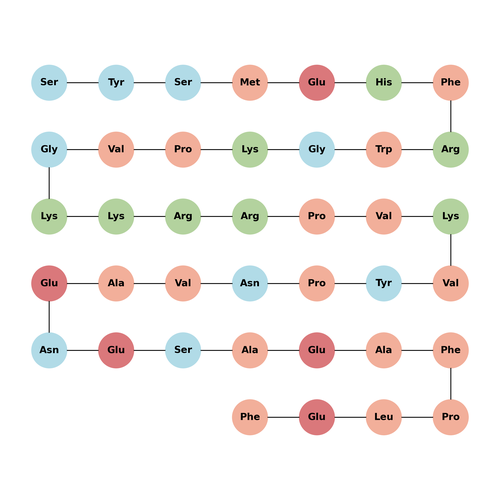
| Sequence | Ser-Tyr-Ser-Met-Glu-His-Phe-Arg-Trp-Gly-Lys-Pro-Val-Gly-Lys-Lys-Arg-Arg-Pro-Val-Lys-Val-Tyr-Pro-Asn-Val-Ala-Glu-Asn-Glu-Ser-Ala-Glu-Ala-Phe-Pro-Leu-Glu-Phe |
| Sequence Short | SYSMEHFRWGKPVGKKRRPVKVYPNVAENESAEAFPLEF |
| Storage | Keep away from moisture Powder: -20°C for 3 years | In solvent: -80°C for 1 year Shipping with blue ice/Shipping at ambient temperature. |
 For example, if the intended dosage is 10 mg/kg for animals weighing 20 g , with a dosing volume of 100 μL per animal, and a total of 10 animals are to be administered, using a formulation of
  10% DMSO+ 40% PEG300+ 5% Tween 80+ 45% Saline/PBS/ddH2O , the resulting working solution concentration would be 2 mg/mL.
Dissolve 2 mg of the compound in 100 μL DMSO to obtain a stock solution at a concentration of 20 mg/mL . If the required concentration exceeds the compound's known solubility, please contact us for technical support before proceeding.
1) Add 100 μL of the DMSO stock solution to 400 µL PEG300 and mix thoroughly until the solution becomes clear.
2) Add 50 µL Tween 80 and mix well until fully clarified.
3) Add 450 µL Saline,PBS or ddH2O and mix thoroughly until a homogeneous solution is obtained.
| Size | Quantity | Unit Price | Amount | Operation |
|---|
 Feedback
 Hello! How can I help you today?
Copyright © 2015-2026 TargetMol Chemicals Inc. All Rights Reserved.
